


Standard features include full-body armor, four horns on the head, a bony club at the tail end and a belly so big that scientists put it in the species name (magniventris means roughly “great belly”). Sadly, this model has been out of stock for about 66 million years.
So these ankylosaurus coloring pages will have to do, every plate and spike placed where the fossils say it goes… well, mostly. Print a few sheets, find a brown you actually like, and start wherever the bumps look least intimidating.
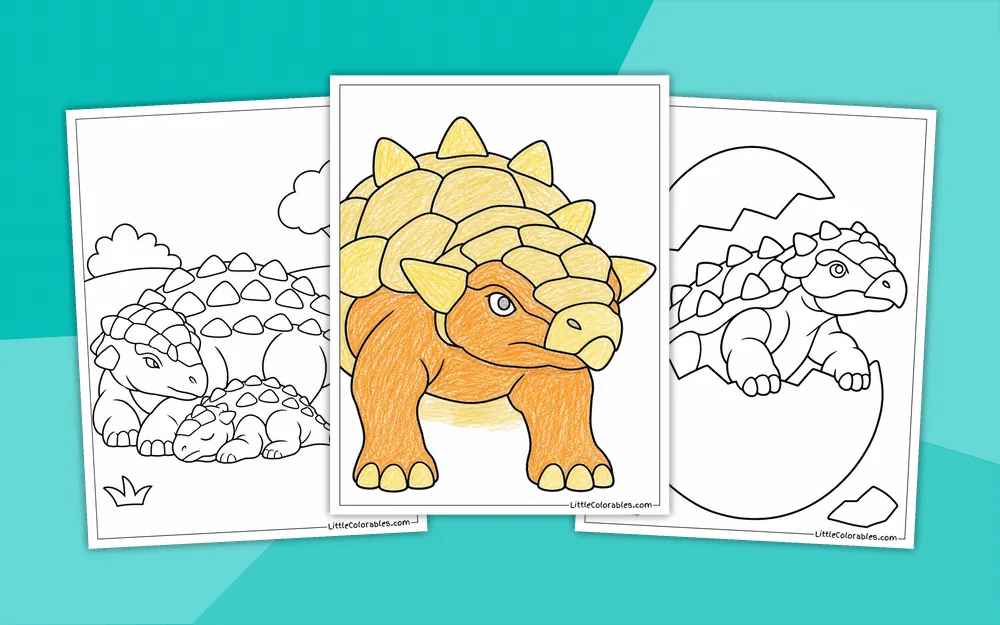 ↓ Scroll to the free printable pages
A few of these ankylosaurus pages are almost bare, just a dinosaur, a ground line and maybe one tuft of grass, perfect for toddler scribbles. Others pile on the scenery, with a smoking volcano, an enormous moon, a fallen log, a boulder and one very questionable mushroom.
And for the record, ankylosaurus ate plants. It never chased anyone, it just made chasing it a terrible idea.
Featured Ankylosaurus Coloring Pages
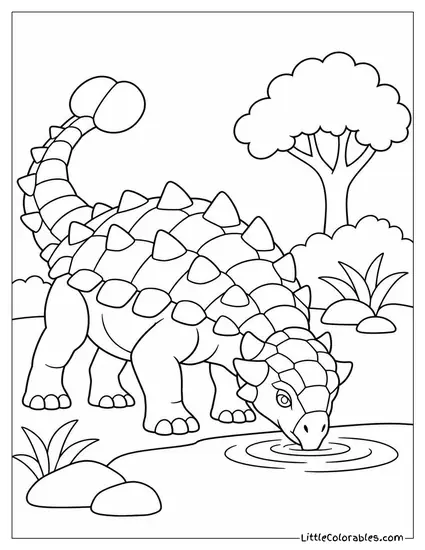
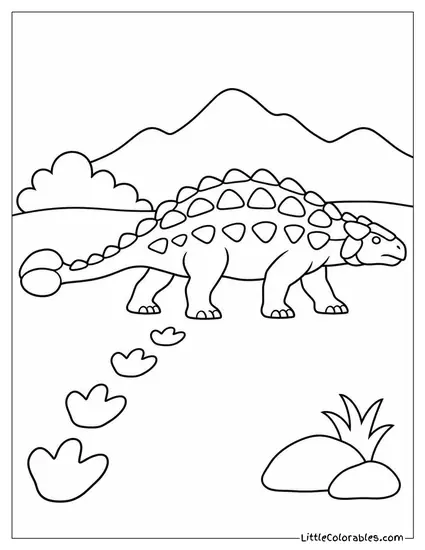
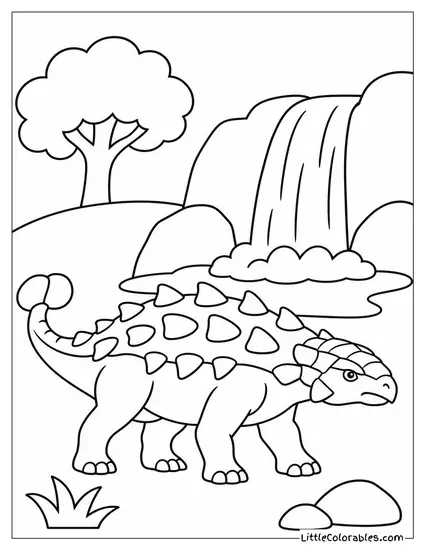
I love how the trail of footprints leads little explorers straight to this ankylosaurus, with its bumpy armor and club-shaped tail shown from the side. I’d start with muddy brown tracks, though a few rainbow footprints would certainly give this prehistoric wanderer some personality!
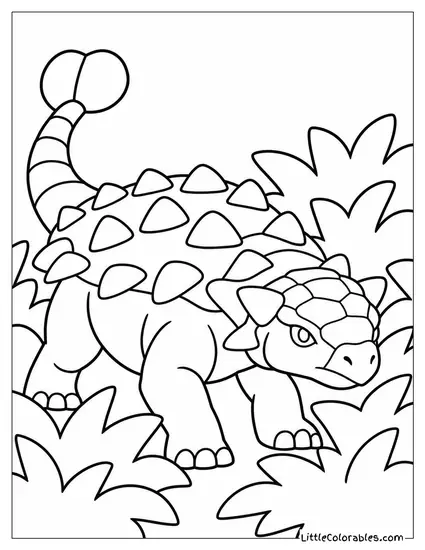
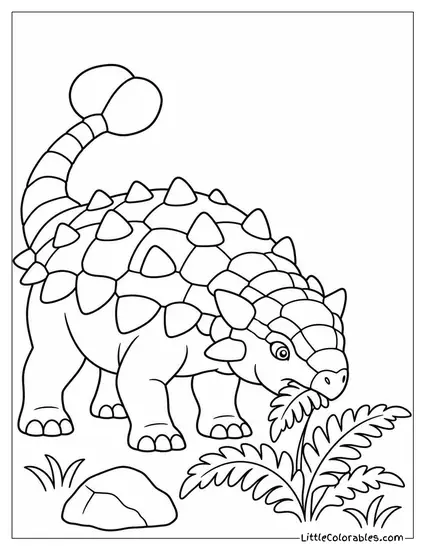
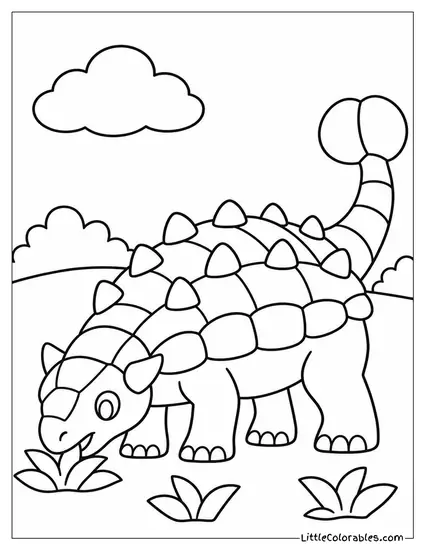
I love how this ankylosaurus nudges through those big leafy bushes, as if it’s taking a shortcut to its favorite snack spot. All those little armor plates invite some patient coloring, while the broad leaves leave plenty of room for big, happy sweeps of green.
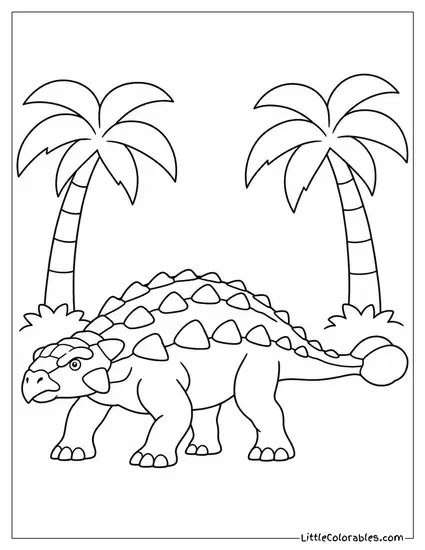
I love how this sturdy ankylosaurus stands between two simple palms, with all those little armor plates just waiting for a splash of color. I’d start with earthy greens and browns, but a purple tail club would be awfully hard to resist!
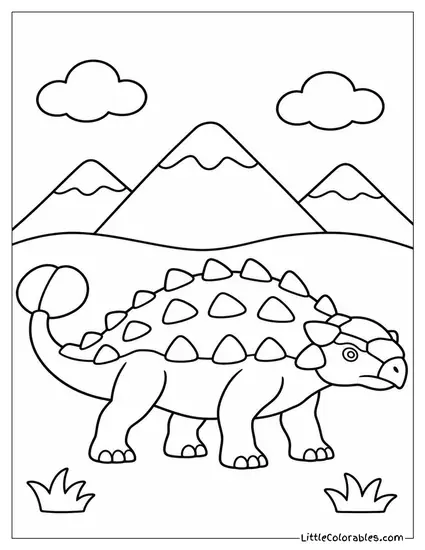
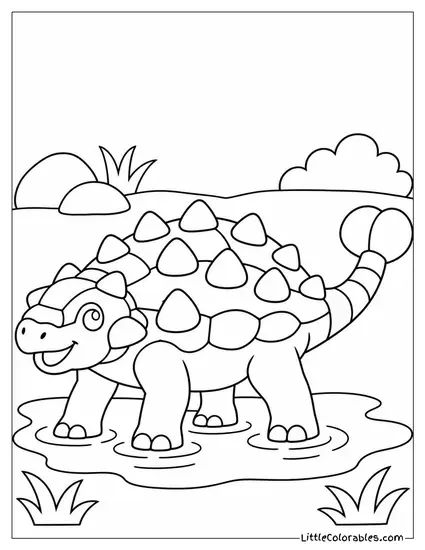
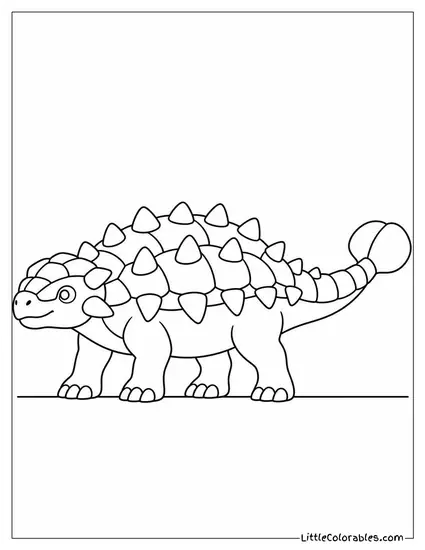
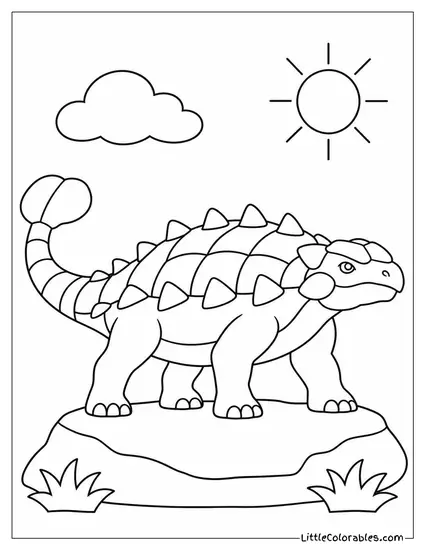
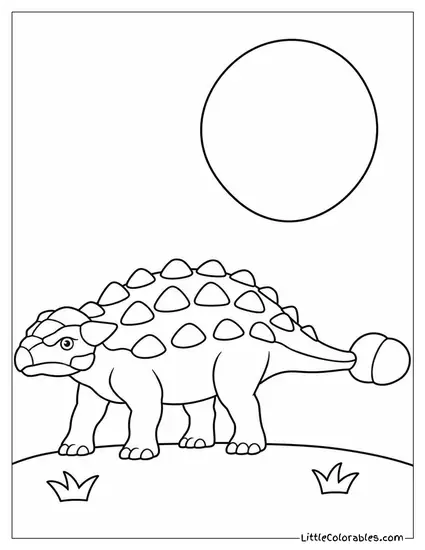
I love how the big, round moon makes this sturdy ankylosaurus look like it’s taking a peaceful bedtime stroll. I’d try earthy browns for its bumpy armor and a soft yellow moon, though a purple dinosaur is always welcome at our table.
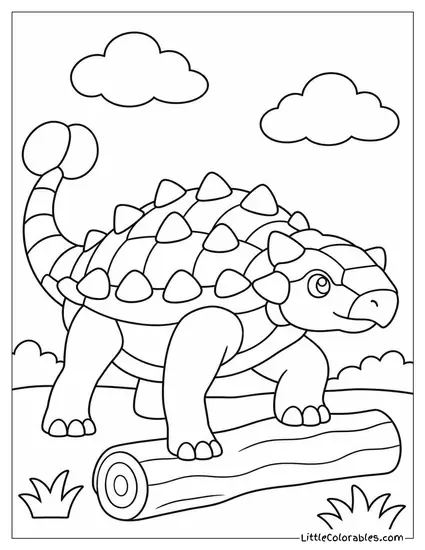
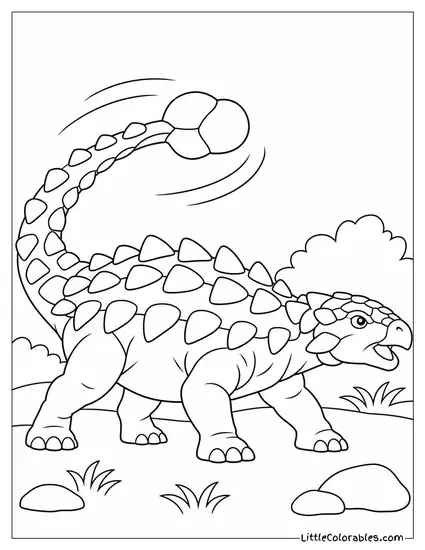
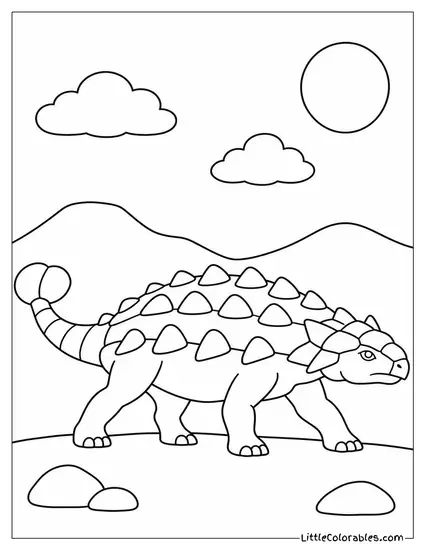
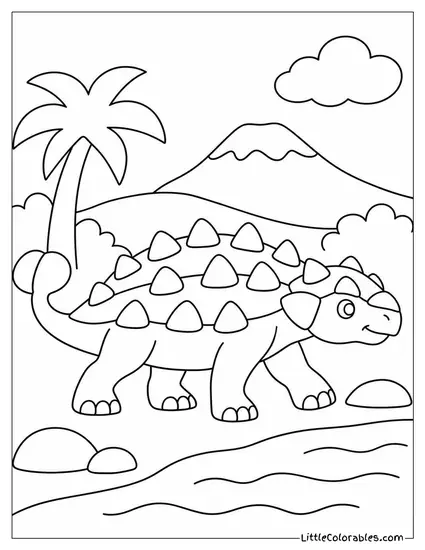
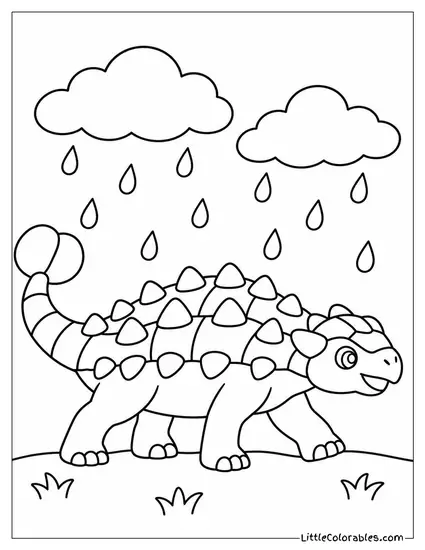
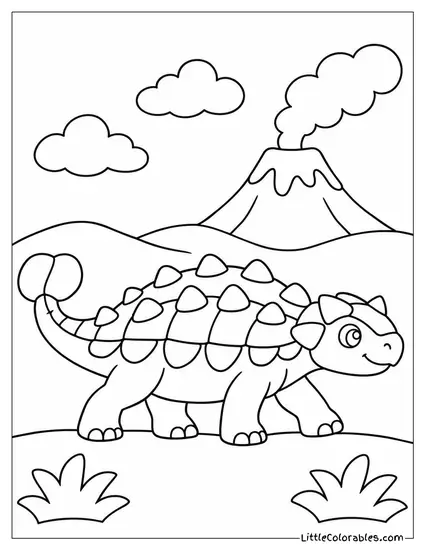
I love how this ankylosaurus looks like it’s taking an ordinary afternoon stroll, with all that armor and a volcano off in the distance. I’d try earthy browns and greens for its bumpy back, but a few purple plates would be hard to resist!
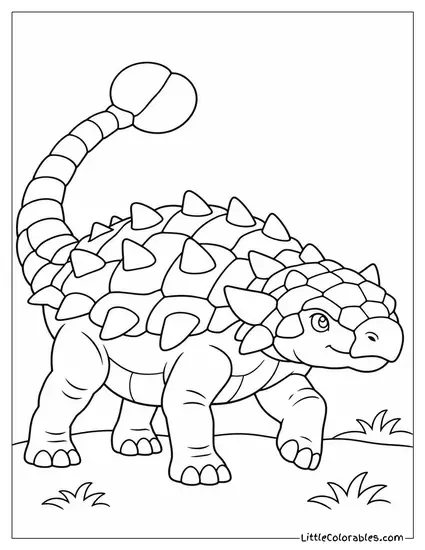
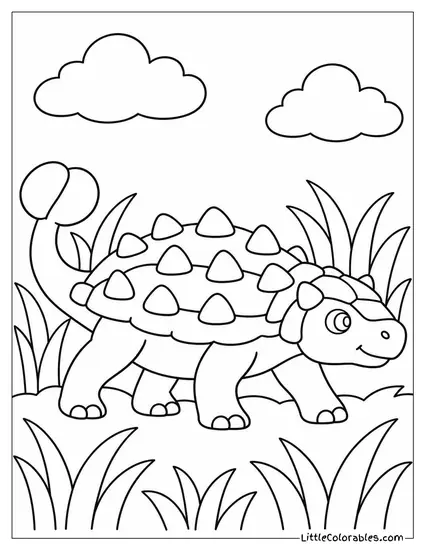
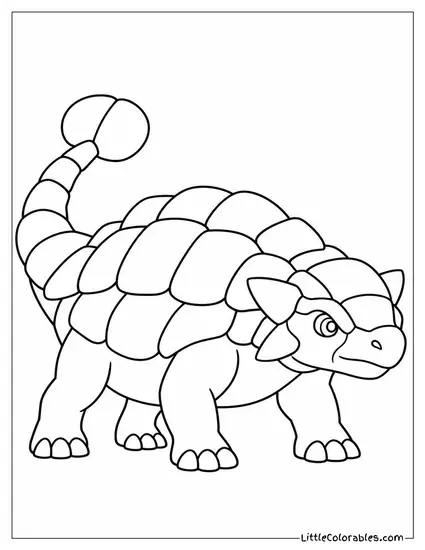
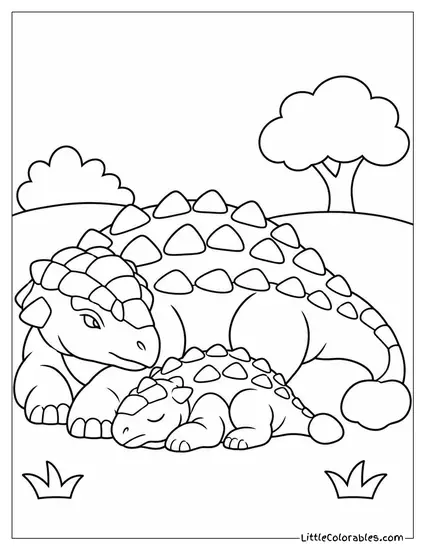
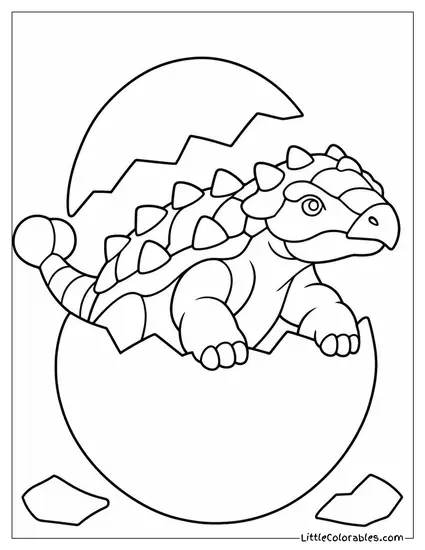
This sleepy little ankylosaurus snuggled beside its mother makes all that bumpy armor look surprisingly cuddly. I’d try soft earthy browns for the pair, though I suspect someone at our kitchen table would insist on a purple tail!
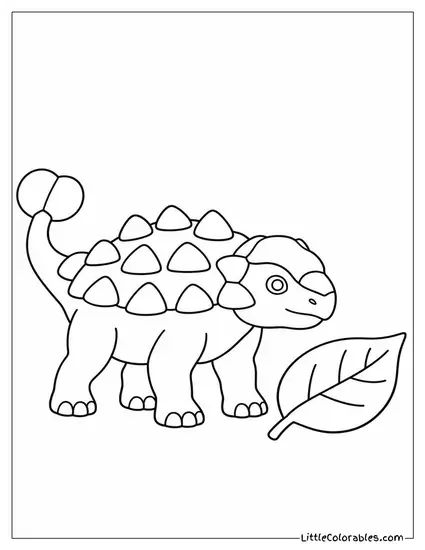
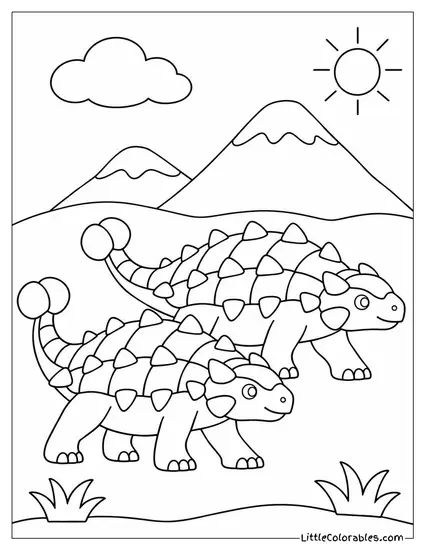
Did you love these ankylosaurus pages?
Browse Other Dinosaurs
Ankylosaurus Coloring Pages Highlights
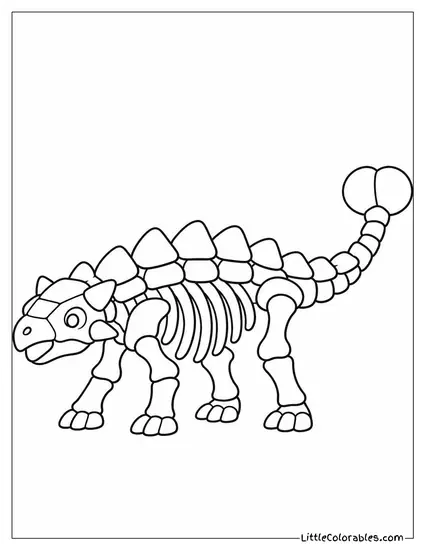
Skeleton with Large Simple Bones
No skin here, just a loopy row of ribs, chunky leg bones, a skull with one big eye socket and the rounded club at the end of the tail. Oddly, a line of armor bumps still runs along the spine. That’s less strange than it looks, since the plates were bone that grew in the skin, and bone fossilizes well.
Here’s what the museum signs tend to skip. Nobody has ever dug up a complete Ankylosaurus skeleton, only a handful of partial ones, so books borrow a lot from cousins like Euoplocephalus. If you need a realistic ankylosaurus coloring page for a dinosaur unit, this is the one I’d hand out, guesses and all.
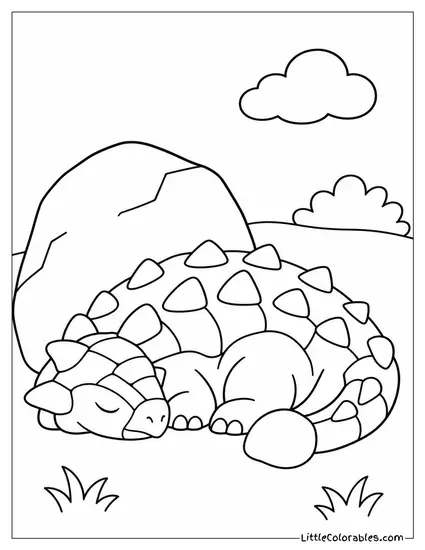
Sleeping Curled Up Beside a Boulder
Eyes closed, chin down, the ankylosaurus curls tight against a boulder almost as tall as it is. The rest of the scene stays quiet on purpose, a little bush at its feet and one cloud drifting overhead.
Big round shapes, very little fuss. It suits preschoolers, and back when I taught, the last half hour before pickup needed pages exactly like this one.
Sniffing a Big Flower
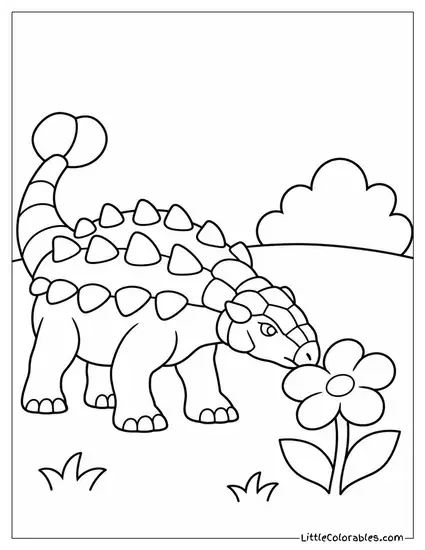
The ankylosaurus leans in nose-first toward a flower with five fat round petals, tail club lifted high behind it. Clouds float above and two small grass tufts sit at its feet. A sweet pick for spring, and for kids who still think dinosaurs are too scary.
Is a flower even fair in a dinosaur scene? Actually, yes. Flowering plants were spreading fast during the Cretaceous, so an ankylosaurus really could have stuck its nose in one, though nobody knows whether it liked the smell.
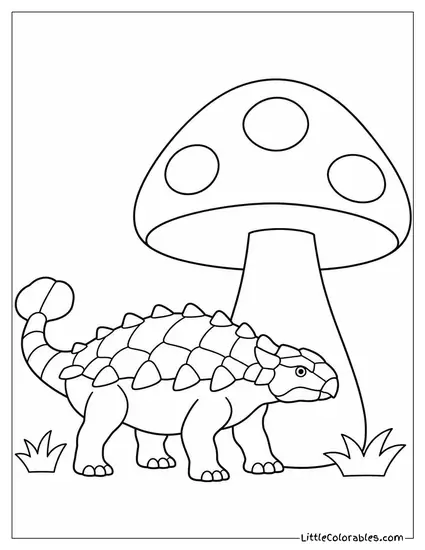
Standing Next to a Giant Mushroom
A spotted mushroom towers over the dinosaur, its cap wide enough to shade the whole armored back. The ankylosaurus stands beside the stem with its tail curled up, perfectly fine with the arrangement.
Giant fungus-like things did exist once. Prototaxites grew trunks up to about 8 meters tall… roughly 400 million years ago, long before any dinosaur showed up. A small timing problem, and one that fairy-tale fans won’t mind at all.
Standing Under a Large Round Moon
This page is mostly sky, a huge empty moon hanging over a stocky ankylosaurus on a strip of ground with one grass tuft. That circle is wide open for toddler scribbles, or for an older kid who wants to add craters.
The moon sat a touch closer when ankylosaurs were around, since it drifts away from Earth about 3.8 centimeters a year. Over 66 million years that adds up to roughly 2,500 kilometers. Sounds like a lot, but from the ground you’d never notice.
Walking Past a Volcano in the Distance
Rolling hills, puffy clouds and a volcano puffing smoke on the horizon while the ankylosaurus strolls through the foreground, unbothered. The dinosaur fills the lower half, so the volcano stays a background thing.
Every dinosaur picture ever printed seems to need a volcano, and I’m a little skeptical. The famous end-of-Cretaceous eruptions were the Deccan Traps in India, half a planet away from the Montana and Alberta plains this dinosaur called home. I’d keep the volcano anyway, kids love smoke.
Walking Toward the Viewer
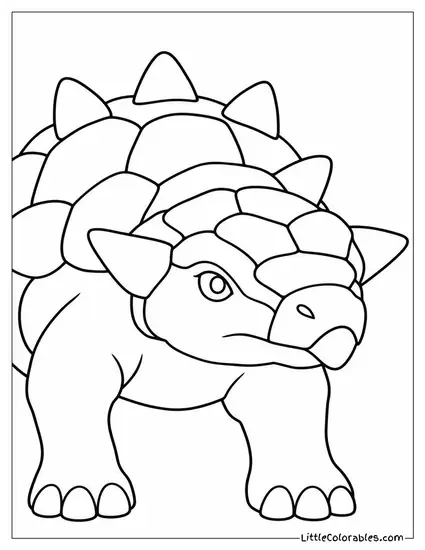
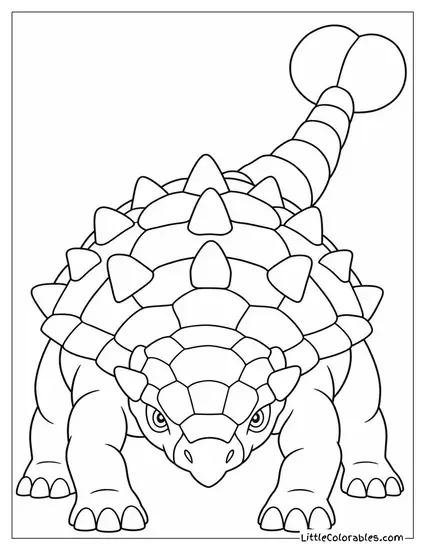
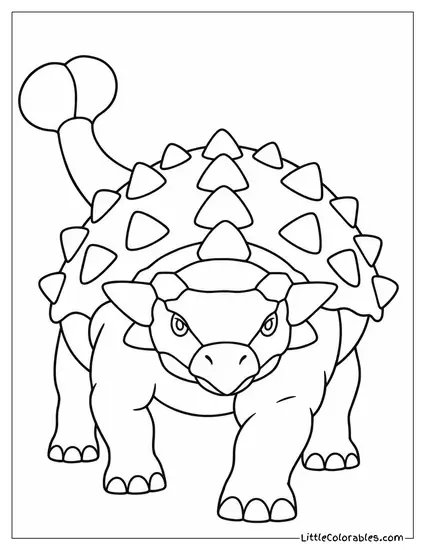
Head-on, the ankylosaurus looks twice as wide, spikes fanning out on both sides and the tail club rising up behind its back. Every bump on the left has a twin on the right. Woodworkers call that bookmatching, slicing a board and opening it like a book so the grain mirrors itself, and this page is bookmatched from snout to tail.
Leo spent a long stretch of a Sunday afternoon on it, matching each spike to its partner before he’d let himself move on. Older kids, detail fans, anyone who wants a challenge… this one’s theirs.
With a Small Bird Sitting on Its Back
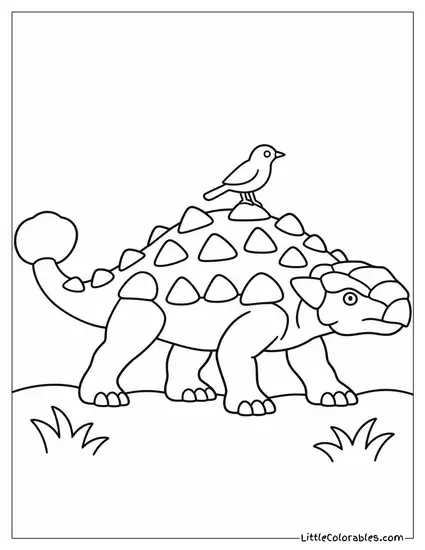
A tiny bird perches right on top of the armor, perfectly calm, while the ankylosaurus walks along underneath. Short grass at its feet, nothing else competing for attention.
Today oxpeckers ride rhinos and buffalo, picking off ticks, and birds did live alongside ankylosaurs. Whether any of them hitched rides, no fossil says. It’s still my favorite coloring page of an ankylosaurus in the set, perhaps because it’s the friendliest.
8 Tips for Coloring an Ankylosaurus
Rusty Back, Pale Belly
In 2011, miners in Alberta dug up Borealopelta, an armored cousin preserved so well that scientists could detect traces of its color. Its back was reddish brown and its belly was lighter, a camouflage trick called countershading.
Try that on the side-view page with a brown colored pencil pressed hard along the spine plates. Ease off as you work down the sides, so the legs and belly end up the palest part.
Give the Plates Their Own Color
Those bumps were osteoderms, bone growing inside the skin with a horny covering on top. The plates and the skin between them really were two different materials.
On the tall grass page, color the skin first in a dull olive. Then switch to a pale bone tan for every plate, and the armor stands right off the body.
Scuff Up the Tail Club
Zuul, an ankylosaur relative from Montana, has a species name that means roughly “destroyer of shins.” A 2022 study found broken, healed spikes on its flanks, most likely from fights with other Zuuls.
On the club-raised walking page, add a few chips and scratches to the club’s rounded knobs with a gray pencil. Leave the handle smooth, because fused bones and stiff tendons held it rigid like a splint on a broken finger.
Mind the Beak
Ankylosaurus had a wide, toothless beak at the tip of its snout and small leaf-shaped teeth farther back. It fed low, probably on ferns and shrubs no taller than about a meter.
On the leafy bushes page, color the snout tip a darker horn brown so it reads as a beak. Make the leaves right in front of its mouth the freshest green on the page, since that’s lunch.
Fossil Brown, Not Bone White
Buried bone soaks up minerals over millions of years, so real fossils are rarely white. Fossils from Montana’s Hell Creek rocks, where ankylosaurus turns up, often come out dark brown.
Color the skeleton page in caramel and chocolate pencils instead of leaving it bare. A few darker patches on the skull and club make it look freshly dug out of the badlands.
Paint the Bird Like an Oxpecker
Red-billed oxpeckers are plain brown on top, with a bright red beak and a yellow ring around each eye. They spend their days riding big grazing animals and eating ticks.
Give the little bird on the ankylosaurus those three colors, and suddenly it has a job. Then ask your kid what the bird is snacking on, and wait for the gross answer.
Go Bold on the Resting Pages
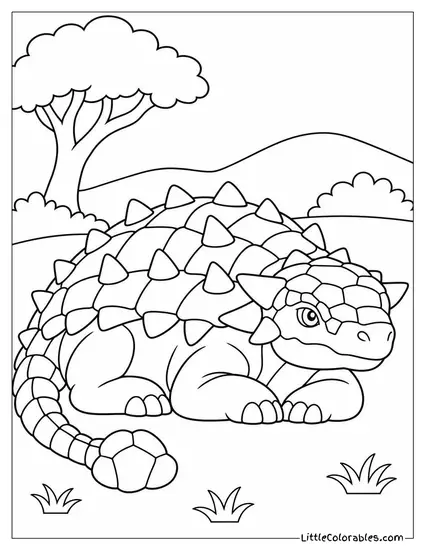
An ankylosaurus had armor almost everywhere except its belly. Lying flat with its legs tucked, it hid the one soft spot it had.
The resting and sleeping pages are the only printable ankylosaurus coloring pages here where almost everything you see is armor, so give the plates your boldest color. Even a T. rex, which lived right alongside it, would have struggled to flip several tonnes of tucked-in dinosaur.
Make the Log a Dawn Redwood
Dawn redwoods grew in the Late Cretaceous, and scientists knew them only as fossils until living trees turned up in China in the 1940s. Honestly, it’s one of my favorite comebacks in all of botany.
On the fallen log page, color the bark a rusty cinnamon brown, the shade dawn redwoods still wear today. The cut end can go a pale pinkish tan, close to freshly sawn redwood.