


There’s a row of shells on my kitchen windowsill, and every one of them still drops a little sand when you pick it up. Nobody can remember which beach gave us the pinkish one. I think it was the trip with the flat tire, but don’t quote me.
These seashell coloring pages started right there, next to a cup of coffee going cold. We drew every spiral, scallop and pearl in-house, from sleepy kawaii shells to a nautilus sliced open so you can count every chamber inside.
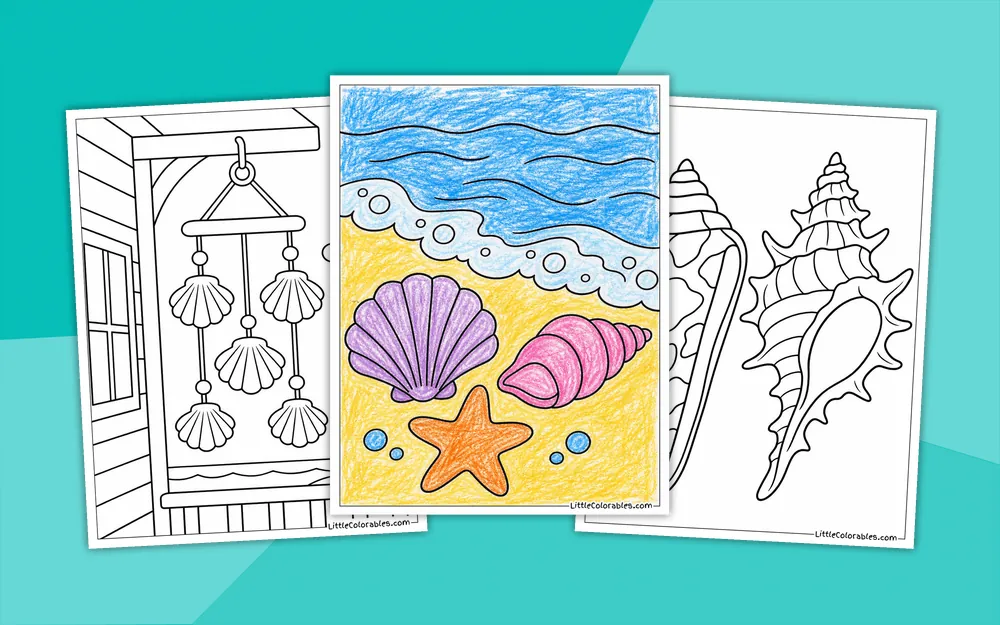 ↓ Scroll to the free printable pages
Some of these are giant shapes made for a fat crayon. Others, the nautilus especially, want a sharpened pencil and a bit of patience.
Scroll through the seashell coloring sheets below and grab whichever ones fit your crew. Every page downloads as a free PDF, so printing takes about as long as finding the stapler.
Featured Seashell Coloring Pages
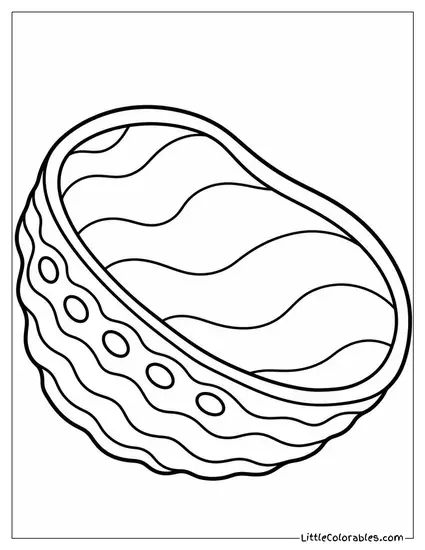
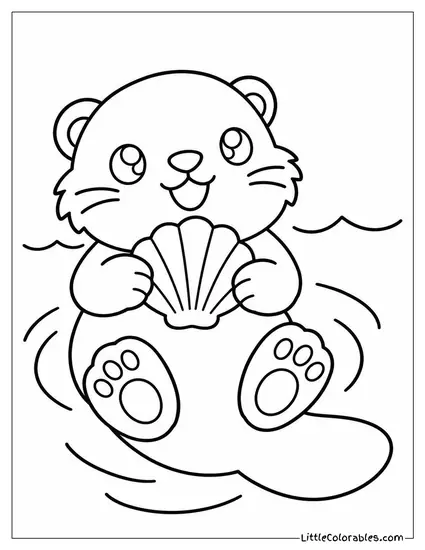
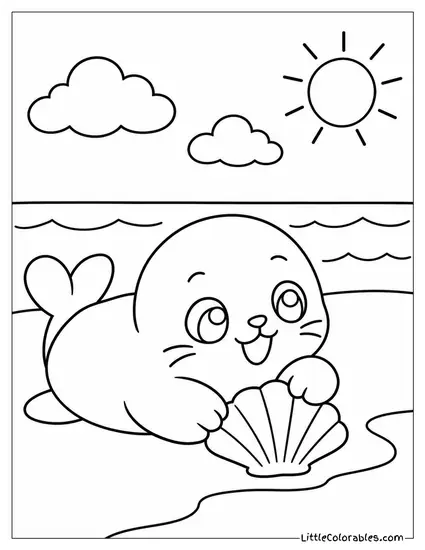
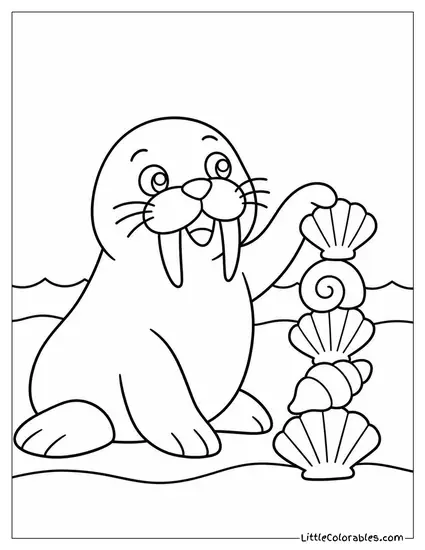
This little seal pup has found the seaside version of a favorite toy, and I think that scallop shell deserves the brightest colors in the box. I’d leave the pup snowy white and go wild with rainbow stripes on the shell. Beach treasures don’t have to follow the rules!
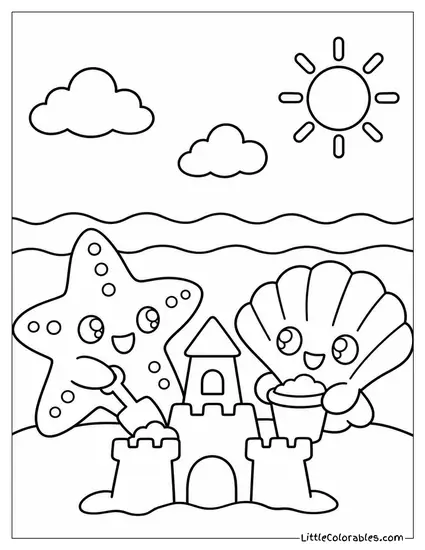
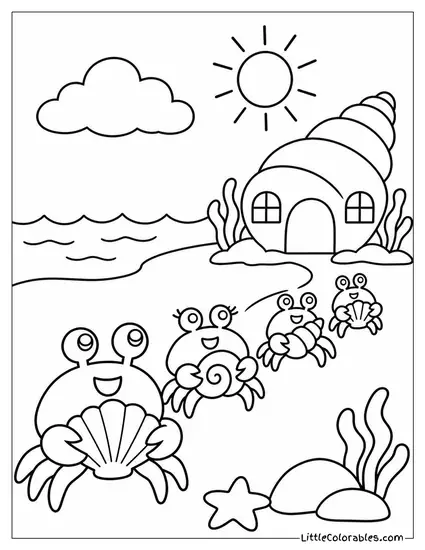
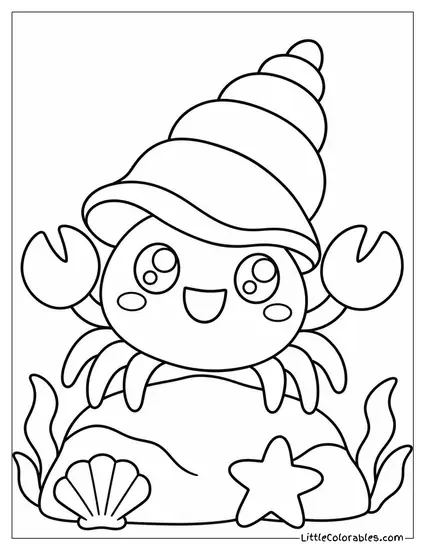
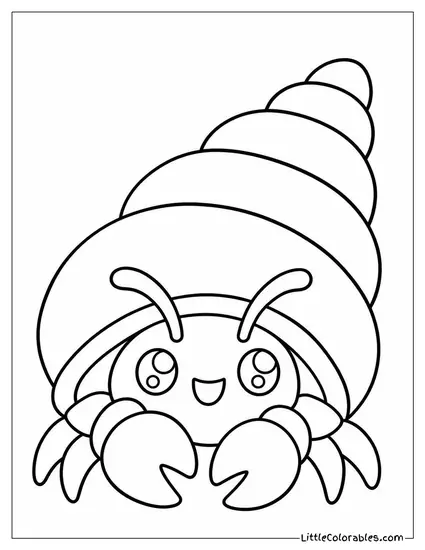
These little crabs carrying their seashells home make me smile. There’s always one family member who insists on bringing every beach treasure along! I’d give each shell a different color, then let the kids decide who’s leading the parade and who’s hoping for a snack.
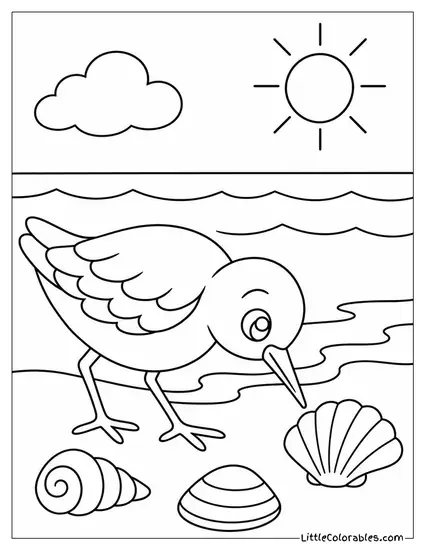
I love how this little sandpiper turns a stroll along the shore into a seashell treasure hunt. I’d give one tiny shell a bright pink swirl. Every beach adventure needs a special find!
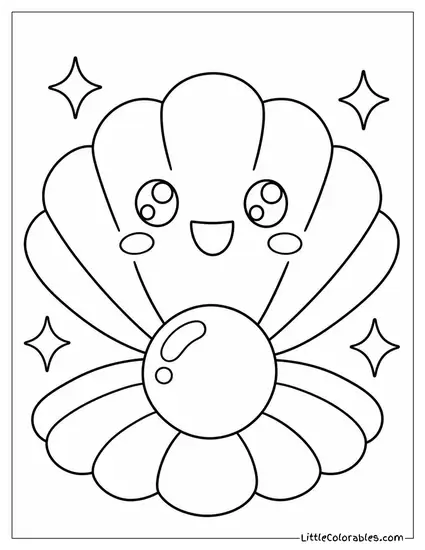
I think this little clam has the sweetest surprise tucked inside. One shiny pearl just waiting for a soft pink or pearly blue glow. I’d leave a tiny spot white on the pearl to make it sparkle, though a rainbow shell would be hard to resist!
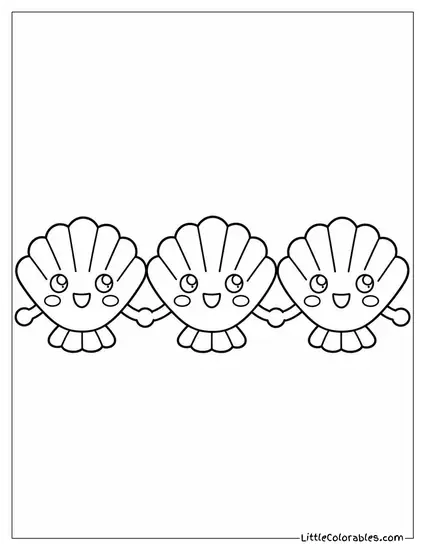
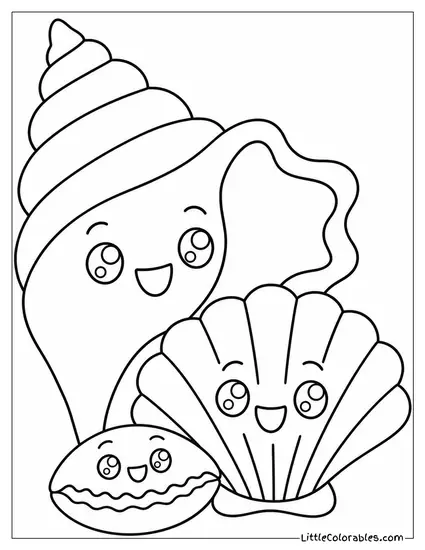
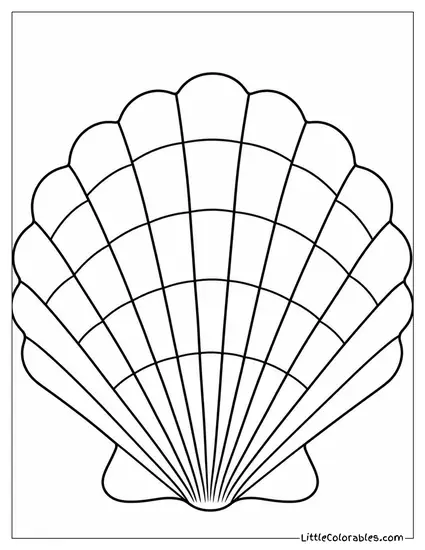
I love how this big scallop shell gives little hands plenty of room to play with color while its detailed ridges invite a bit of careful shading. I’d try peach and pink with a sandy yellow edge, though a rainbow shell would be quite the beach treasure!
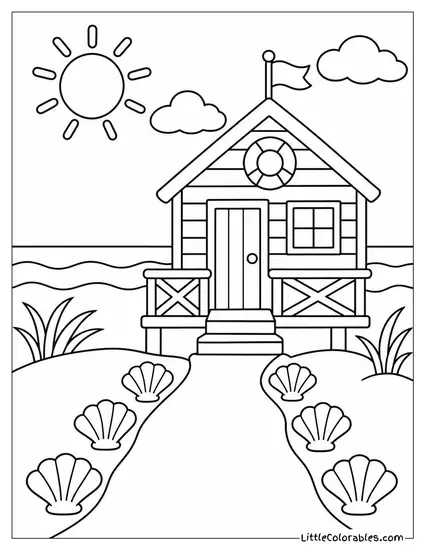
I’d give this little beach hut a sunshine-yellow door and let the seashells along the path be every color in the crayon box. It looks like just the spot to kick off sandy shoes and settle down with a slightly squashed picnic sandwich.
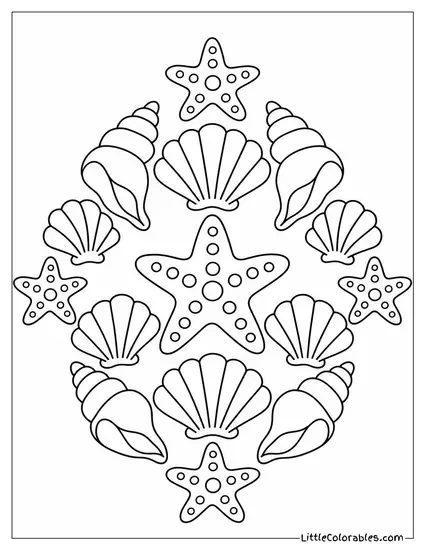
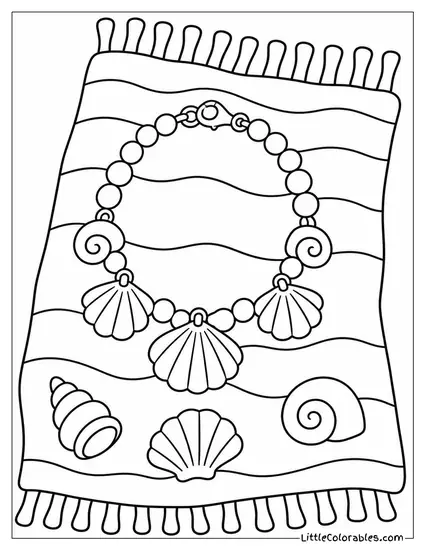
I’d give that ribbon a cheerful coral shade and let the shells and pebbles show off their sandy stripes and speckles. This little jar reminds me of the beach treasures that come home in everyone’s pockets, usually with enough sand to start our own seaside!
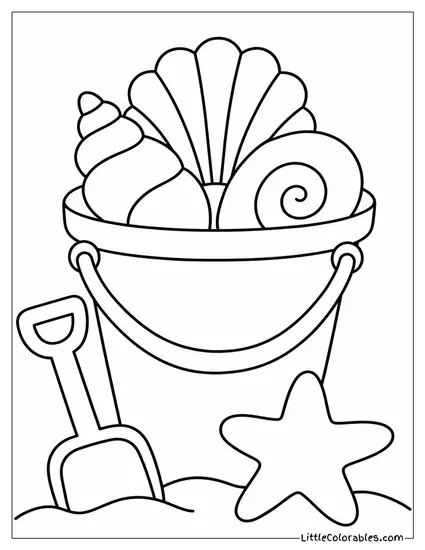
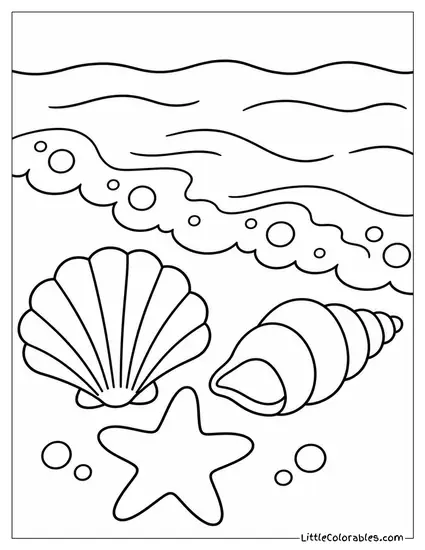
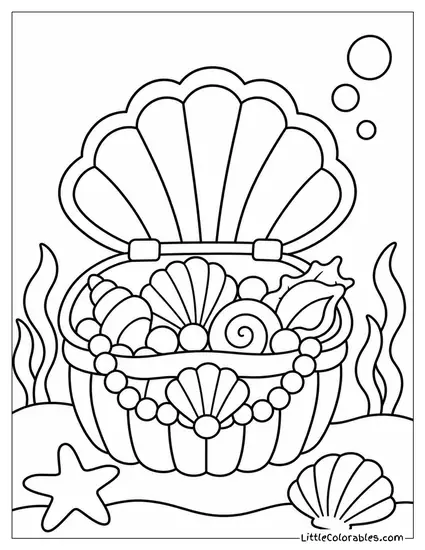
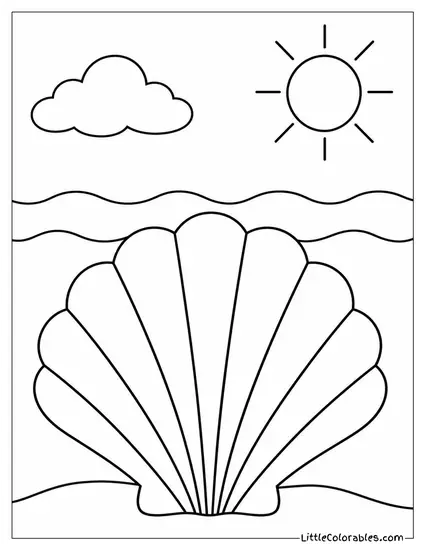
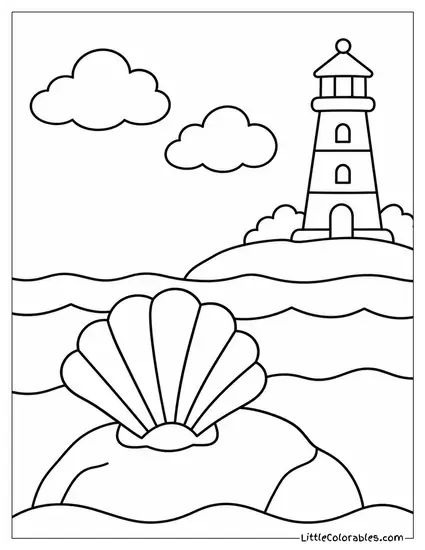
I love how those bold ridges give little hands clear spaces to fill, whether this scallop shell ends up peachy pink or rainbow striped. The sandy beach makes me want to add a few tiny dots around it. Much tidier than the sand that somehow always comes home in our shoes!
Did you love these seashell pages?

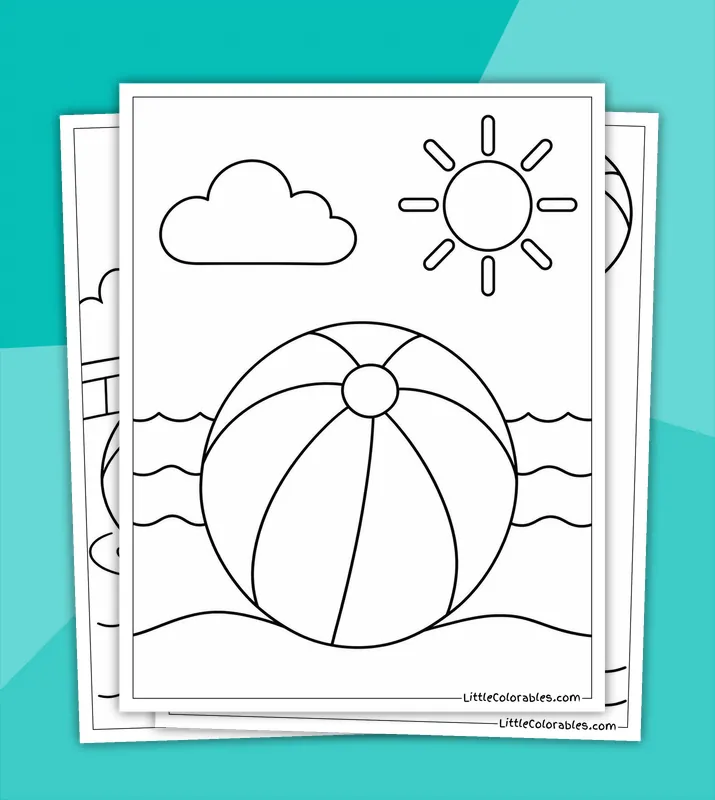
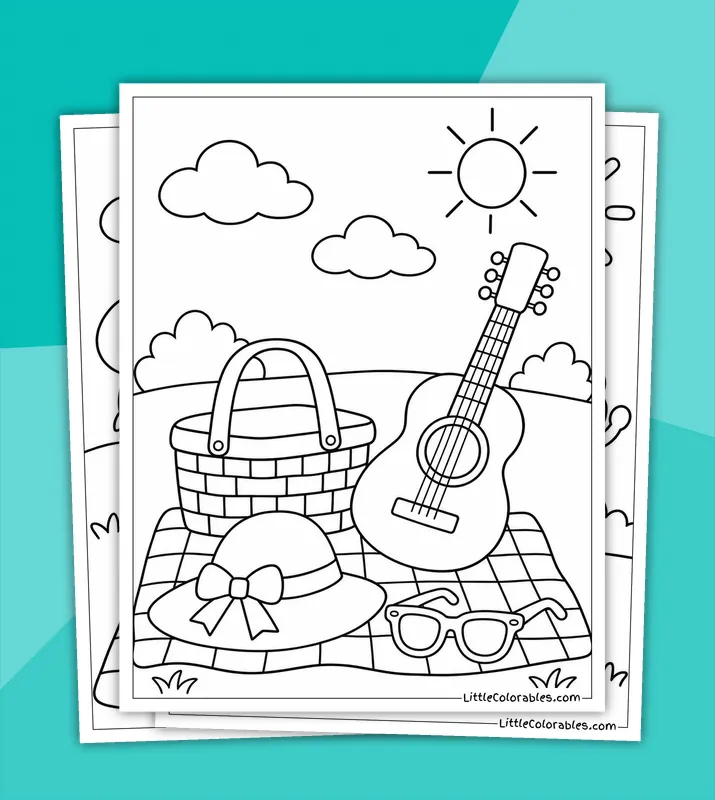
Seashell Coloring Pages Highlights
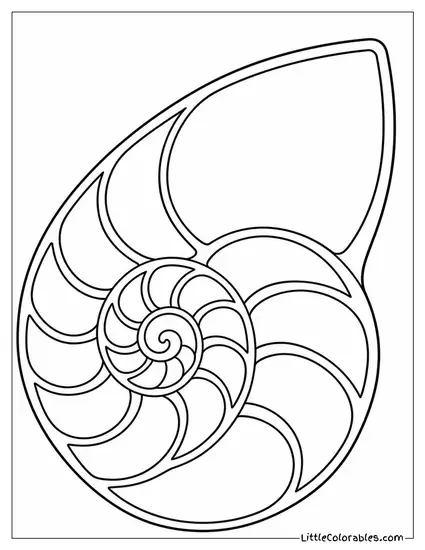
Detailed Nautilus Shell Cut in Half
People type “seashell coloring pages printable” into a search bar expecting a cute clam. Then this shows up. A nautilus sliced right down the middle, every chamber curling smaller and smaller into a tight little spiral at the center.
It’s the most patient page in the set, perhaps the only one where a steady hand really matters. Older kids who love detail can work through the chamber walls one at a time, and it makes a calm sheet for a science corner in the classroom.
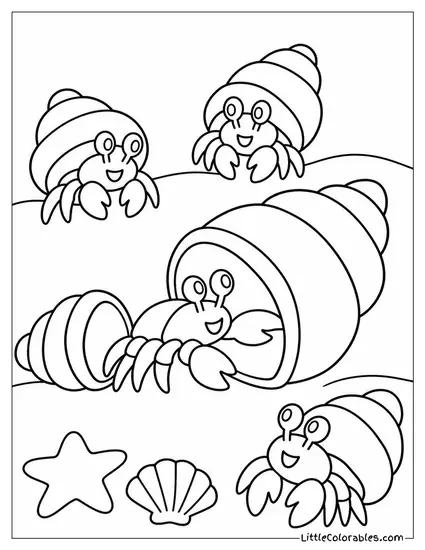
Hermit Crab Moving Into a Bigger Shell
Moving day! One hermit crab is caught mid-scoot between its old shell and a much bigger spiral, claws out. Two neighbors watch from the top of a sandy hill, and a fourth crab peeks in from the bottom corner near some starfish and scallops.
There’s real biology hiding in this one (more on that in the tips). It suits early elementary kids who like a page with characters to keep track of, and it slides right into an ocean unit.
Kawaii Clam Shell With a Shiny Pearl
Big round eyes, a tiny smile and a fat pearl sitting right up front like a prize. The clam’s top shell is the face, and four-point sparkles float all around it.
Thick outlines, very few cramped spaces. Preschoolers can handle it, and it’s a sweet extra for a mermaid or under-the-sea birthday.
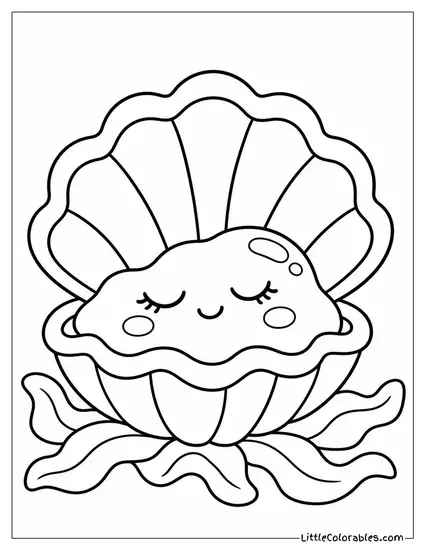
Kawaii Oyster Sleeping on Seaweed
This oyster is out cold. Eyes shut in two soft curves, little marks on its cheeks, tucked into a fluffy bed of seaweed with its top shell propped open like a headboard.
But quiet is good sometimes. It’s a gentle pick for the wind-down before nap time, or for a kid who likes cute over complicated.
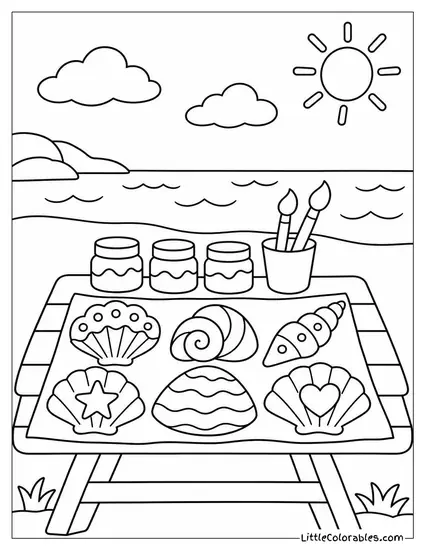
Painted Seashells Drying on a Picnic Table
Picnic table, sea in the background, sun overhead, and a whole spread of shells that somebody already painted. Dots on some, stripes on others… with three paint jars and a cup of brushes waiting at the back.
Of all the seashell color pages here, this one leaves the most room to invent. Each shell is a tiny canvas, so it suits older kids and summer camp craft tables, especially right before a real shell-painting afternoon.
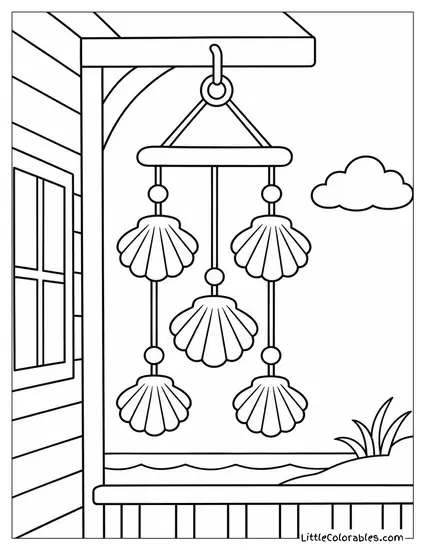
Scallop Shell Wind Chime
Scallop shells dangle on strings from a hook on the edge of a beach house porch. There’s a window on the left, a cloud drifting past and a tuft of grass in the corner.
Can you hear it? Sort of, if you squint. Lots of repeated shapes at a medium level of detail, so it’s good for kids who like settling into a rhythm.
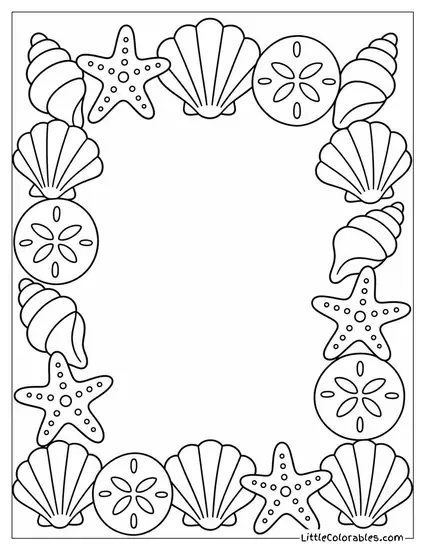
Seashell Frame Border With Sand Dollars
Scallops, conchs, starfish and sand dollars line all four edges, and the whole middle is blank. On purpose.
Teachers, here’s your back-to-school writing prompt. Kids color the border, then write or draw their best beach memory in the space, and it turns into a keepsake worth saving.
Seashells in a Sand Bucket
Heaped with shells, a sand pail sits next to a little shovel and a starfish resting in the sand. Big shapes, almost nothing fiddly.
Toddlers and preschoolers, this one’s yours. Sam insisted the shovel had to match his dump truck, yellow, no discussion.
8 Tips for Coloring Seashells
Give the Nautilus Its Pearly Walls
Only the biggest, outermost chamber of a real nautilus has anyone living in it. The animal seals off each old chamber as it grows, like a family that keeps building a bigger room on the front of the house and bricking up the last one.
So color that outer chamber the warmest, peach or soft orange, and let each inner chamber step down paler toward the center. The walls between are nacre, the same mother-of-pearl you find inside an oyster, and pale pink, lilac and mint layered lightly in pencil get you close… oh, and skip the golden ratio claims online, since measured nautilus spirals don’t actually match it.
Color-Code the Hermit Crab Line
Real hermit crabs do something wild when a big empty shell turns up. They gather nearby, line up roughly by size and swap one after another, each crab taking the shell the bigger one just left, in what biologists call a vacancy chain.
Give each crab a different leg color and match its current shell to it, then leave the big new spiral uncolored for now. Kids can work out who moves next, a bit like forwarding mail when an entire street shifts one house down on the same afternoon.
Line the Clam With Quahog Purple
Quahog clams from the Atlantic coast have a deep purple patch along the inside edge of the shell. Native peoples of the Northeast carved those purple bits into wampum beads, which were valued above the white ones.
On the kawaii clam, run a band of purple pencil just along the inner rim of the lower shell and keep the rest soft tan. Pearls from clams are rare, and the few quahog pearls tend to be purple, so a lilac pearl is honestly more realistic than a white one.
Add Scallop Eyes to the Wind Chime
Scallops have eyes. Lots of them… a bay scallop can have up to around 200 tiny blue eyes lined up along the edge where its shell opens.
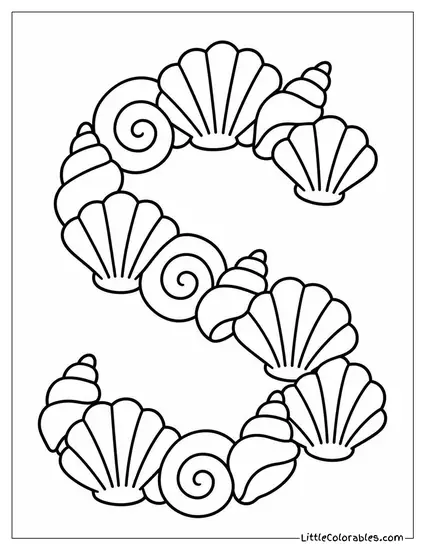
Color each chime shell in crayon first, then press a sharp blue pencil into a row of small dots along its bottom edge. The same trick works on every scallop in these seashells coloring pages, the repeating pattern sheet included.
Paint the Picnic Shells From the Jars Only
Start with the three paint jars on the picnic table, any three colors your kid wants. Those are the only paints that beach painter had, so every dot and stripe on the drying shells has to come from them.
Mixing is allowed, though. Layer two jar colors on top of each other in pencil for a fourth, and watch how a small palette pushes kids toward bolder choices rather than duller ones.
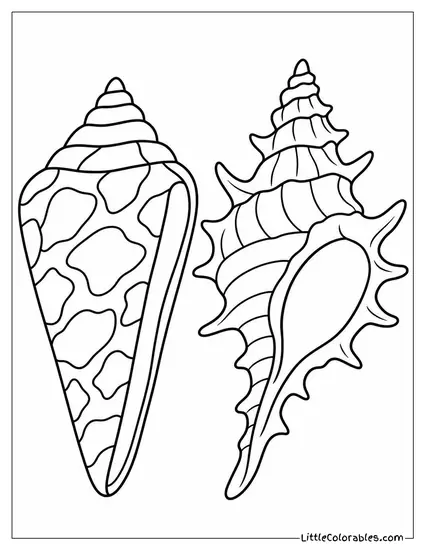
Figure Out Which Whelk You Have
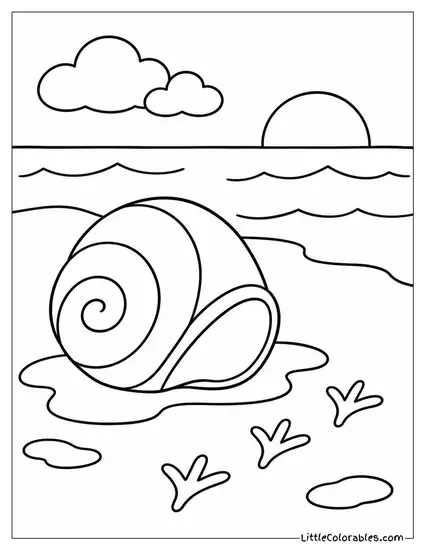
Turn the whelk page so the pointy tip aims up and the opening faces you. Most snail shells open on the right, but the lightning whelk from Florida and the Gulf opens on the left and wears brown or purple zigzag stripes.
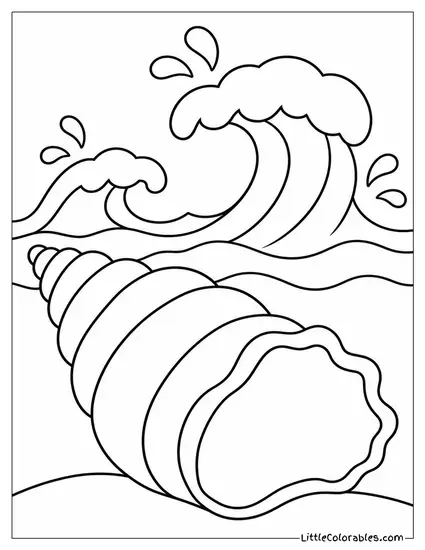
If your drawing opens on the left, go zigzag on cream. Opening on the right makes it a knobbed whelk instead, pale gray-tan outside with a warm orange glow deep in the opening, and the crashing wave behind it should stay cooler so the shell holds the spotlight.
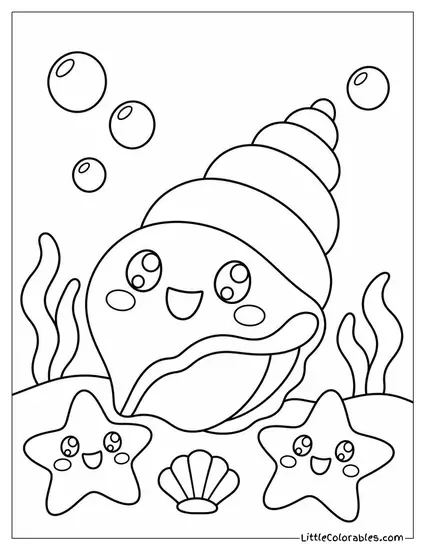
Give the Kawaii Conch a Queen Conch Blush
Most coloring pages of seashells leave the conch one flat color, but a real queen conch from the Caribbean is tan outside and glossy pink inside the opening. That flared pink lip only grows once the conch reaches adulthood, at around three or four years old.
On the happy conch page, keep the spiral tan and bring the pink into the open part around its face, deepest toward the inside. Its two starfish friends can go sunny yellow so they don’t argue with the pink.
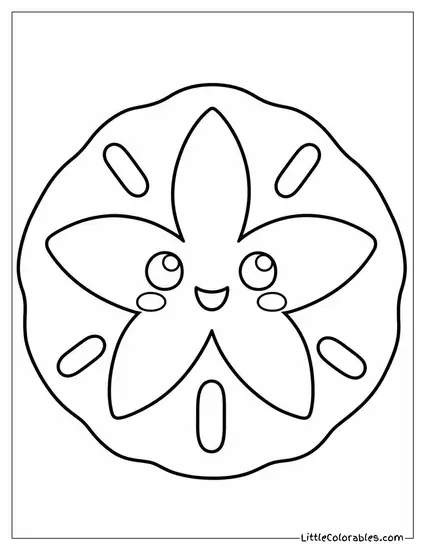
Decide Which Sand Dollars Are Still Alive
White sand dollars from the beach are skeletons, bleached by the sun. Living ones wear a coat of tiny velvety spines and look purple, reddish brown or nearly black.
On the frame page, first decide where the border lives, a dry beach or the sea floor. Beach means creamy white sand dollars with the five-petal flower traced in pale gray, and sea floor means deep purple-brown all over, because live ones hide that flower under their spines.