


Why does a watering can need a neck that long? Took me years of filling ours at the kitchen sink to figure it out… the spout lets you reach the back of a flower bed without stepping on a single seedling.
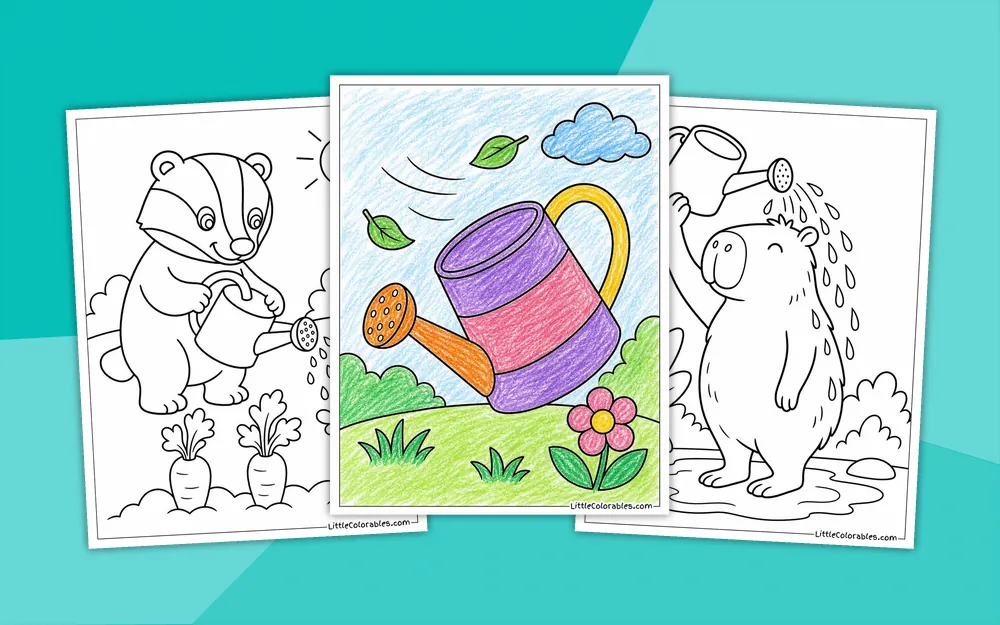
These watering can coloring pages have spouts of every length, plus a moon, a robot and one elephant who skipped the can entirely. Every design was drawn with lines bold enough for preschool fists and enough tiny leaves to slow down the older crowd.
 ↓ Scroll to the free printable pages
Below are all 44 pages, laid out in one grid. Some are quiet, a single can and nothing else, while others tell a tiny story with a raccoon or an otter in the middle of a chore.
All of them are free to print, and each opens as a PDF with a single click. Scroll down, pick the mood that fits today, and print.
Featured Watering Can Coloring Pages
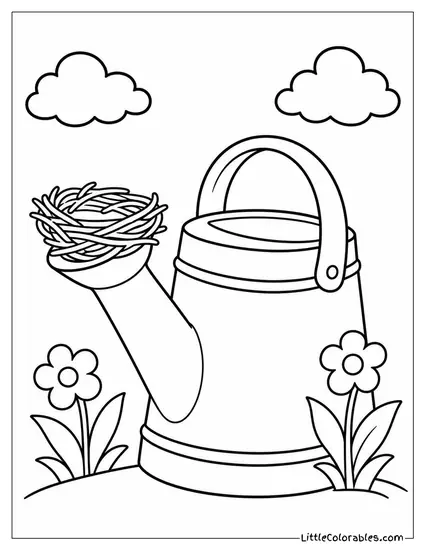
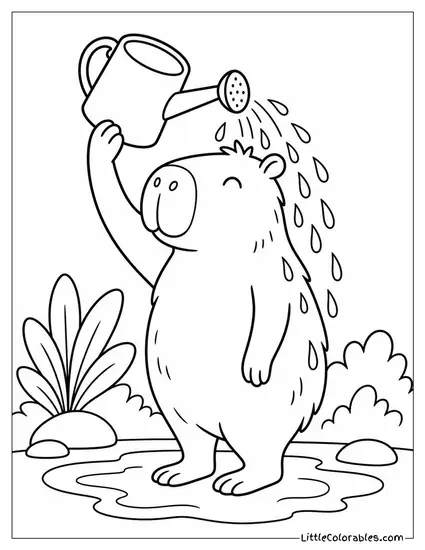
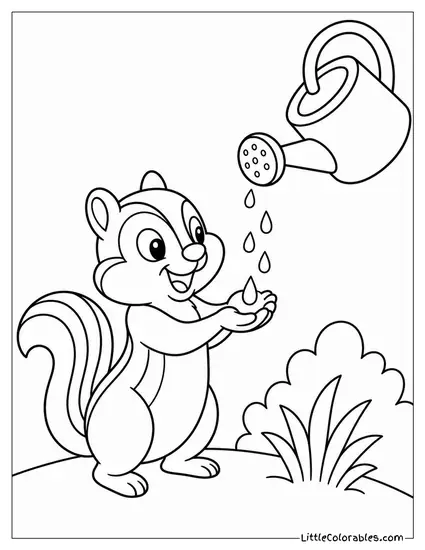
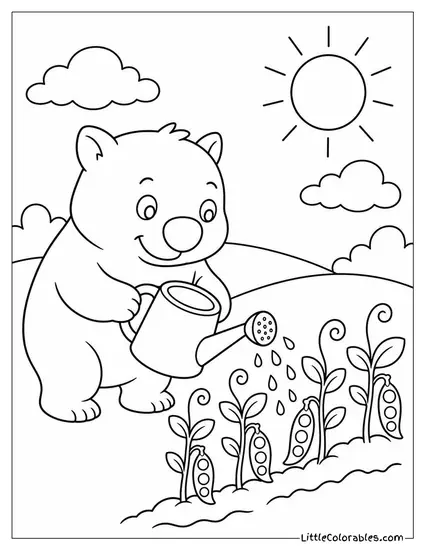
I like to think this little chipmunk was meant to be helping water the garden but got happily sidetracked catching drips instead. I’d leave a few drops white to make them sparkle, though a rainbow watering can would be hard to resist!
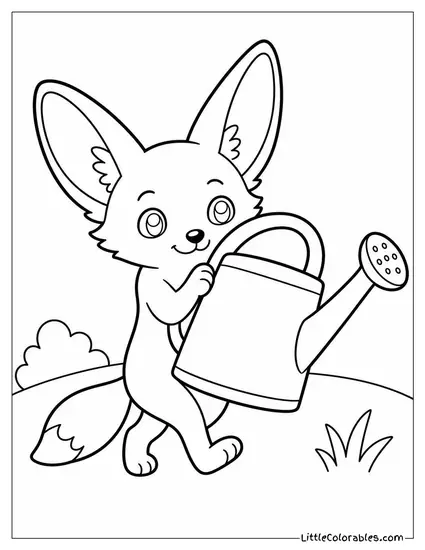
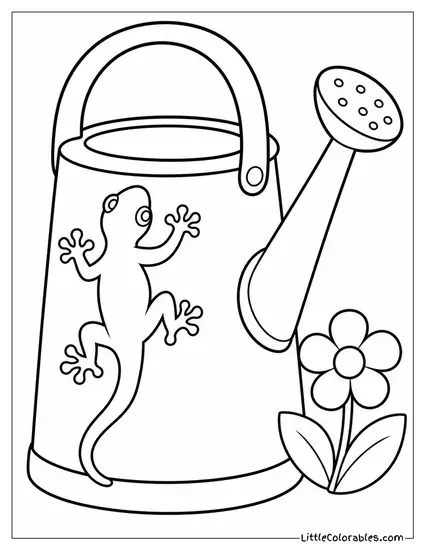
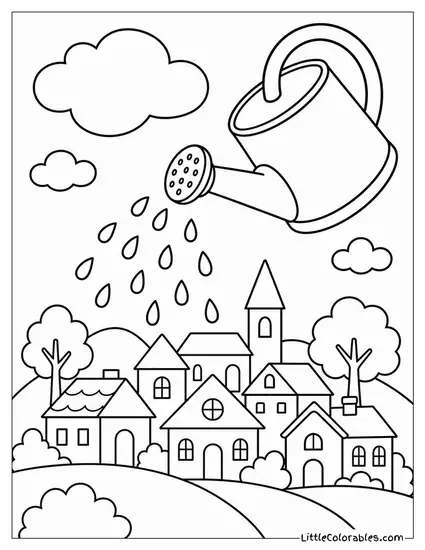
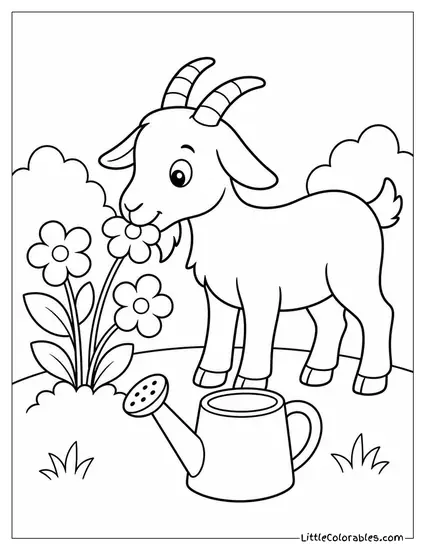
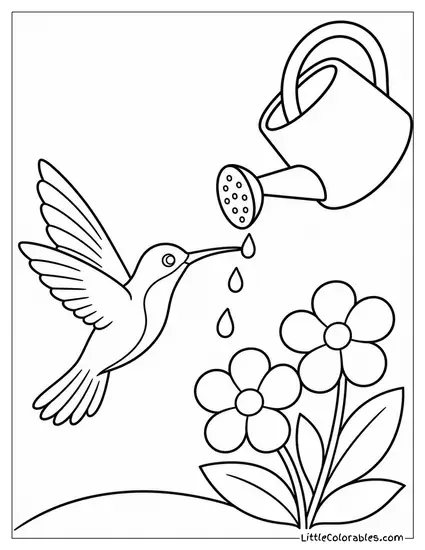
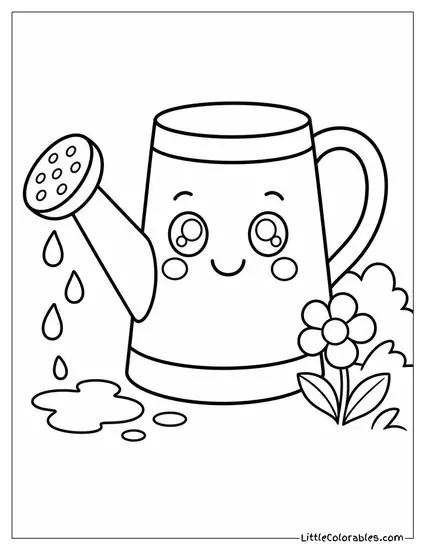
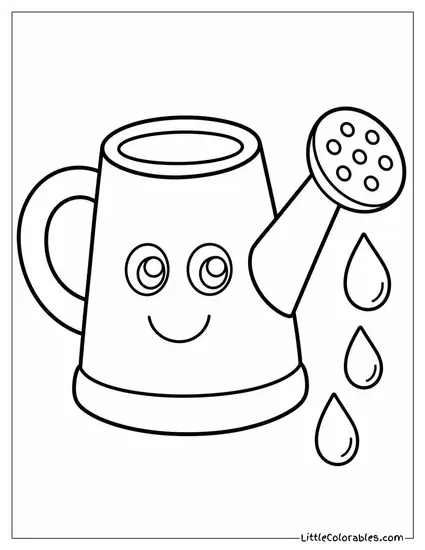
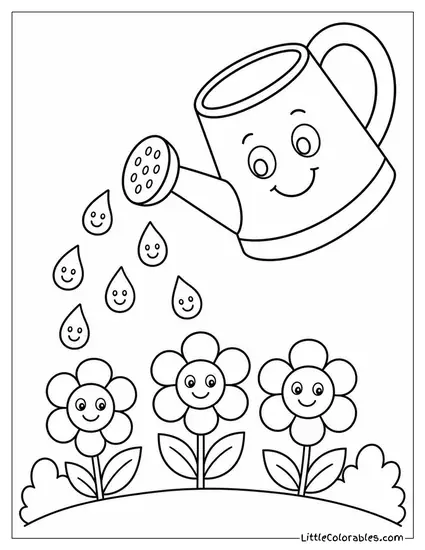
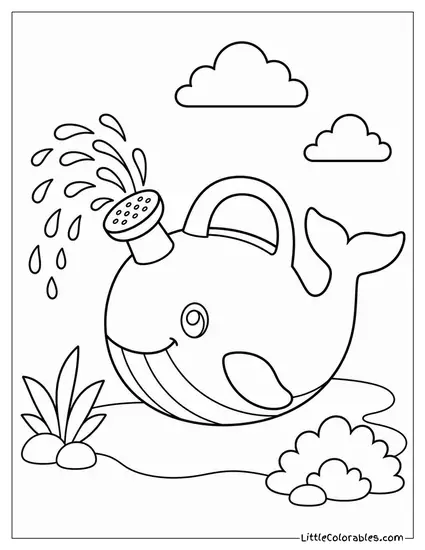
That little smile makes this watering can look so pleased with itself, as if it’s just helped the whole garden grow. I’d go for a sunny yellow can and bright blue drips, though a few rainbow drops would be hard to resist!
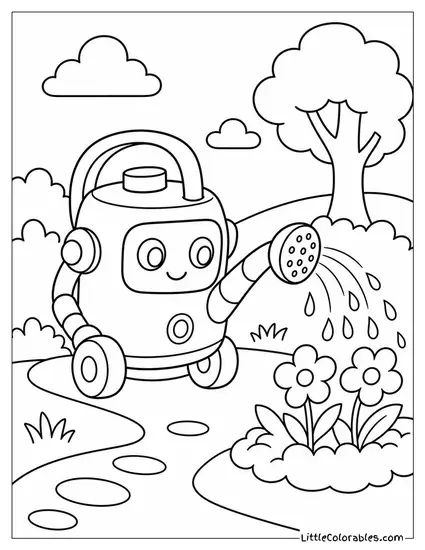
I like to imagine this little watering-can robot rolling along the garden path, making sure even the tiniest daisy gets a drink. A bright yellow body and muddy brown wheels would suit this busy helper, though I suspect the flowers might vote for pink!
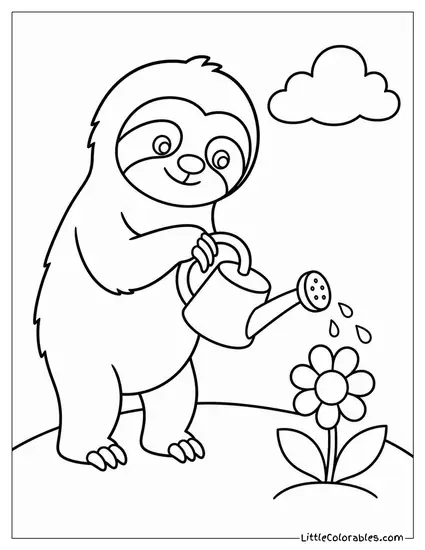
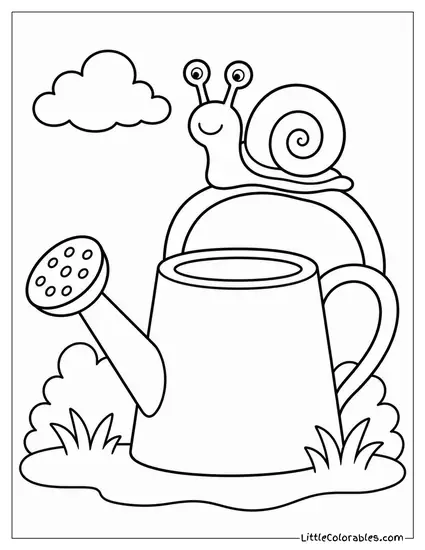
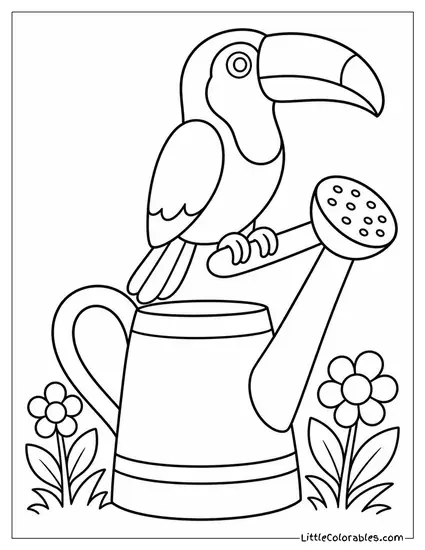
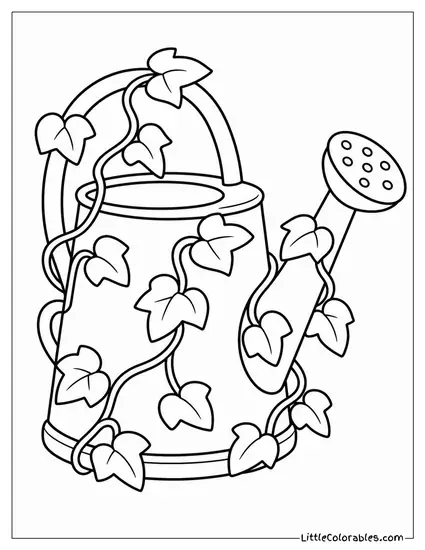
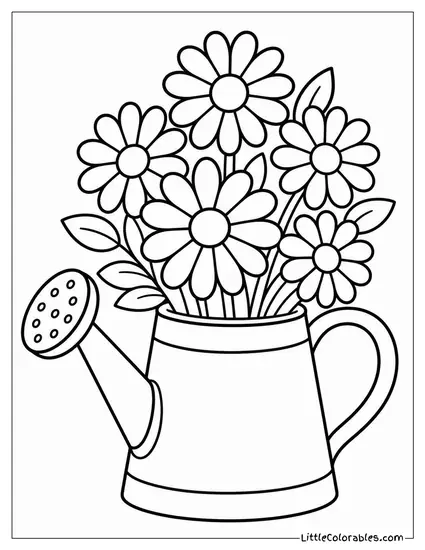
I love how this little watering can has traded its garden chores for a cheerful bunch of daisies. I’d give it bright yellow petals and a polka-dot can, because even garden tools deserve a fancy outfit now and then!
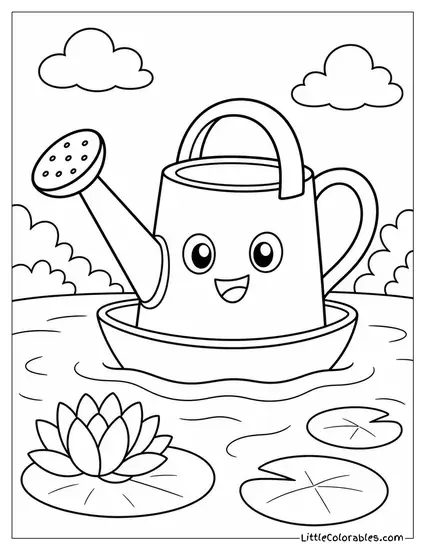
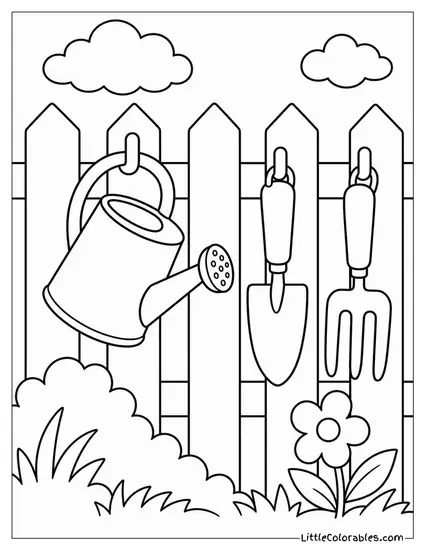
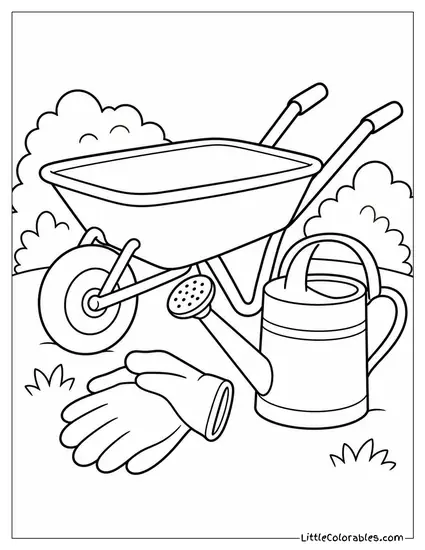
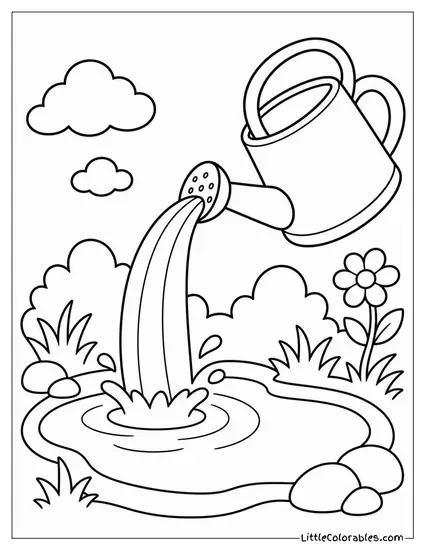
I love how this little watering can gets to make its very own waterfall. Quite a big job for such a small garden helper! I’d try a bright yellow can and a swirl of blues in the tiny pond, though purple water would be perfectly welcome here.
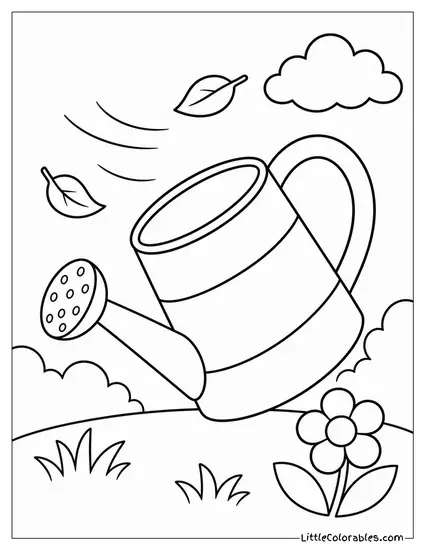
I love how this little watering can seems to wobble in the breeze, as if the garden has given it a playful nudge. I’d reach for a sunny yellow, but a polka-dot can would be awfully sweet too!
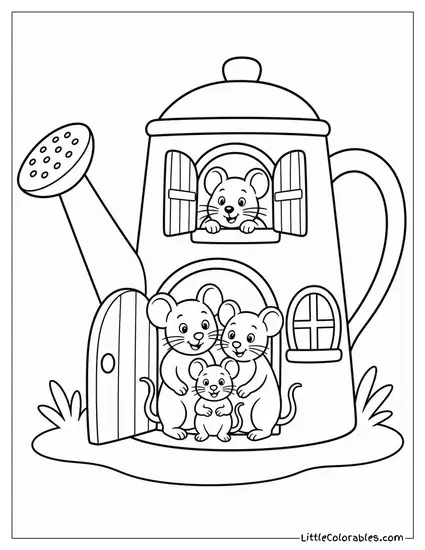
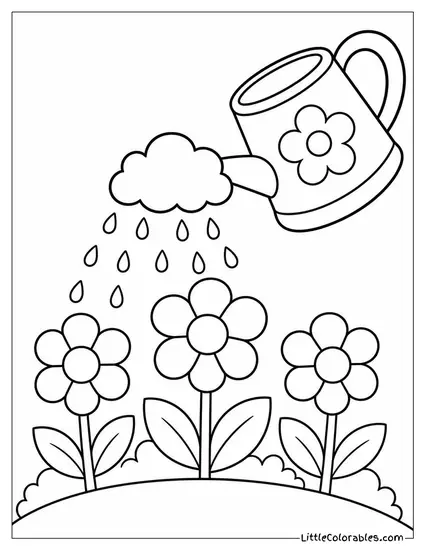
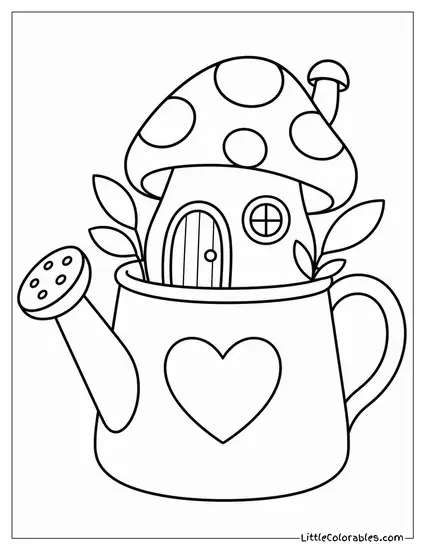
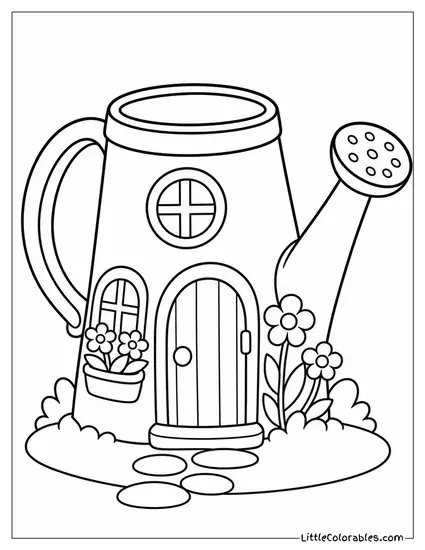
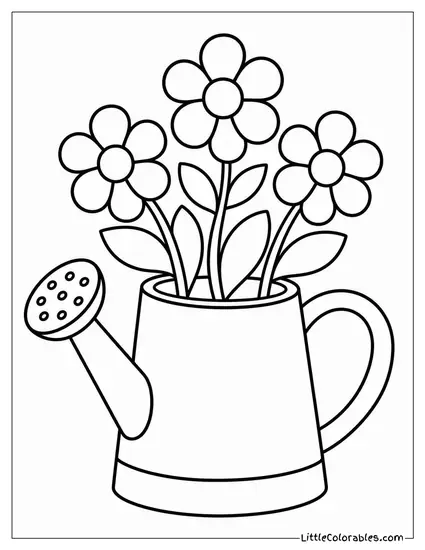
I love how this little watering can has become a flowerpot. It looks like someone in the garden got delightfully mixed up! I’d give the can a bright yellow coat and let the kids dream up the wildest colors for the blooms.
Did you love these watering can pages?
Watering Can Coloring Pages Highlights
Moon-Shaped Watering Can Watering Sleepy Flowers
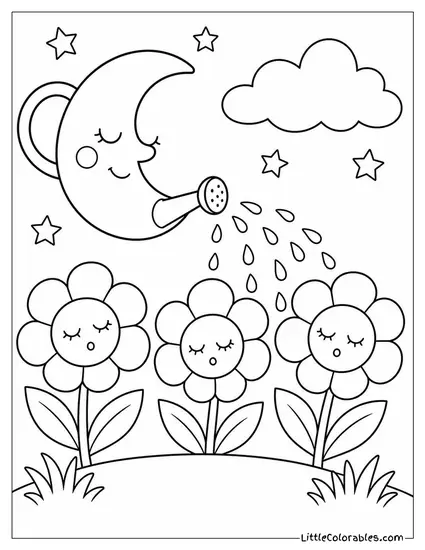
Three sleeping flowers, eyes shut and smiling, get a sprinkle from a crescent moon that has a spout built right into it. Stars and one puffy cloud fill the night sky around them.
My gardening books all warn against watering at night, since leaves that stay wet till morning invite mildew. Clearly the moon skipped that chapter. Toddlers can handle the big flower faces with a marker, and it makes a sweet bedtime page.
Elephant Using Its Trunk as a Watering Can
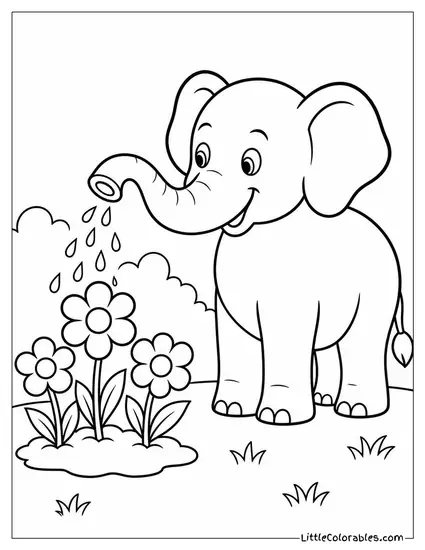
No can on this one at all. The elephant raises its trunk and showers a patch of daisy-like flowers growing from a little mound of dirt, looking very pleased with itself.
Real elephants pull a similar trick on hot days, spraying water over their own backs. With a big floppy ear and a tufted tail, it’s an easy pick for three- and four-year-olds.
Raccoon Washing Its Paws Under a Watering Can
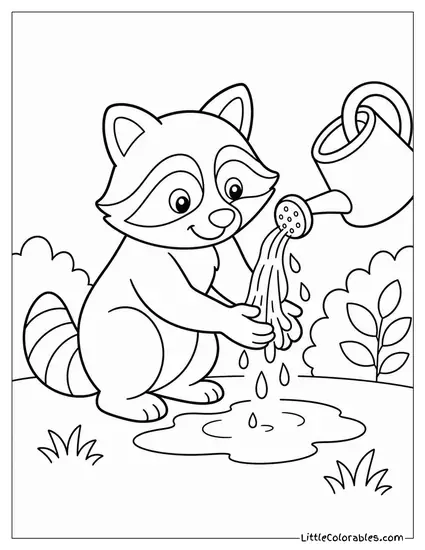
Water pours from a tipped can straight onto a raccoon’s front paws as it scrubs, with a small puddle forming below. Leafy bushes fill the right side of the page.
Anyone who has begged a kindergartner to wash up before dinner will appreciate this. A raccoon who volunteers! Careful work for older kids, too, with that striped tail and mask.
Robot Watering Can Rolling Through the Garden
Picture a watering can that sprouted wheels and a face… that’s the robot here. It rolls down a winding path with a handle on its head and a spout bent like an arm, sprinkling a cluster of flowers.
Sam refuses to call it a robot. Wheels mean truck, in his opinion, so he colored a watering truck and nobody could talk him out of it. Machine-loving kids who shrug at flowers tend to grab this one first.
Watering Can Floating Like a Boat
Here’s a can with a smile, bobbing on a pond like a little boat while ripples circle it. In the corner a water lily blooms on its pad, and clouds drift overhead.
I think this is the calmest picture in the set. It’s the watering can coloring page I’d tuck into a quiet-time basket, right beside the board books.
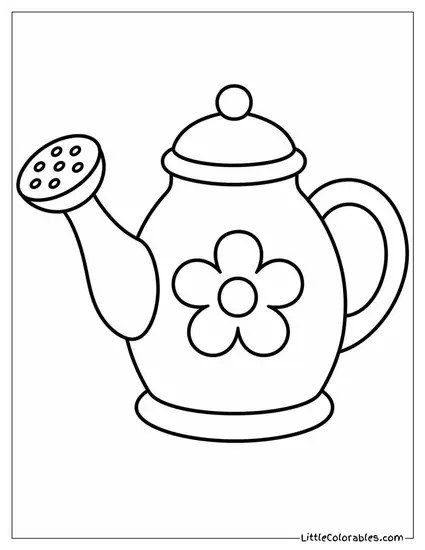
Watering Can Shaped Like a Teapot
Somebody on our team crossed a teapot with a watering can, and now I can’t unsee it. Its lid and round knob come straight from a tea set, but the spout ends in a sprinkler head, and one big five-petal flower decorates the side.
Tea party fans, this is yours. Wide open space around a single object makes it work for toddlers, and older kids can fill that space with their own patterns.
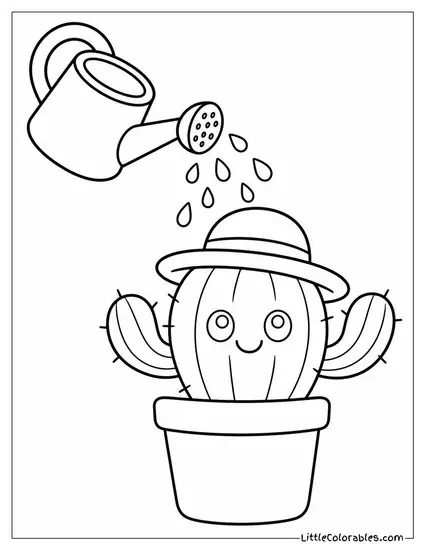
Watering Can Sprinkling a Cactus in a Little Hat
From the top corner, a can sprinkles a smiling cactus planted in a flowerpot. Two stubby arms, a happy face and a tiny brimmed hat with a band . . . what more do you want from a cactus?
Funny thing is, cacti need less water than almost any houseplant, so this can might be overdoing it. Silly-page fans will grin. Desert units in second grade, too.
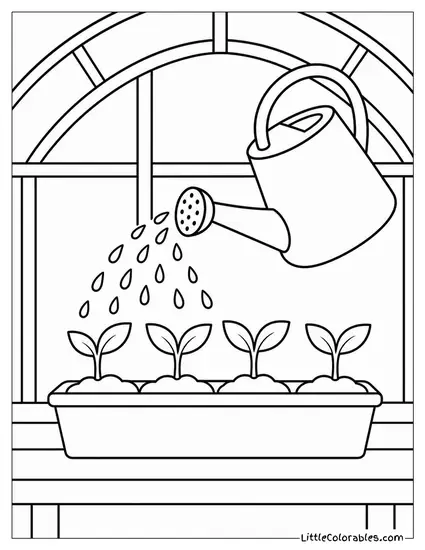
Watering Can Sprinkling Seedlings in a Greenhouse
Arched glass panes frame the whole scene. Under them, a can sprinkles a row of seedlings in a long planter box on a bench, each sprout with just two leaves.
Lots of straight lines and repeating windows on this one, so it rewards patience. Older kids who like precision will be happy, and so will any class growing beans on the windowsill.
8 Tips for Coloring Watering Cans
Glaze the Teapot Can in Delft Blue
Potters in Delft spent the 1600s copying the blue and white porcelain that Dutch ships carried home from China. Leave the teapot can’s body white and color only the flower, lid knob and rim in blue.
One blue pencil handles it, pressed hard on the petals and barely touching the trim. Do the flower first, while the pencil is sharp, then the knob and rim.
Ring the Elephant’s Trunk
An elephant’s trunk can hold about eight liters of water, roughly two gallons, which it squirts into its mouth rather than sipping like a straw. Muscle counts are another story, 40,000 in one book and 150,000 in the next, so pick whichever number you like.
Go over the trunk in medium gray, then press harder along each crease so it looks ringed like corrugated drain pipe on a building site. Spray drops stay almost white, with a speck of pale blue.
Give the Raccoon Grizzled Fur and Dark Paws
Procyon lotor, the raccoon’s scientific name, roughly means washer, but researchers think the dunking is really about touch. Wet paws get extra sensitive, so the raccoon is feeling things more than cleaning them.
Color the body light gray, then flick in short black and tan strokes so it looks grizzled like real raccoon fur. Bare dark skin covers real raccoon paws, so make them the darkest spot on the page, right where the water lands.
Plump Up the Cactus Pleats
Saguaro ribs work like pleats, swelling outward after a rainstorm and shrinking back in dry months. Our cactus is mid-drink, so it should look full.
Press dark green into the grooves and keep the ridges light. Straw tan with a red band suits the tiny hat, if you ask me.
Paint the Robot Like a Tin Toy
Japanese factories turned out wind-up tin robots by the thousands in the 1950s, printed in loud reds, blues and silvers. Same paint job, then, for the robot can on wheels.
Try a red body, a silver-gray handle and yellow wheels. Then draw a few tiny dials on its chest with a fine black pen, like the printed gauges on those old toys.
Empty the Can in the Gentle Breeze
Most coloring pages of a watering can show it standing upright, but this one is tipping over in a gentle breeze. That’s an official term, by the way, force 3 on the Beaufort scale a British naval officer drew up in 1805.
Force 3 means leaves and small twigs in constant motion, nowhere near enough to knock over a full can. So shade the inside of the opening dark gray, skip the water, and color the blowing leaves in a few different greens.
Tip the Sleepy Daisies in Pink
Daisy comes from the Old English for day’s eye, since the flower closes its petals at night and opens them at sunrise. Turns out the snoozing flowers on the moon page are more accurate than they look.
English lawn daisies often have pink tips on their white petals, so drag a pink pencil lightly along each petal end. Keep the faces in the middle buttery yellow.
Hang the Fence Tools on a Shadow Board
Woodworkers keep tools on a shadow board, each one’s outline painted on the wall so a gap tells you instantly what’s missing. This fence page already hangs a can, a trowel and a hand fork in a neat row.
Behind each tool, color a slightly larger dark gray outline on the white pickets, then make the tools bright on top. Afterward, cover one tool with a finger and ask a little one to name what’s gone.