


Plant tag for this batch: hardy perennial, thrives on kitchen tables, blooms in whatever color you hand it, never needs a drop of water. Our team drew every one of these flower pot coloring pages with that tag in mind… and then the pots got a little strange.
A mouse family moved into one, a raccoon climbed into another, and a little elephant is holding a third up on the tip of its trunk. Then there’s the old lace-up boot stuffed with geraniums, which I’d happily put on my own porch.
 ↓ Scroll to the free printable pages
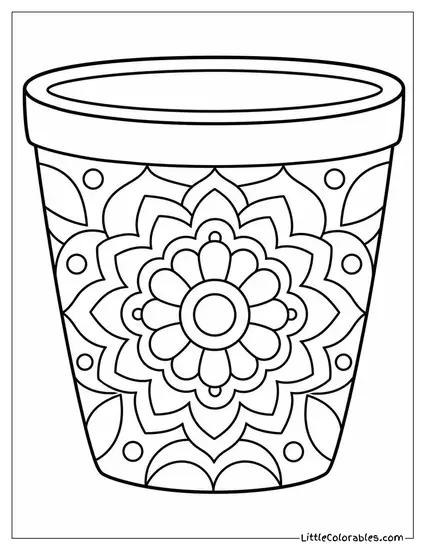
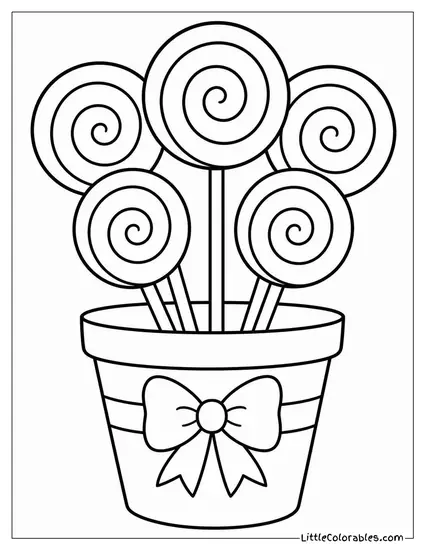
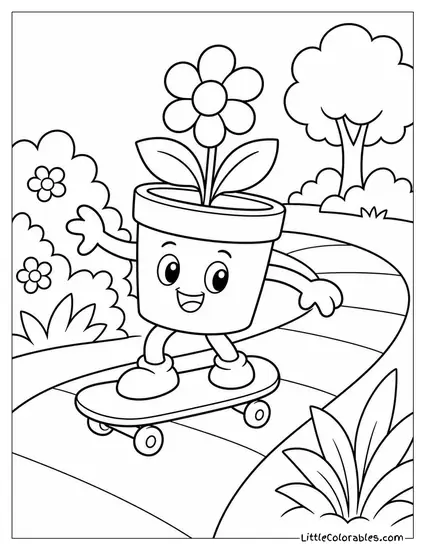
These printable coloring pages of flower pots run from big, open shapes to fiddly little ones. The raccoon’s pot is about as simple as a page gets, while the bonsai and the typewriter keys will keep an older kid busy well past snack time.
Every thumbnail below opens its own PDF. Print whatever your crew grabs first and come back for the rest later.
Featured Flower Pot Coloring Pages
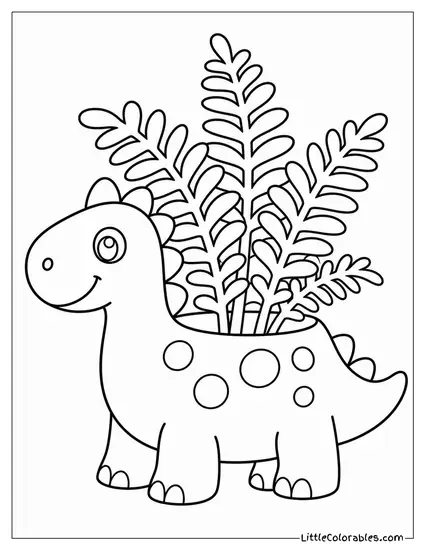
I have a soft spot for this little dinosaur planter with ferns sprouting from its back. It’s like a tiny prehistoric garden for the windowsill. I’d go for a sunny yellow pot and leafy greens, but a purple dinosaur would feel right at home too!
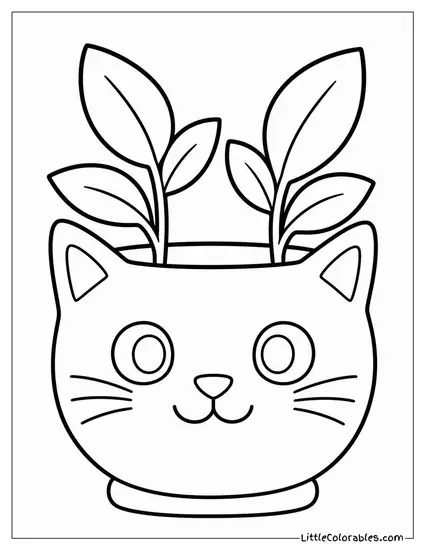
Those leafy ears make this little kitty planter look like it’s listening for rain, and I can’t help smiling at that sweet face. I’d try a ginger pot with bright green leaves, but a purple cat would be just as welcome on my windowsill.
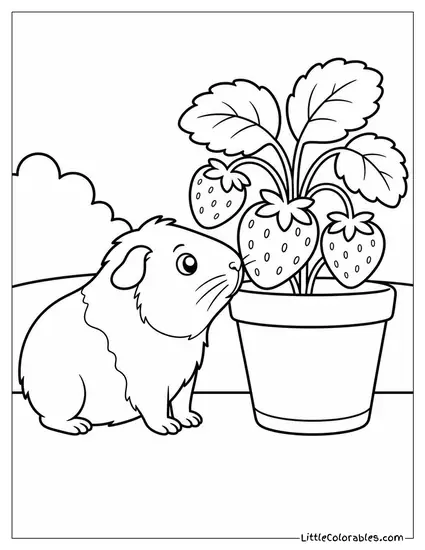
That little nose hovering over the strawberries makes me think someone is hoping for a snack rather than just a sniff! I’d leave a few berries pale pink and make the rest bright red, though a purple guinea pig would be perfectly welcome too.
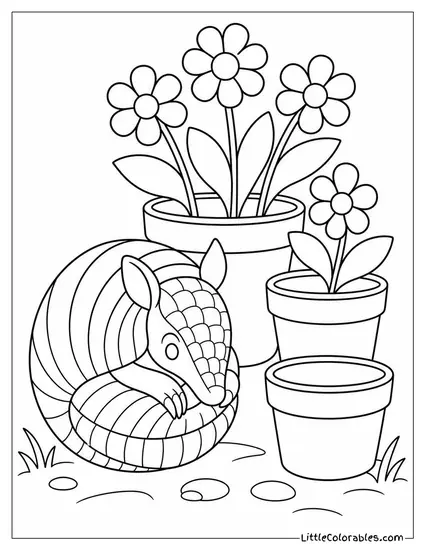
I think this little armadillo has found the coziest napping spot beside those flower pots, though I hope nobody wakes it up with the watering can! I’d give each pot a different cheerful pattern and leave our sleepy friend in soft, earthy shades.
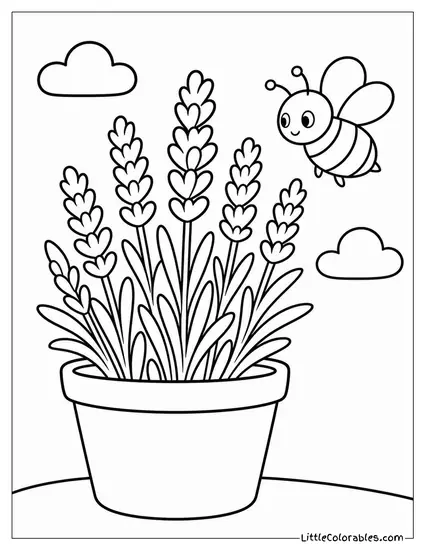
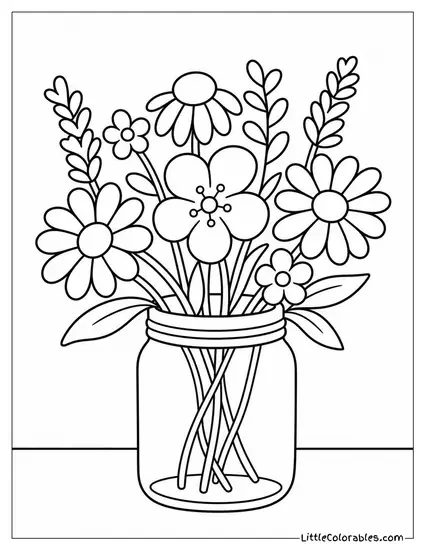
I’d give this lavender a lovely jumble of purples, then save the sunniest yellow for that fuzzy little bumblebee. He looks as though he’s deciding which flower serves the best lunch!
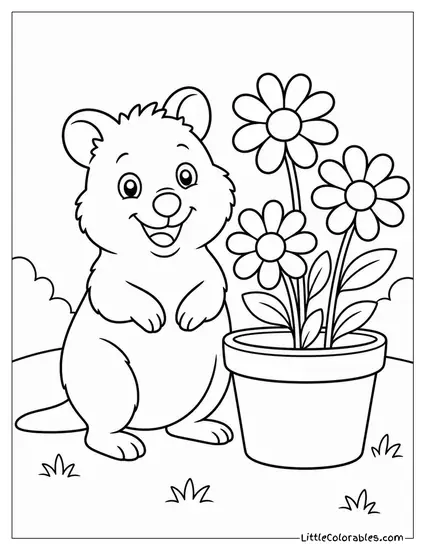
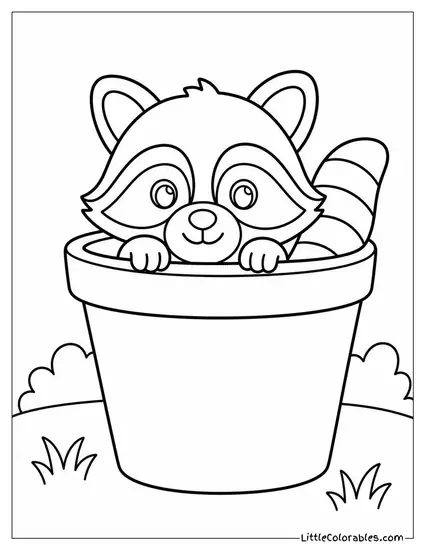
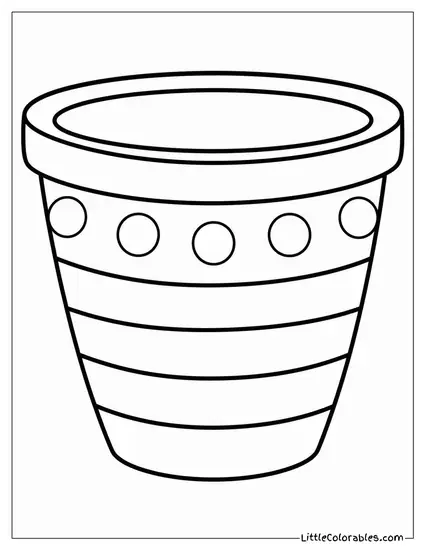
I think this little raccoon has found the perfect hide-and-seek spot, though those peeking eyes might give it away! That big empty pot is just begging for rainbow stripes or polka dots. I’d let the kids turn it into the fanciest hiding place in the garden.
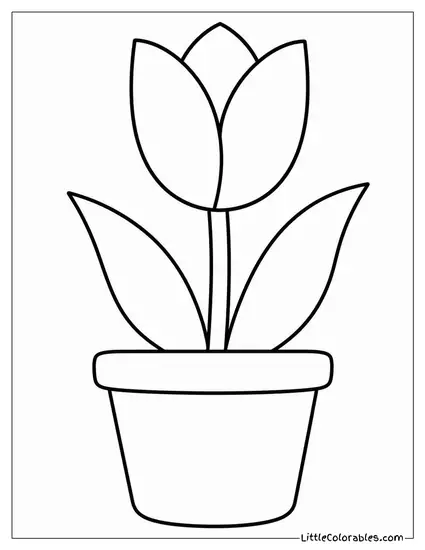
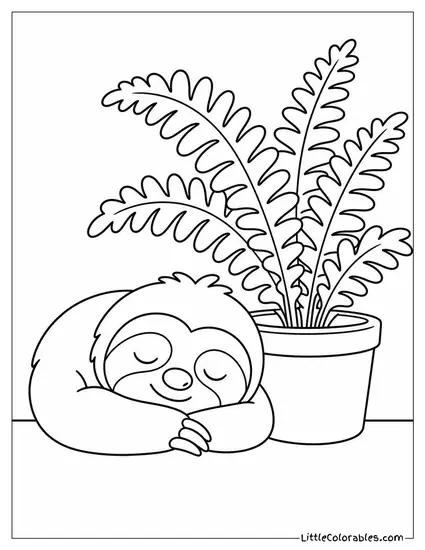
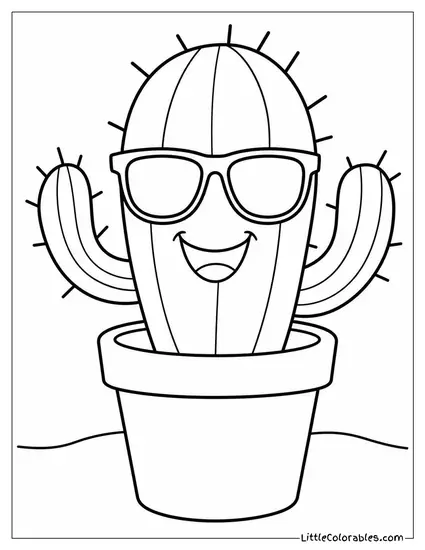
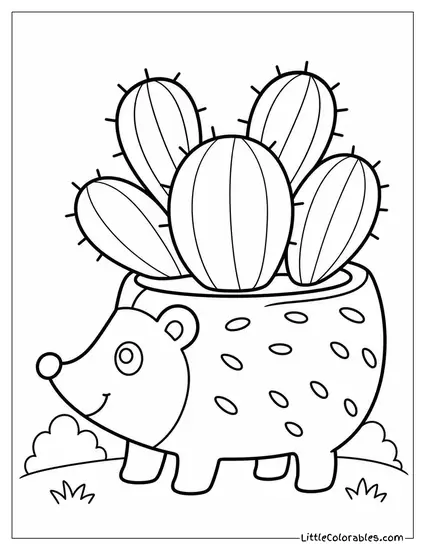
I think this little cactus looks far too pleased with its sunglasses, and I can’t help smiling back. I’d give its pot some cheerful rainbow stripes. If you’re going to look this cool, you might as well go all out!
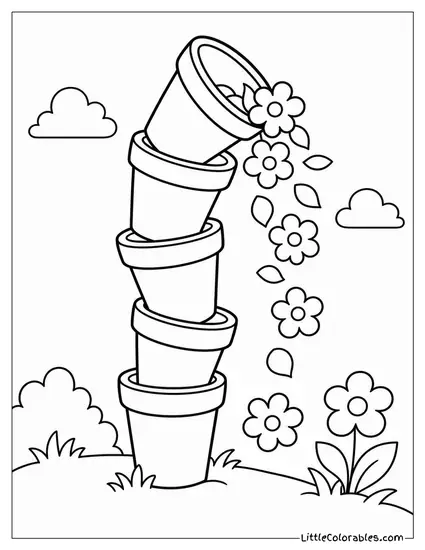
Did you love these flower pot pages?
Flower Pot Coloring Pages Highlights
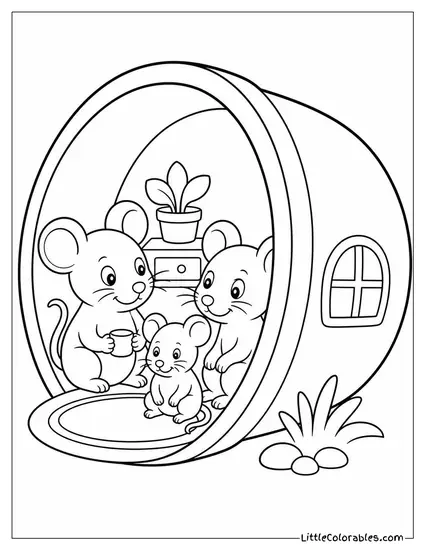
Mouse Family in a Sideways Flower Pot
Tipped on its side, this flower pot has become a house, and the mouse family inside has clearly signed the lease. A little window with crossed panes is cut into the bottom of the pot, and up behind the mice sits a tiny potted plant of their own (a pot inside a pot, which delights me more than it should).
Those mice are small and tucked close together, so sharp pencils and kids around six and up will do best here. Little ones can still grab the big curved wall and leave the family to a sibling.
Elephant Balancing a Flower Pot
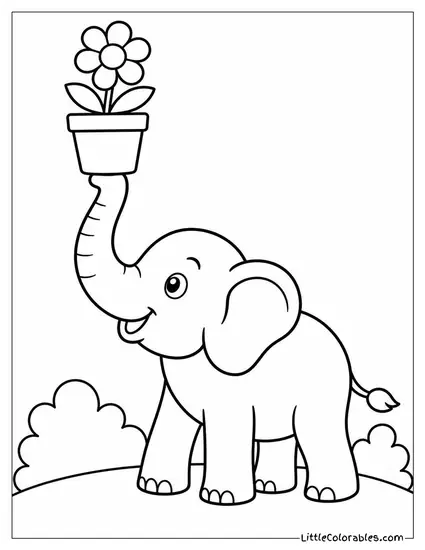
This little elephant has a pot perched on the very tip of its trunk, flower and all, and the grin says it loves the job. Behind it, just a bush and a gentle hill.
Big round ears, a big round body, hardly any tiny bits. Preschoolers won’t find a friendlier coloring page of a flower pot, and the balancing act makes an easy circus-week bulletin board piece.
Old Boot Planter with Geraniums
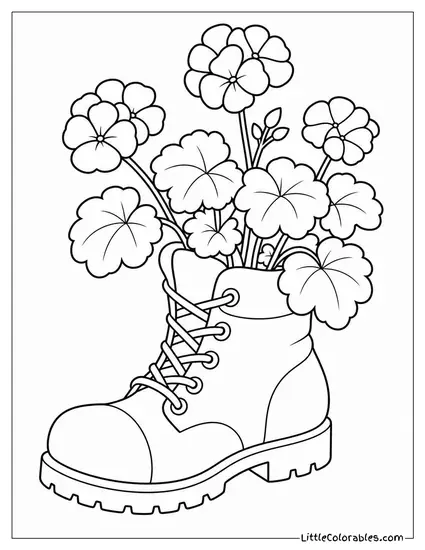
An old lace-up boot has retired from walking and now holds a whole bush of geraniums. Each flower head is a round cluster of small blooms, and the scalloped leaves spill over the top like the boot ran out of room.
I love this one, no qualifiers. Older kids get the laces to weave in and out of every eyelet, which takes more patience than you’d expect.
Old Typewriter with Flowers
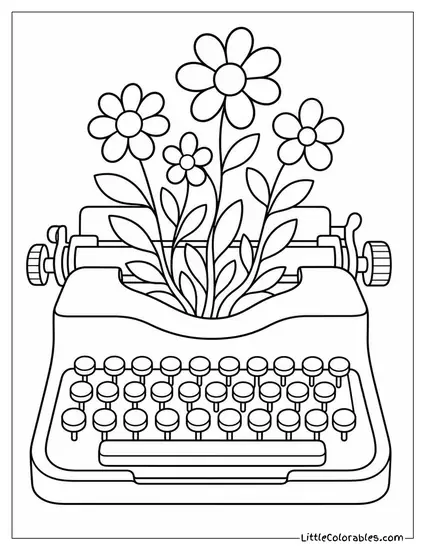
Somewhere along the way, this typewriter quit typing and took up gardening. Stems and leaves rise out of the top of the machine, right behind the keyboard, and the keys sit below in tidy rows of little circles.
All those circles are the draw. Hand this page to the kid who fills one tiny shape at a time and gets cross when anyone rushes them.
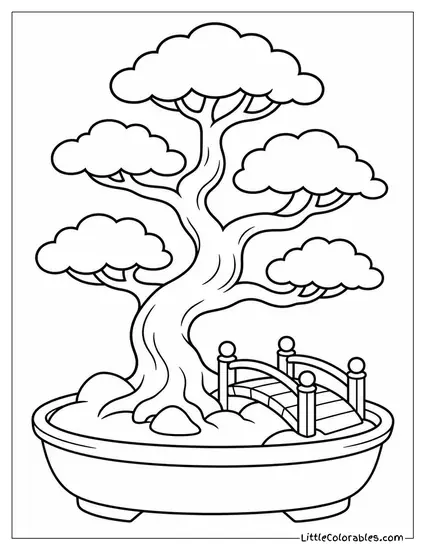
Potted Bonsai Tree with a Tiny Wooden Bridge
Out of a shallow tray of a pot grows a twisty little bonsai, its leaves clipped into puffy clouds. At its base, a wooden footbridge with tiny railing posts arches beside a few small stones, small enough that an ant would cross it in two steps.
Slow page. Teens and grown-ups at the table tend to drift toward it, and the calm, curvy lines suit a quiet classroom corner after recess.
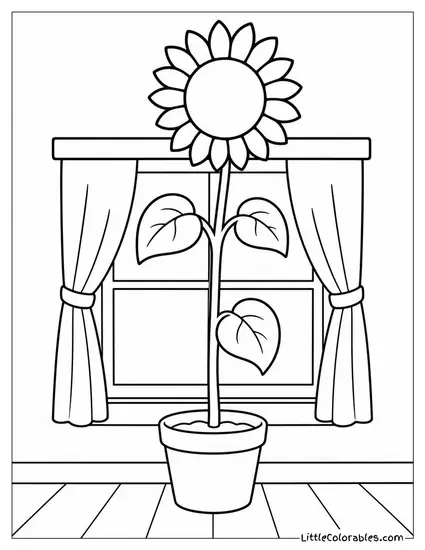
Potted Sunflower Taller Than the Window
One sunflower, one pot, and it has outgrown the window behind it. Its head pokes up past the top of the frame, with curtains hanging on both sides as though they’ve stopped trying to keep up.
If you want a flower in a pot coloring page with a bit of drama, here it is. Huge leaves and petals for small hands, window panes for bigger kids, and a natural fit for a spring plant-growth unit.
Raccoon Peeking Out of an Empty Flower Pot
No flowers in this pot, just a raccoon with both paws hooked over the rim and a striped tail poking up behind. That grin is up to something.
Lily decided an empty pot was simply wrong, so she scribbled a giant yellow marker flower right on top of the raccoon’s head and called it fixed. Such a huge, plain pot makes an easy win for toddlers and their chunkiest markers.
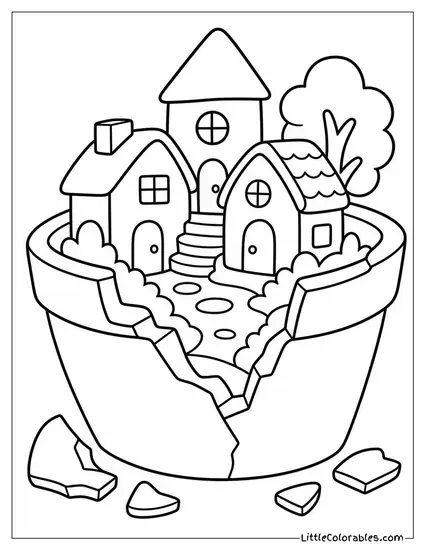
Giant Flower Pot with a Tiny Cottage
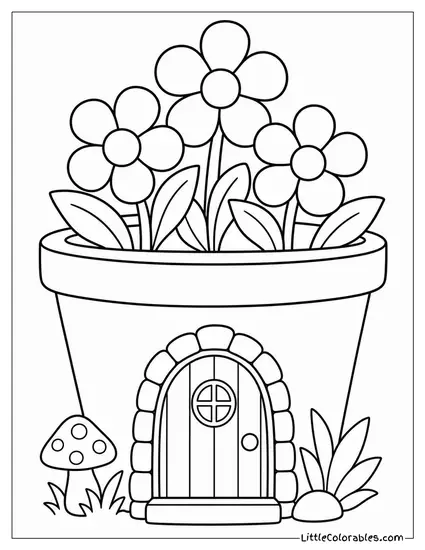
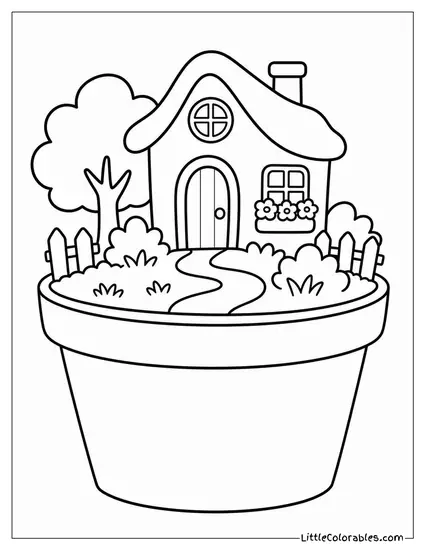
Somebody planted a house. Up on top of a giant pot sits a cottage with an arched door, a round attic window and a flower box, and a winding path leads right up to the door.
Fairy garden fans will spot what’s going on right away. It’s a good middle-ground page too… fence posts and window panes for patient hands, and one big plain pot for anyone who wants to fill something fast.
8 Tips for Coloring Flower Pots
Pick the Clay Before the Crayon
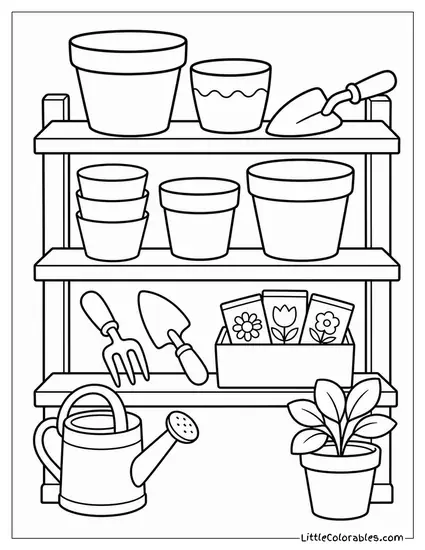
Terracotta gets its orange from iron in the clay, and clay with very little iron comes out of the kiln a pale buff or cream instead. Which means the gardening shelf, probably the busiest of these free flower pot coloring pages, doesn’t need one orange from top to bottom.
Decide which pots came from iron-rich clay (rusty orange) and which from pale clay (sandy beige), then reuse those two crayons on the armadillo’s cluster of pots. Save the louder colors for the trowels, the watering can and the seed packets so the clay stays calm.
Find the Horseshoe on the Geranium Leaves
Botanists will tell you the geraniums in that old boot aren’t geraniums at all. They’re pelargoniums, lumped in with true geraniums when Linnaeus sorted plants in 1753, and the old name stuck the way everyone keeps saying the brand name on a pharmacy bottle when the generic is what’s inside.
Most garden-center geraniums are the zonal kind, with a darker horseshoe-shaped band on each round leaf, so press a deeper green in a curved stripe partway in from the scalloped edge. Keep each flower cluster to one bold shade (scarlet, salmon, hot pink) and let the boot fade into a tired brown.
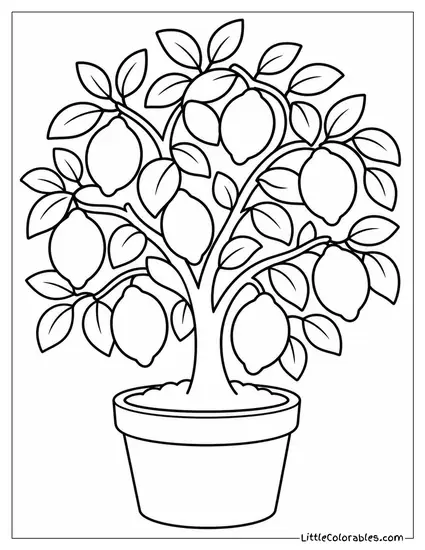
Stripe a Few Lemons
Look closely and the lemons on the potted tree have a little pointed nub at one end, the shape of the Eureka lemons sold in most supermarkets. Meyer lemons, which plant explorer Frank Meyer brought to the US from China in 1908, are rounder and a warmer, almost orange yellow.
Then there’s the oddball, a variegated pink Eureka whose young lemons come striped green and yellow, with pink flesh inside and leaves edged in cream. Pick two or three lemons, run thin green stripes from stem to nub, and leave a pale rim around a few leaves so the whole tree looks like that one.
Leave a Strip of Bonsai Deadwood
Bonsai artists sometimes peel the bark off a narrow strip of trunk on purpose and paint the bare wood with lime sulfur until it bleaches bone white. Growers call it shari, and on an old juniper it’s the first thing your eye goes to.
Pick one of the twisting bands on this trunk, leave it pale silver gray, and color the rest a warm bark brown. For the shallow pot, go with an earthy brown or slate gray, which is what bonsai growers traditionally pair with evergreens, and save glazed blues and creams for flowering trees.
The Sunflower Is Facing the Wrong Way
Young sunflowers swing from east to west following the sun, but once the big head opens, most of them settle down facing east for good. Ours has turned its back on the window and faces the room instead, like a kid in a school photo told to look at the camera, never mind where the light is.
Split the center into two zones, pale olive green in the very middle where the tiny florets haven’t opened yet, then deep chocolate brown around the outside. Press a little orange into the base of each petal, right next to that brown, and the yellow looks warmer than yellow alone ever manages.
Skip the Gray on the Elephant
Elephants throw dirt over their backs to block sun and bugs, so real ones often end up the color of their local soil instead of storybook gray. Herds in Kenya’s Tsavo parks are famous for looking brick red, thanks to the red earth they roll in.
Just once, color this little one a dusty reddish brown instead. Balanced on its trunk, the pot needs a glossy cobalt glaze, or it will vanish against an elephant that’s practically terracotta itself.
Pick a Real Coat for the Guinea Pig
Guinea pigs aren’t pigs, and they aren’t from Guinea. Their real home is the Andes in South America, and people have argued over where the name came from for a few hundred years without much luck.
Like us, they can’t make their own vitamin C, so the strawberries this one is sniffing would be a genuine treat (a small one). Color the markings on its fur pale ginger or chocolate, keep the rest of the coat white, and save your reddest red for the berries.
Letter the Typewriter Keys
QWERTY came from Christopher Latham Sholes’ typewriters in the 1870s, and the popular story says the letters were scrambled to slow typists down so the metal arms wouldn’t jam. Historians aren’t convinced, and perhaps nobody will ever fully pin down why the keys landed where they did.
Have older kids letter the top row of round keys Q, W, E, R, T, Y in fine black pen, then pick a body shade from the 1950s portables (seafoam green, coral, pale turquoise). Go loud on the flowers, because a soft seafoam machine with hot pink blooms is, I think, the most stylish of all the flower pot coloring sheets.