


My kids dragged around 3.5 pounds of wet mud into the hallway yesterday afternoon. I think they were trying to track a neighborhood dog they randomly decided was a wild timber wolf.
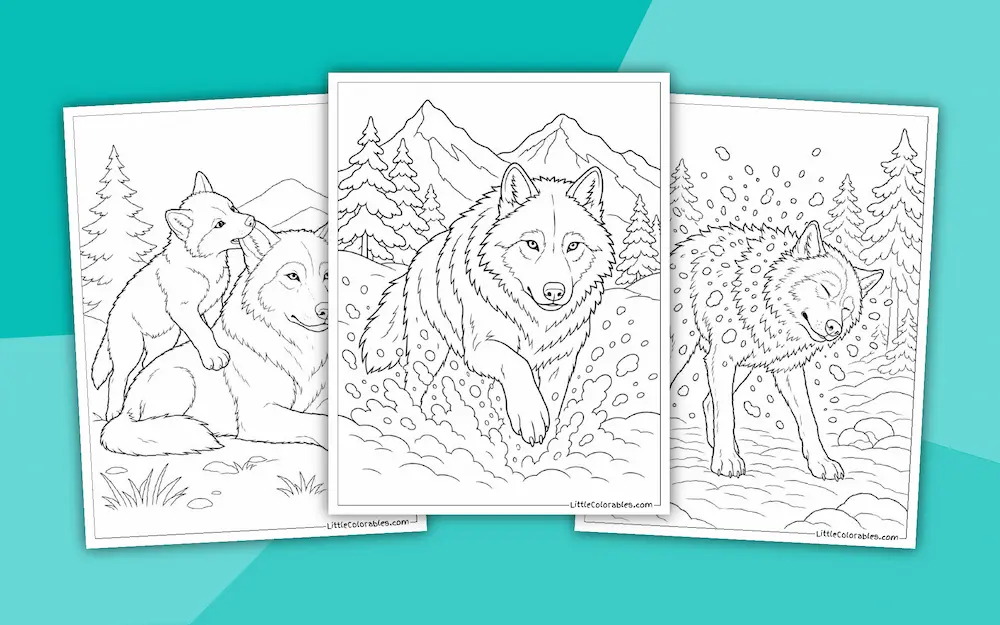
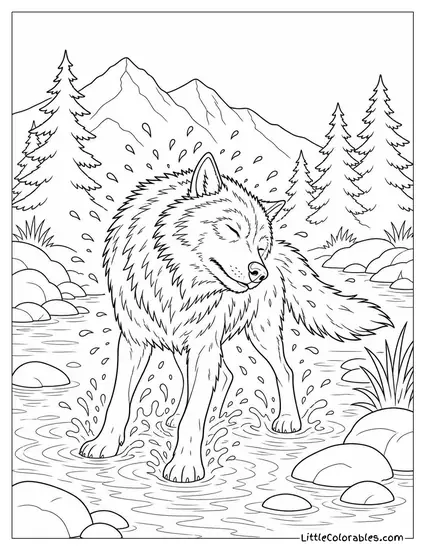
It really got me thinking about how much raw, untamed energy these animals have. So our team channeled that exact feral chaos into these new wolf coloring pages.
 ↓ Scroll to the free printable pages
We deliberately engineered these designs to handle heavy crayon pressure. Because let’s face it, little hands color aggressively when they are pretending to be apex predators.
Just print a wolf coloring sheet and let them go entirely wild at the kitchen table. It might just save your sanity for, I don’t know, maybe 23 minutes.
Featured Wolf Coloring Pages













Browse Different Wild Animals
Wolf Coloring Pages Highlights
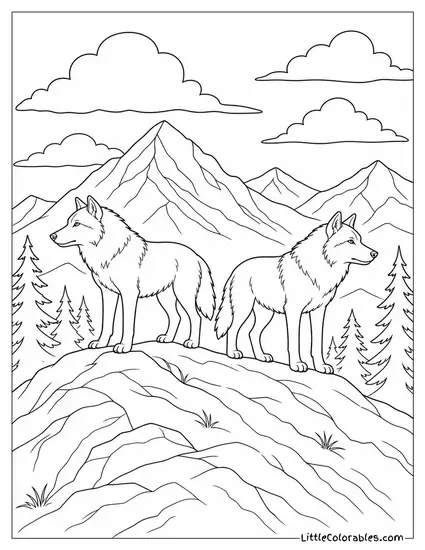
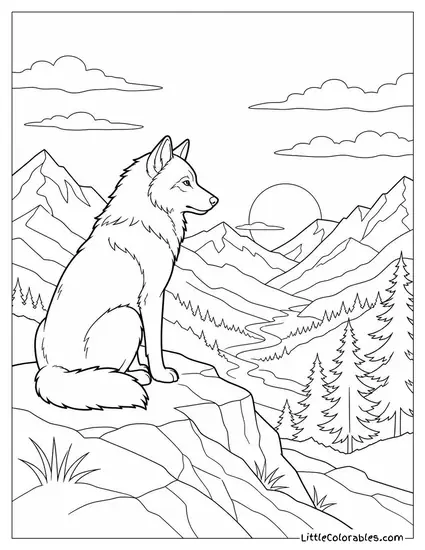
Standing at the Treeline
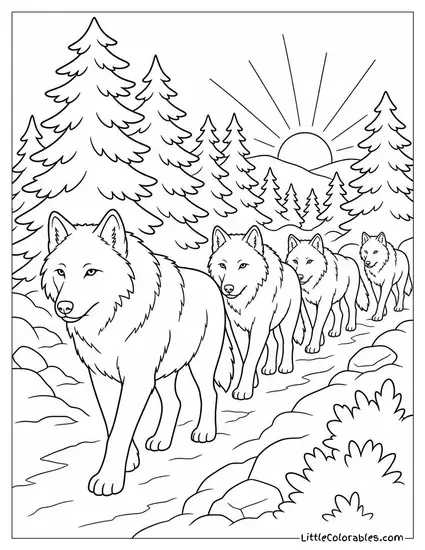
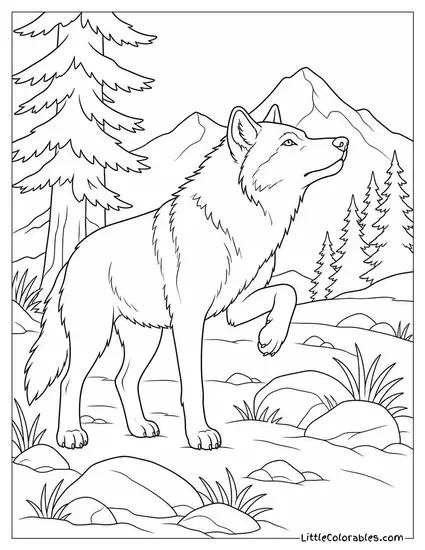
This grey wolf is pausing right at the edge of a dense forest. The setting sun in the background creates a really calm atmosphere over the mountains. Kids can practice shading the sky here.
Printing these printable wolf coloring pages is great for a relaxing afternoon. My youngest loves coloring those round rocks in the foreground. It keeps him busy for at least ten minutes.
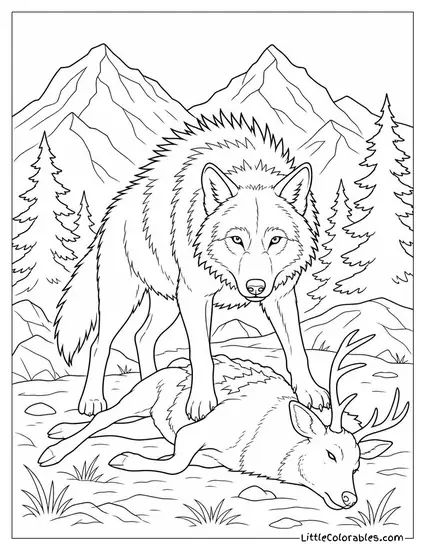
The Hunter’s Catch
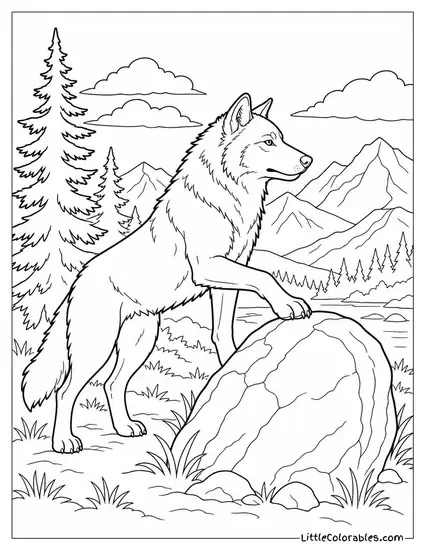
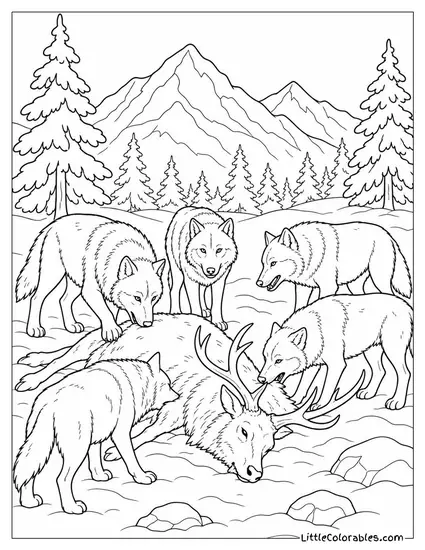
Nature is brutal and sometimes kids need to see the reality of the food chain. Here a wolf stands over a fresh deer kill with its hackles fully raised.
It is a very raw scene that older kids usually find fascinating. You don’t often find free wolf coloring pages that show this harsh side of survival. The mountain peaks behind them add a sharp contrast to the soft fur.
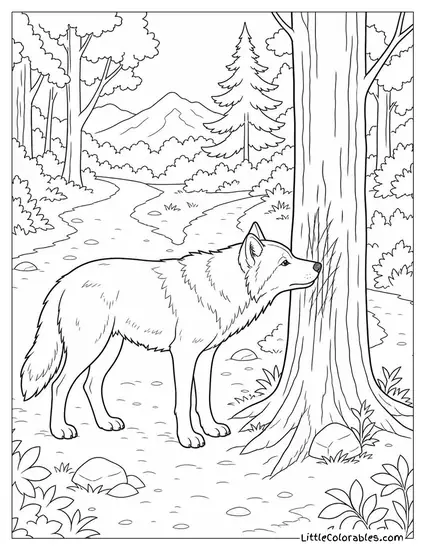
Nose to the Ground
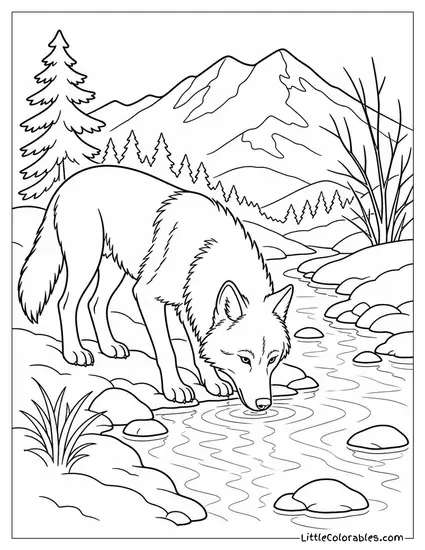
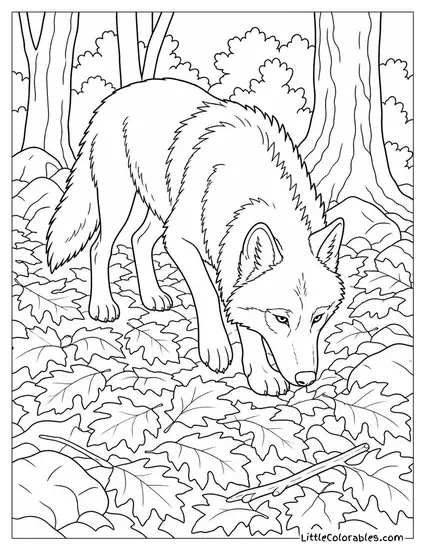
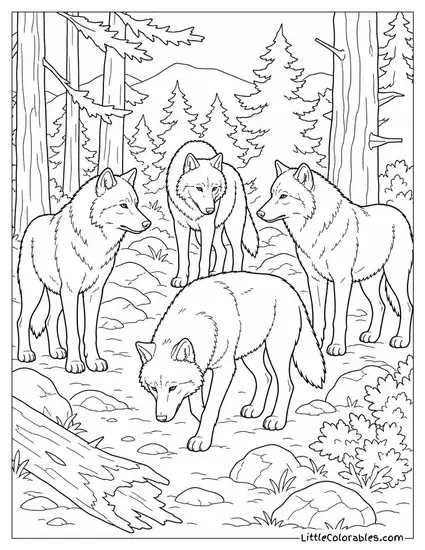
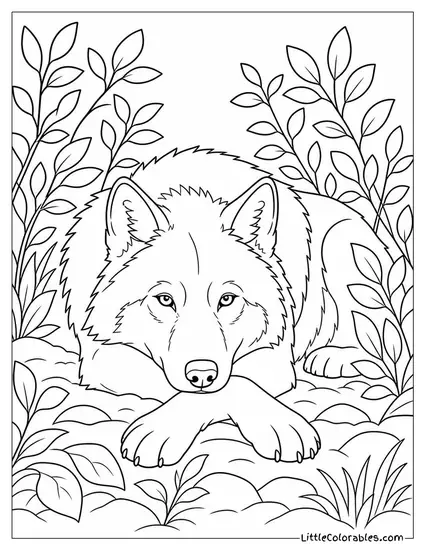
Tracking a scent trail through deep leaf litter requires intense focus. You can see the heavy concentration in the way this wolf is angled downward. The intricate leaves on the forest floor are fantastic for practicing fine motor skills.
My team spent a lot of time getting those oak leaves looking crisp. Any good wolf printable coloring pages collection needs a tracking scene like this.
Breaking into a Sprint
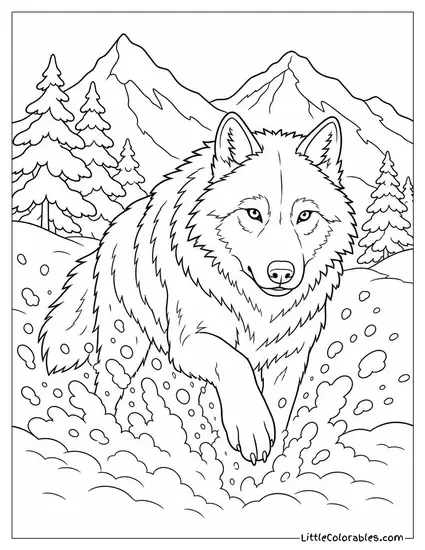
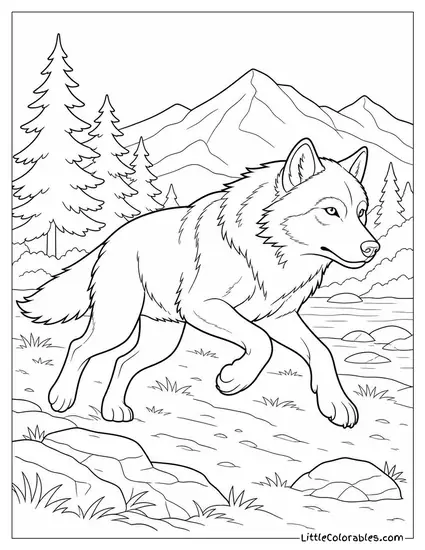
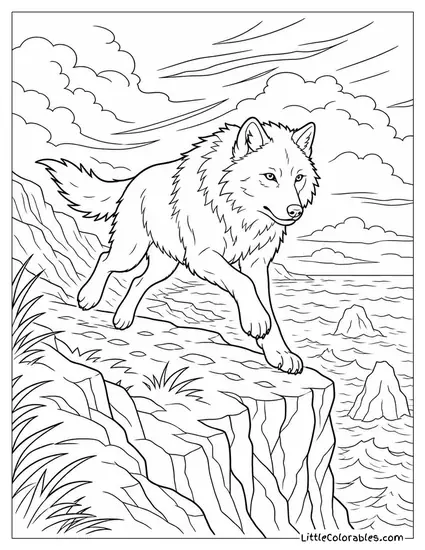
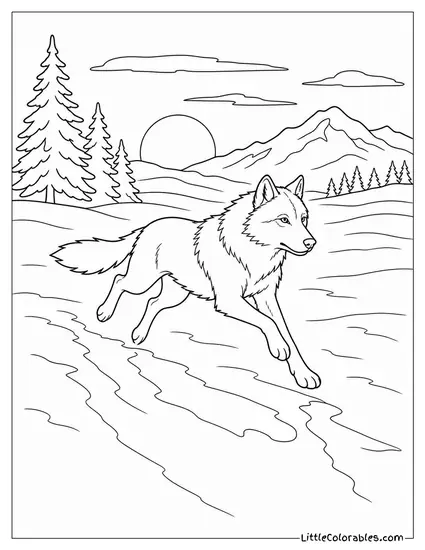
Suddenly breaking into a full sprint from a standing position shows pure muscle power. This alpha is running hard along a rocky riverbank.
I tell my kids to use quick messy strokes to make the water look like it is moving fast. Every coloring wolf pages folder needs high energy action shots. The pine trees in the back frame the running motion perfectly.
Patiently Watching the Caribou
Lying flat in the deep snow requires total stillness and patience. This arctic wolf is quietly watching a distant caribou herd across the cold plains. I like how empty the space feels around the predator.
It really captures the isolation of the frozen tundra beautifully. A simple wolf coloring sheet like this leaves plenty of room for kids to draw their own snowy weather.
Touching Noses on the Tundra
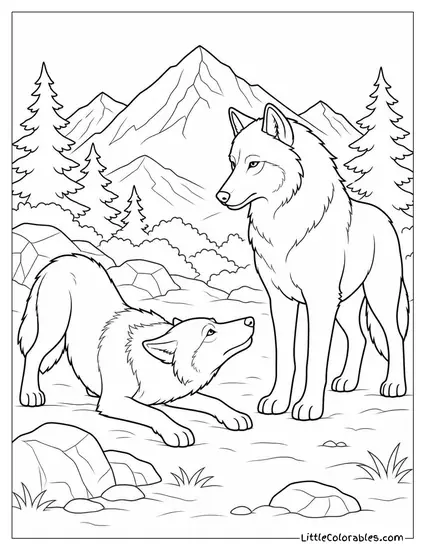
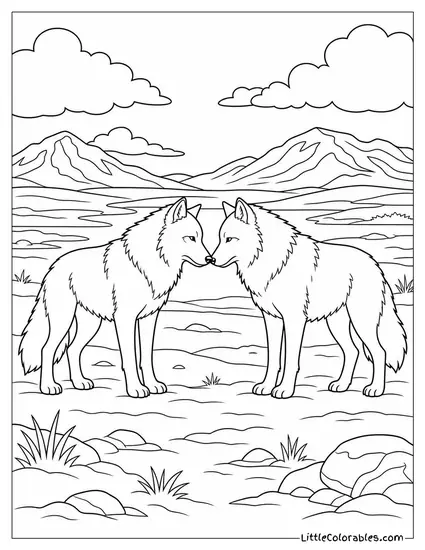
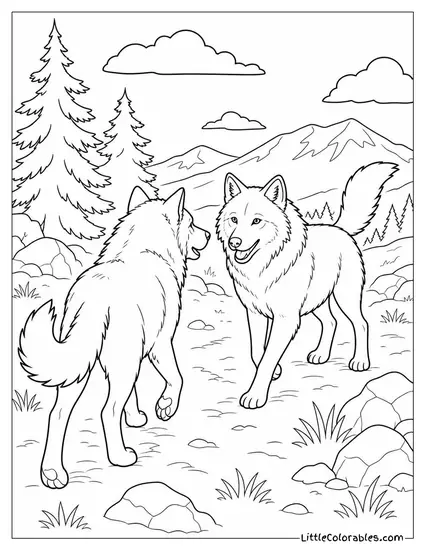
Social bonds in a pack are incredibly strong. These two arctic wolves are greeting each other by touching noses in the middle of a wide open space.
The water winding through the background gives the whole scene a peaceful feeling. Finding printable wolf coloring pages that highlight their gentle side is always a win for my classroom. Kids always want to color the wolves to look like their own pet dogs.
Blinking in the Sunlight
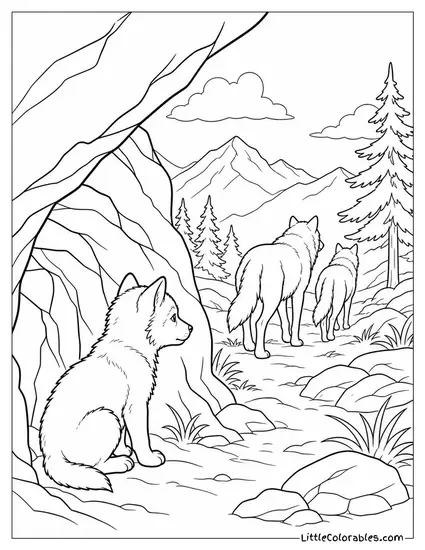
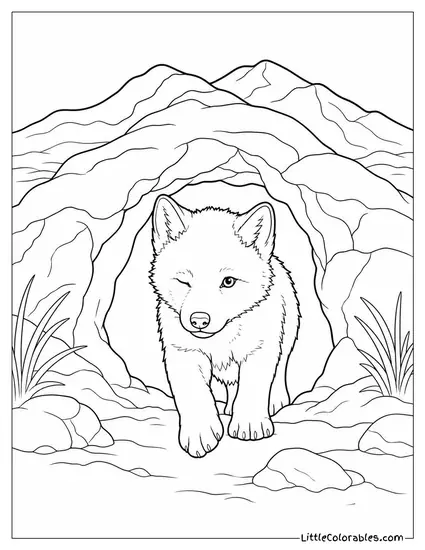
Emerging from a rocky den for the very first time is a big moment. This little arctic wolf pup is blinking hard against the bright light. The rough texture of the rocks around the entrance is fun to shade.
Everyone loves a baby animal picture. This wolf printable coloring pages download is easily the most requested one in my house right now.
Rolling in the Snow
Even apex predators need to play sometimes. This arctic wolf is completely upside down rolling in the snow with its legs in the air.
It is completely ridiculous and makes my toddlers laugh every single time. Grab this wolf coloring sheet when you want a lighter mood. The jagged mountains in the back just make the silly pose stand out more.
Tips for Coloring Wolf Pages
1. The Whites aren’t Just Paper
Leaving the arctic wolves completely blank is a rookie mistake. Snow and white fur still have shadows.
I always tell my students to lightly brush a pale icy blue or light lavender into the shaded areas. It makes the white actually look like thick winter fur instead of flat paper. Try it next time you are coloring wolf pages with your kids.
2. Blending the Greys
A timber wolf is never just one solid flat shade of grey. Their coats are a complex mix of silver and black and brown. Do not just grab the standard grey crayon and scribble hard.
Layer the colors lightly starting with the lightest shades first. Build up to the dark blacks around the ears and along the spine for a realistic look.
3. Creating Texture in Leaves
The forest floor shouldn’t be a giant puddle of muddy brown. Those fallen leaves need some individual attention to look right.
Pick three different autumn colors like ochre and rust red and a muted green. Alternate them randomly across the leaf litter to create visual depth. It takes patience but the final result is totally worth the extra effort.
4. Cold Mountain Backgrounds
Mountains in the distance always look lighter and less detailed than things up close. This is called atmospheric perspective and it is a great concept to teach kids. Don’t color the distant peaks with heavy dark lines.
Use soft pressure and pale blues or purples for those background rocks. It forces the dark wolf in the foreground to pop right off the page.
5. Sharp Eyes
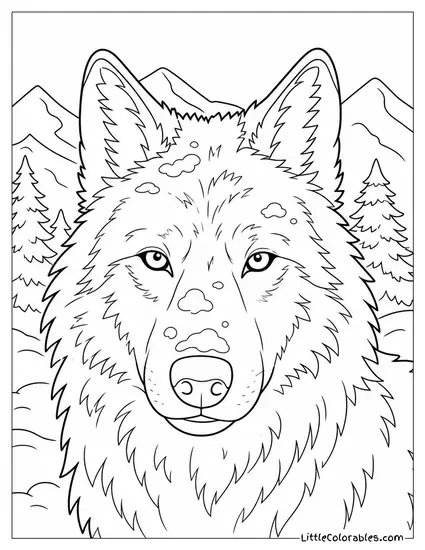
A predator’s eyes are their most striking feature. They should pierce right through the picture.
Use a bright sharp yellow or piercing amber for the irises. Leave a tiny speck of white paper untouched for the catchlight. That little white dot brings the animal to life instantly.
6. Shading the Snow
Snow is highly reflective and catches the colors of the sky. If it is sunset the snow should have hints of pink and orange.
If it is midday cast shadows in the snow will be a crisp cool blue. Think about what time of day it is before you start laying down color on the ground.
7. Rough Rocks vs Soft Fur
Contrast is what makes art interesting. You have soft fluffy fur right next to jagged hard rocks. You need to color them differently to show that physical texture.
Use smooth sweeping strokes for the animal’s coat. Then use short choppy aggressive marks with your colored pencil for the boulders and den entrances.
8. The Sunset Sky
A setting sun is the perfect excuse to use the brightest markers in the box. Do not be shy with the neon orange and hot pink.
Blend the colors horizontally across the sky in thick bands. Let the colors overlap slightly where they meet to create new shades. The bright warm sky will contrast beautifully with a dark shadowy wolf.