


Back in August, the maple by our school pickup line was just shade, a green blob nobody looked at while we waited for the bell. One cold week later it had gone scarlet and gold, and every kid in that line was craning out a car window like a celebrity had shown up.
These maple leaf coloring pages are for the after part, when leaves suddenly matter. Our artists drew them everywhere a leaf could end up, plausible or not… floating on a pond, taped in a journal, carrying a ladybug through the sky.
 ↓ Scroll to the free printable pages
Some are kawaii and chunky, with faces and rosy cheeks for the littlest hands. Others, like the mandala ring and the mosaic, ask for a steady wrist and a fair bit of patience.
Print a stack, scroll down for the highlights, then steal whatever tips you like from the bottom of the page.
Featured Maple Leaf Coloring Pages
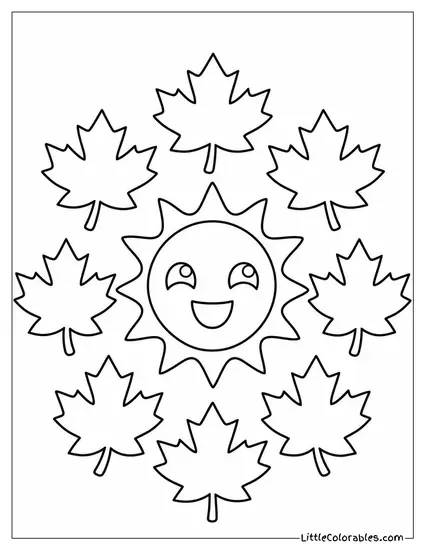
I love how these maple leaves gather around the smiling sun like they’re waiting for a warm little hug. I’d reach for reds and golds, though a few purple leaves would fit right in at our kitchen table!
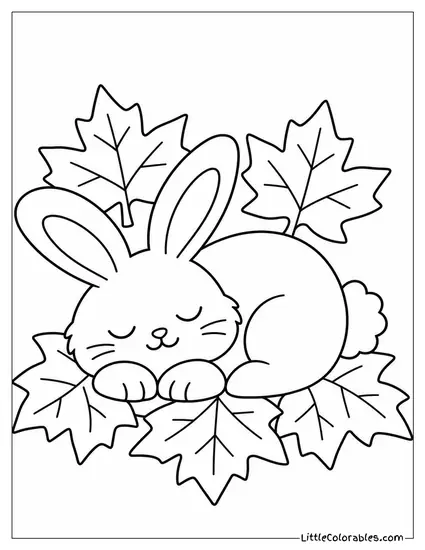
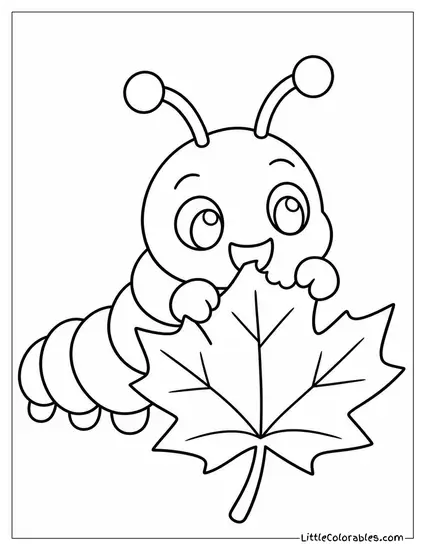
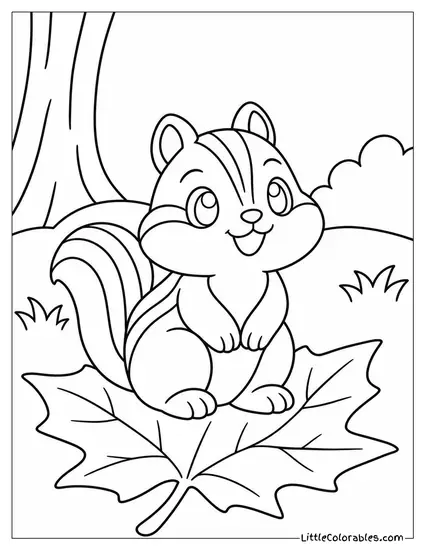
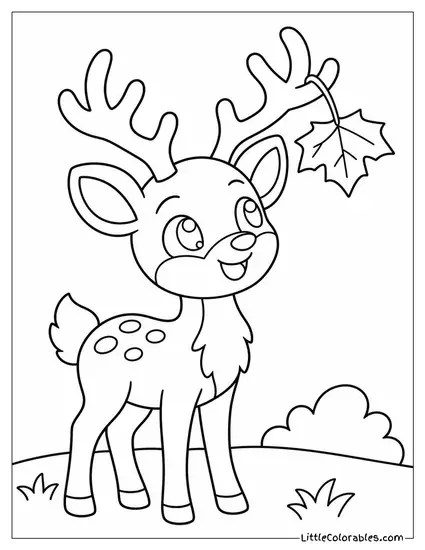
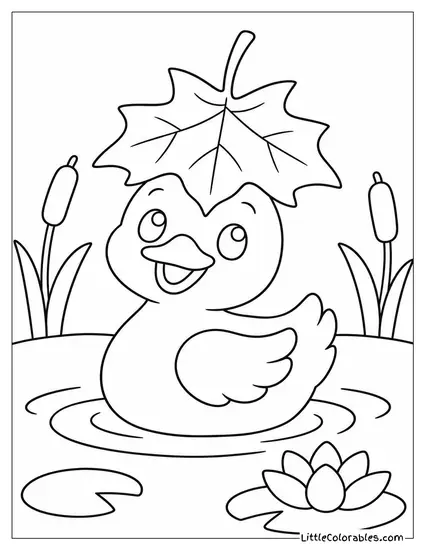
I think this little duck’s maple leaf hat is just the thing for a very fancy paddle around the pond. I’d reach for a rusty orange for the leaf, though a pink hat would certainly give the other ducks something to quack about!
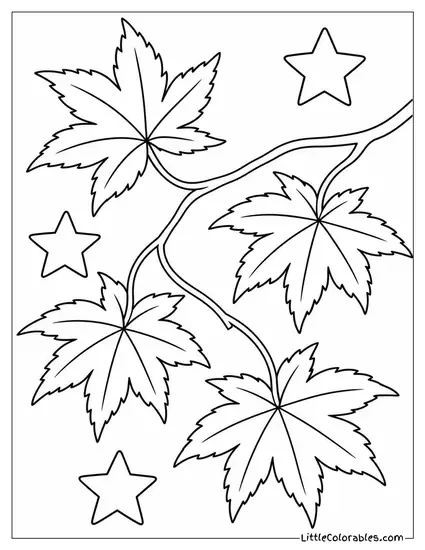
These pointy Japanese maple leaves remind me of little stars scattered across the garden, and I’d start with a handful of reds, oranges, and golds. Of course, a purple leaf or two would fit right in. Autumn can always use a little make-believe!
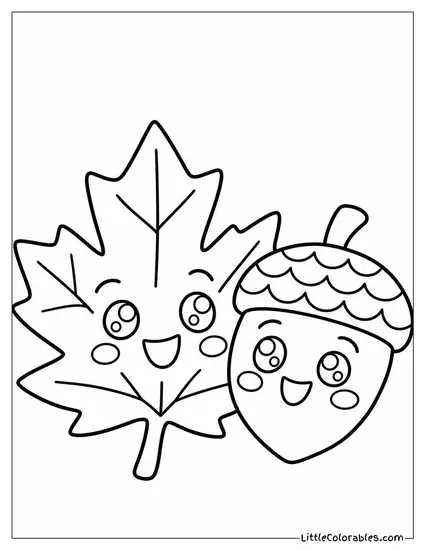
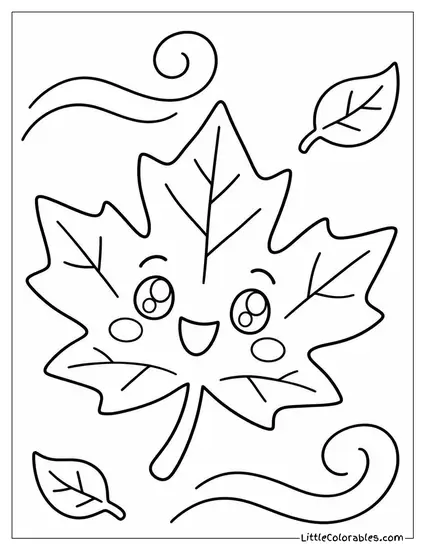
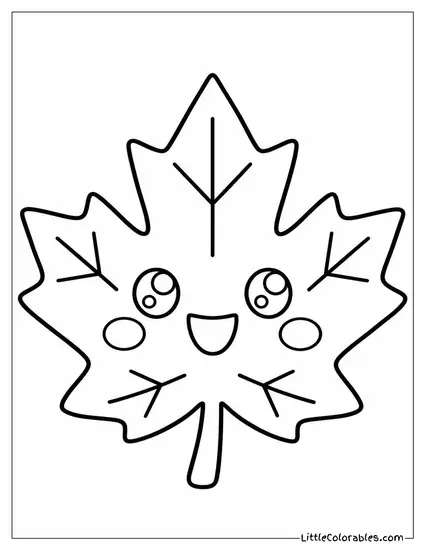
Those rosy cheeks make this little maple leaf look awfully pleased to have fallen out of its tree! I’d go for golden yellow with pink cheeks, but a rainbow leaf would be right at home on our fridge, too.
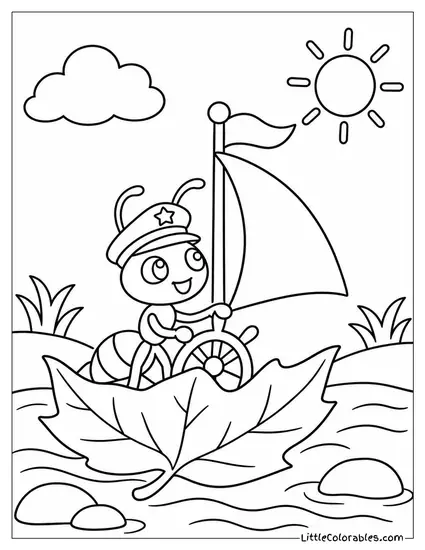
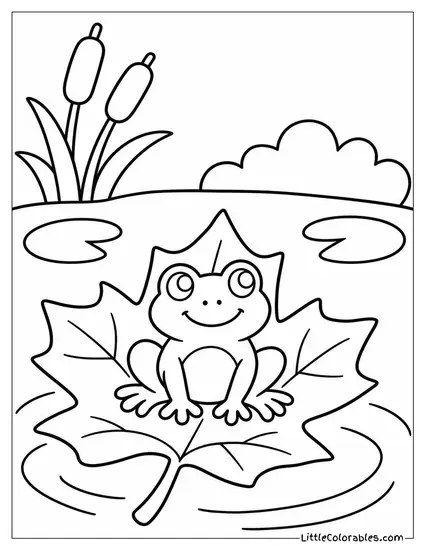
That little frog looks awfully pleased with his maple-leaf boat. I do hope he packed a snack for the trip across the pond! I’d try a bright orange leaf against soft blue water, but a pink pond would be perfectly lovely too.
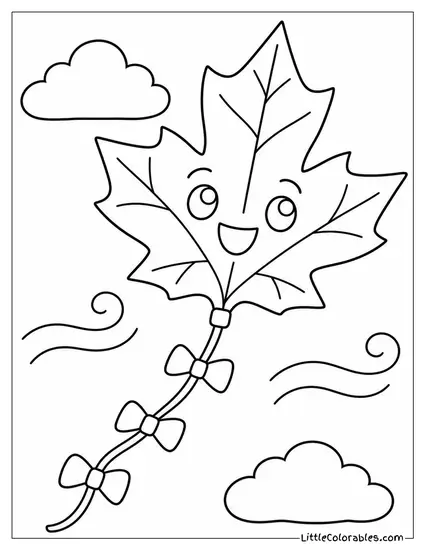
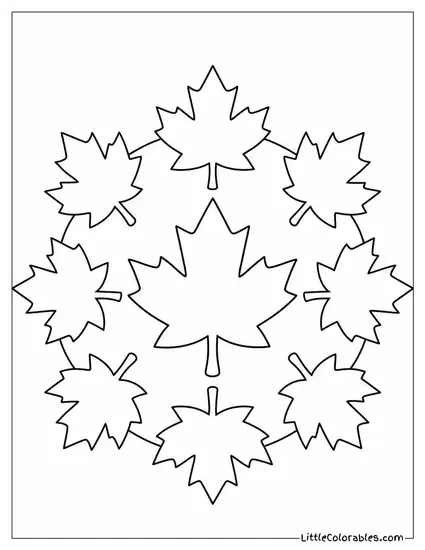
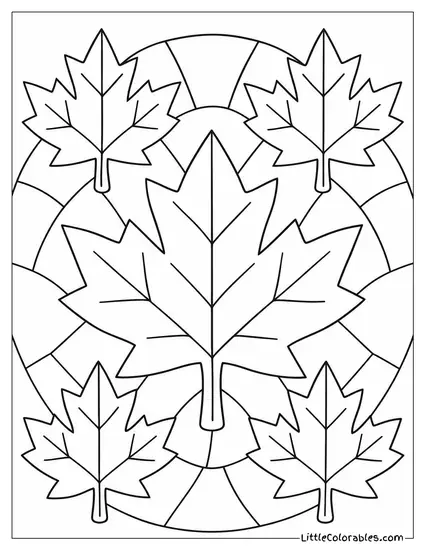
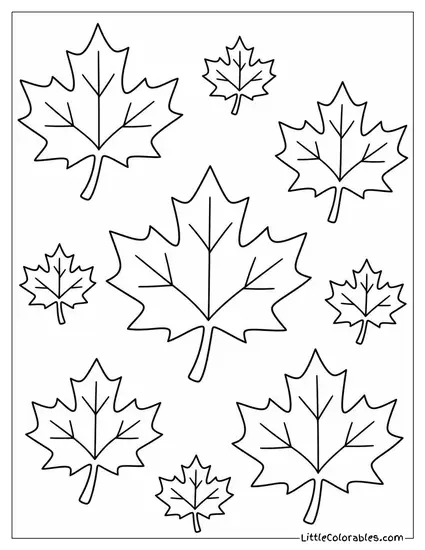
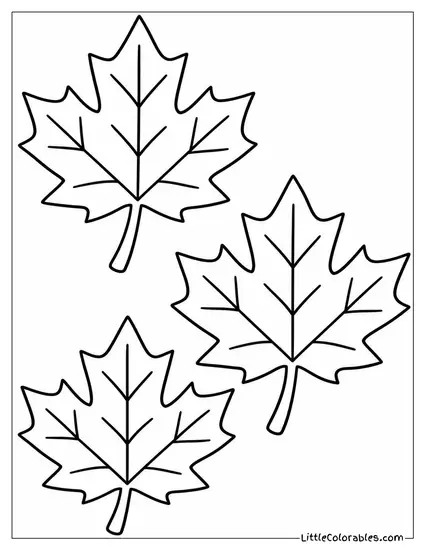
I love how these big, bold maple leaf outlines give little hands plenty of room to play with reds, oranges, and sunny yellows. Though if a purple leaf sneaks into the pile, I’m certainly not sending it back!
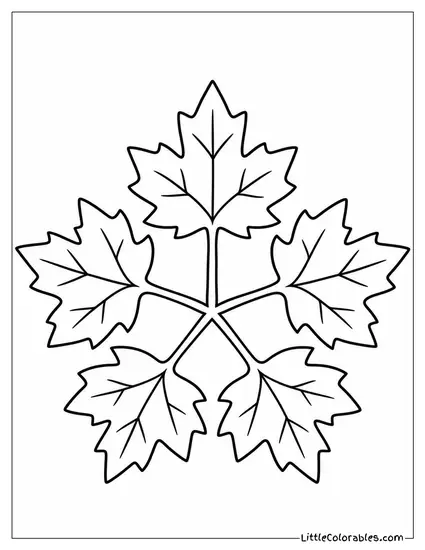
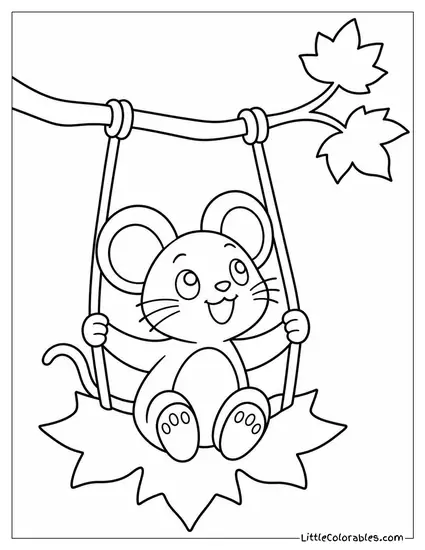
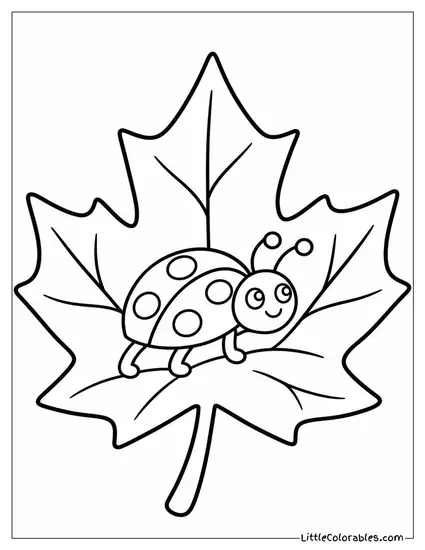
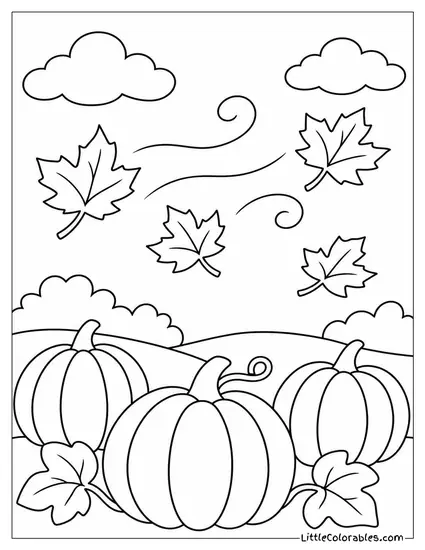
I love how these maple leaves seem to tumble and twirl over the pumpkins, as if autumn has started a little dance party. I’d reach for rusty reds and golden yellows, though a purple pumpkin would be very welcome in this patch!
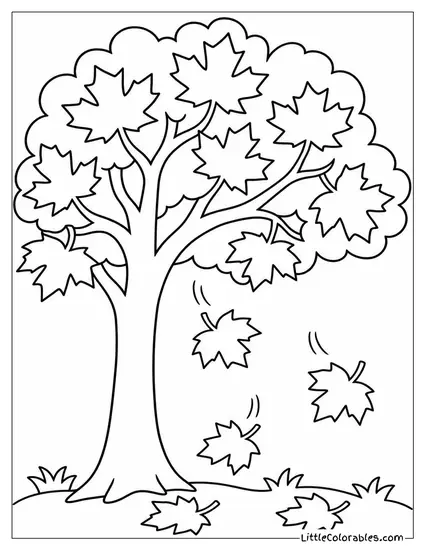
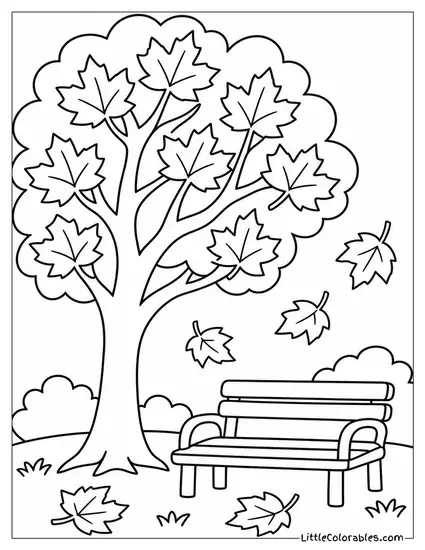
I’d give this maple a glorious mix of red and gold, with a few orange leaves drifting down around the park bench. That little seat looks like the perfect spot for a snack break before another round of leaf-pile jumping!
Did you love these maple leaf pages?
Maple Leaf Coloring Pages Highlights
Kawaii Maple Leaf With a Happy Face
One leaf. Huge eyes, an open grin, two round blush circles and a short stem, all wrapped in a thick outline that fills most of the sheet.
Toddlers need large maple leaf color pages like this one, where a scribble that wanders still lands somewhere useful. Lily refused to start until the leaf had a name. It’s Gus now, apparently, and Gus has purple cheeks.
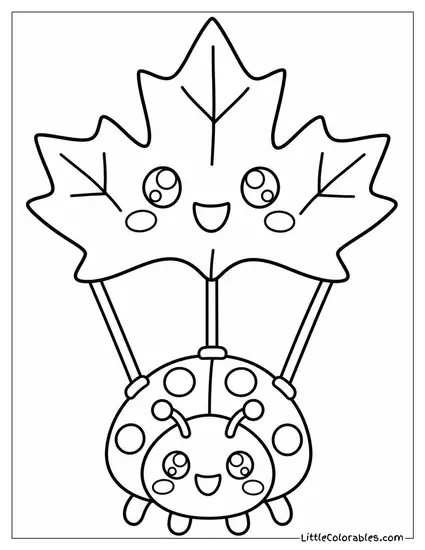
Maple Leaf Parachute Carrying a Ladybug
A grinning leaf has turned itself into a parachute, and four thin lines run down from its edges to a round little ladybug dangling underneath. She’s smiling too, spotted shell and tiny legs and all, so nobody here seems worried about the landing.
Can ladybugs fly on their own? Perfectly well, which makes this the laziest commute in the whole set. Good pick for a preschool bug unit, or for any kid who likes their characters a little ridiculous.
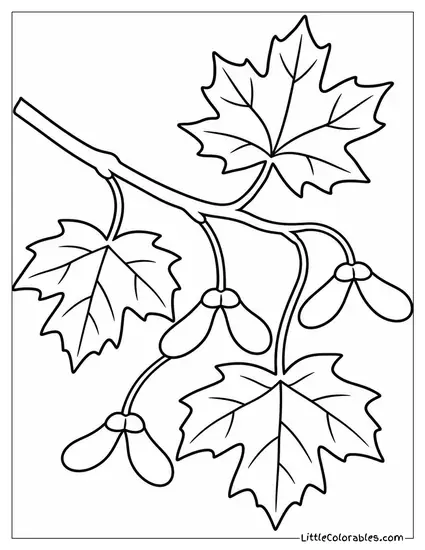
Maple Branch With Winged Seeds
No faces on this one. A real-looking branch reaches in from the corner with several jagged maple leaves, and pairs of winged seeds hang from short stems between them.
It’s quieter, closer to a field guide drawing than a cartoon, so older kids and nature-study classrooms will get the most out of it. I think it makes a decent sneaky science page too… most kids have thrown those seeds in the air without ever asking what they were.
Maple Leaf Floating on a Pond With a Frog
A frog sits on a big maple leaf like it’s a raft, ripples circling out across the water and cattails standing tall at the back. Smaller leaves drift nearby, and that frog looks extremely pleased with its boat.
Real pond frogs are about to clock out for winter right around now. Green frogs and leopard frogs mostly rest on the pond bottom breathing through their skin, and the old “buried deep in the mud” story is shakier than picture books suggest, since thick mud would smother them. Kids around five and up handle the ripples fine.
Maple Leaf in a Nature Journal
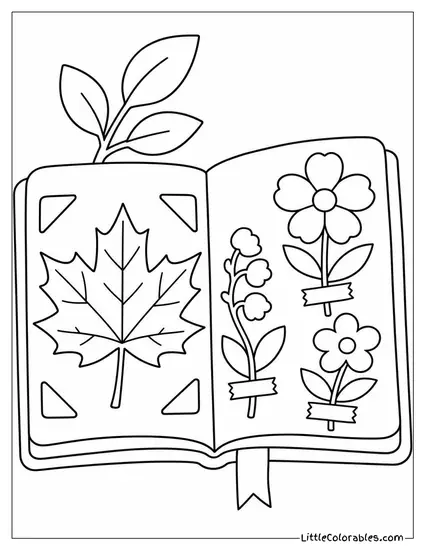
An open journal lies flat, a maple leaf held down on the left page with little corner tabs and pressed flowers taped across the right. There’s a big round bloom, a curved stem of bell-shaped blossoms and one smaller flower near the bottom, plus a leafy sprig poking up behind the book and a ribbon bookmark dangling below.
Set this one out for a maple leaf coloring sheets station during a fall nature unit, right next to whatever the kids dragged in from recess. It suits the crafty eight-year-old too, the one with a sticker collection and strong opinions about tape.
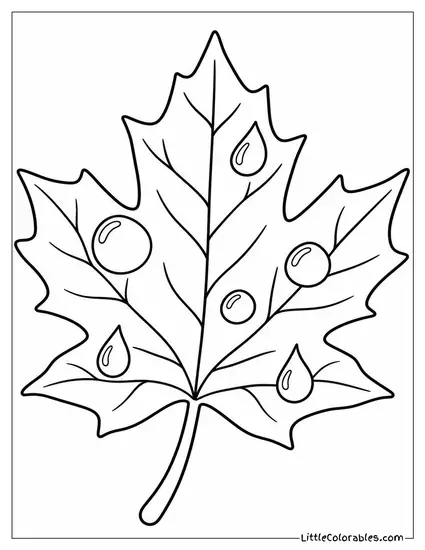
Maple Leaf With Water Drops After Rain
Close up and simple. One big leaf fills the page with its veins drawn clearly, and it’s dotted all over with round beads and teardrop drips, each with a tiny shine circle inside.
There’s something soothing about it, no characters, no plot, just weather that happened a minute ago. Hand it to kids who like a big shape with small surprises inside, or pair it with a rainy-day science lesson on why water beads up.
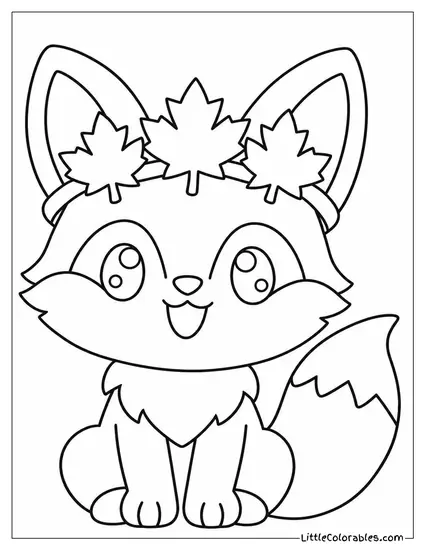
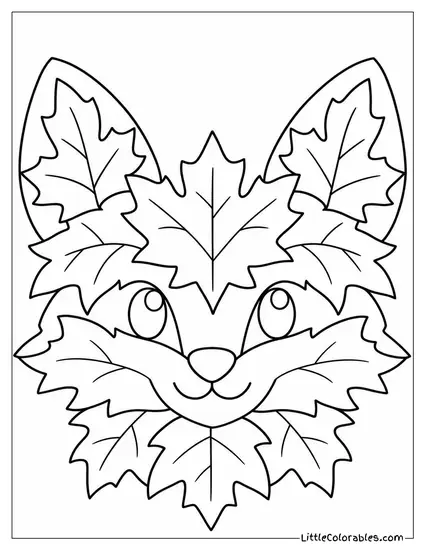
Maple Leaves Arranged Into a Fox Face
Look twice. Overlapping maple leaves form the pointy ears, the forehead and the cheek fluff of a fox, and in the middle sit two eyes, a small nose and a sly little smile.
Half puzzle, half portrait, and older kids love counting how many separate leaves are hiding in one face. The leaf edges are busy, so ages seven and up will get more out of it.
Maple Leaves Blowing Across a Pumpkin Patch
Wind swirls push a flurry of maple leaves across the sky while three pumpkins sit below, one big one front and center with a smaller one on each side. Rolling hills, puffy clouds and curly vine leaves on the left fill out the scene.
This is the page to grab when one sheet has to cover fall, all of it, for a bulletin board or a harvest party table. Younger kids can stick to the big pumpkins while older ones chase all those scattered leaf edges.
8 Tips for Coloring Maple Leaves
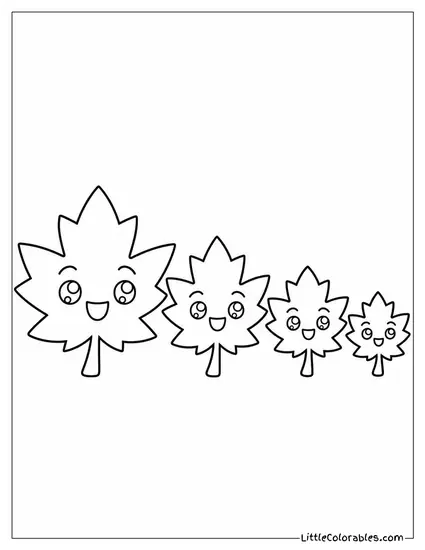
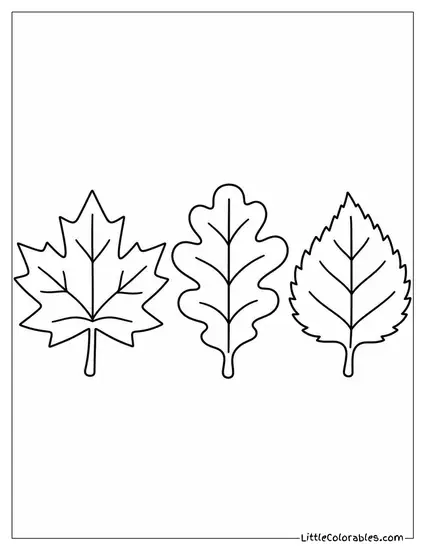
Turn the Leaf Family Into Four Real Maples
Most coloring pages of a maple leaf quietly assume there’s only one kind of maple, and there are well over a hundred. Color the biggest leaf in the row as a bigleaf maple, the Pacific Northwest tree whose leaves can stretch close to a foot across, in clear butter gold, then make the second one a sugar maple in bright orange.
Third in line gets red maple scarlet, the loudest red in the box. And the tiny one on the end becomes a Japanese maple in deep wine red, small and a bit dramatic, just like those trees in a backyard garden.
Let the Winged Seeds Go Papery
Sugar maples ripen their seeds in fall, so on the branch page the wings should look dry and almost see-through. Give them the lightest tan you own with barely any pressure, and keep the leaves around them bold so the seeds read as the crisp, finished part of the branch.
Kids in plenty of places split the sticky seed end open and stick these on their noses, a trick some folks call polly noses. Ask around at pickup, because half the grown-ups did it as kids and none of them can explain why.
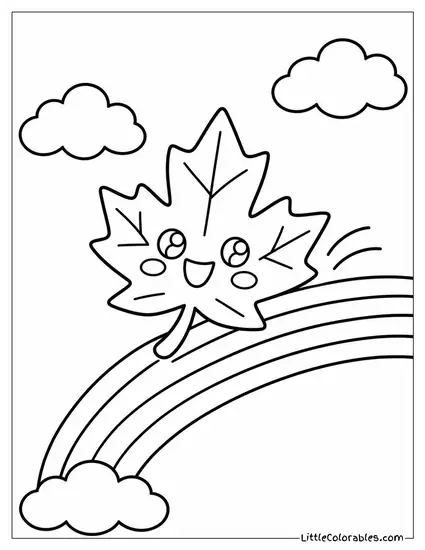
Color the Rainbow Slide as a Second Bow
A double rainbow’s outer bow runs its colors in reverse, red on the inside edge and violet across the top, and it’s always paler than the main one. Color the slide that way, flipped and light, and the orange leaf rides along a violet stripe instead of melting into red.
Kids rarely believe the flipped order until a real double rainbow shows up, so keep a phone photo handy after the next storm. That darker strip of sky between the two bows even has a name, Alexander’s band, after a Greek philosopher who described it around 200 AD.
Make the Ladybugs October Lady Beetles
Those ladybugs crowding onto sunny window frames every October are usually Asian lady beetles, hunting for a crack to spend the winter in. Their shells run anywhere from pale butterscotch to deep red, so color the parachute rider and the bug crawling across the big leaf in pumpkin orange instead of fire-engine red.
Up close, this species wears a white patch behind its head with a black mark shaped like an M, or a W from the other end. Kids love penciling that tiny letter on, and afterward every orange bug on the classroom window turns into a spotting contest.
Fatten the Veins Under Every Raindrop
A water drop works like a tiny magnifying lens, and in the 1690s an English dyer named Stephen Gray built a microscope out of one, a single drop held in a little hole in a brass plate. Wherever a printed drop sits on top of a vein, go over that bit of vein a little thicker and darker than the rest.
Dentists wear clip-on magnifying loupes for the same reason, whatever sits under the glass looks bigger while the rest of the mouth stays normal size. Color the leaf inside each drop a hair brighter than the leaf around it as well, and the whole page suddenly looks wet.
Build the Fox the Arcimboldo Way
In the 1500s, Giuseppe Arcimboldo painted faces built entirely from fruit, vegetables and flowers, and his portrait of Emperor Rudolf II as Vertumnus turns the emperor’s nose into a pear. Our fox face plays the same trick with maple leaves, so every leaf should still look like a leaf in true fall shades, never flat fox orange.
Placement does the fox work instead. Pale yellow leaves go on the cheeks and around the muzzle where a real red fox is white, and the deepest red-brown leaves go along the ear tips, so the face reads as a fox from across the room and as a leaf pile up close.
Gray Bark and a Mixed Crown for the Tall Maple
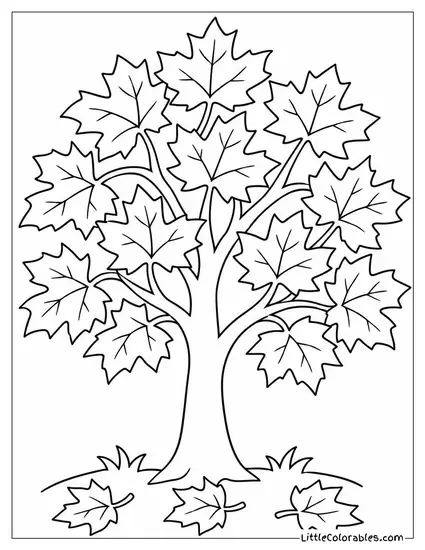
Kids grab brown for every tree trunk, but sugar maple bark is mostly gray, smooth on young trees and broken into long shaggy plates on old ones. Use two grays on this trunk, pressing harder along its drawn lines so the bark looks rough.
Up top, one sugar maple can wear yellow, orange and red at the same time, so mix the crown like the syrup jugs lined up in the grocery aisle, golden to amber to dark. It’s the same tree the syrup comes from, which tends to impress six-year-olds far more than anything about bark.
Scratch Light Into the Mosaic
Medieval red glass came out so dark that glassmakers fused a thin red skin onto clear glass, called flashed glass, and later craftsmen ground through that skin to cut pale patterns into it. Try it on this maple leaves printable coloring page by filling a few background sections with heavy red crayon, pressed hard so the wax sits thick.
Then scratch thin lines or tiny dots into the wax with a toothpick or an unbent paper clip, and the paper underneath shines through like light in a church window. Leave the big center leaf smooth and unscratched, and the scratched panels around it start to glow.