


It is 6:45 AM and someone has already spilled juice on the rug. I usually redirect that chaotic energy by slamming down a stack of these sea animals coloring pages. Or rather, I just leave them on the table and retreat.
We drew these up when we realized how hard it is to find decent ocean stuff. Will this buy you an hour of peace?
Finding a sea animal coloring page that doesn’t look like a nightmare is surprisingly tough. The internet is just full of heavy, unusable digital garbage right now.
But these PDFs are actually formatted for normal home printers. Just hand over the crayons and let them ruin their sleeves in peace.
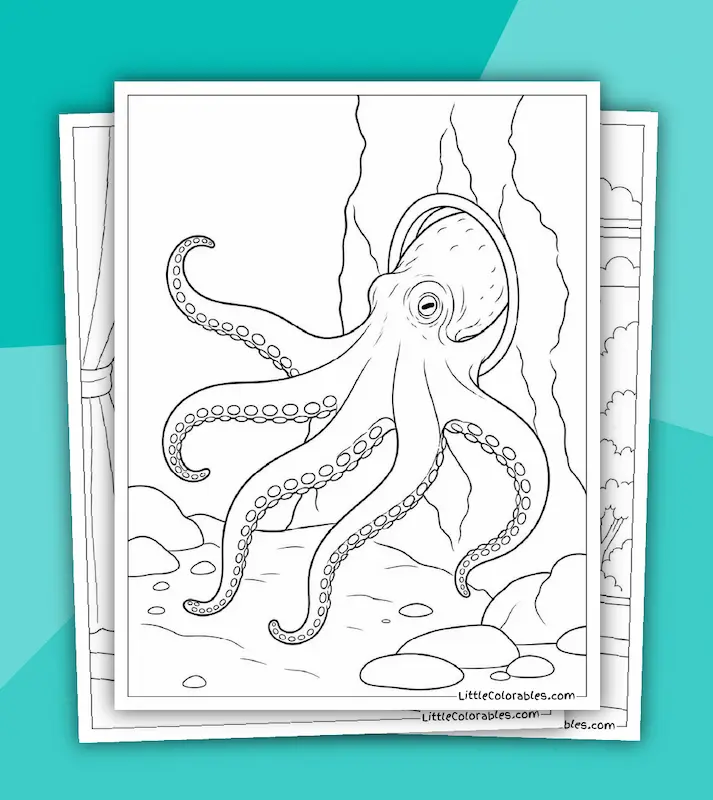
Featured Sea Animal Coloring Pages


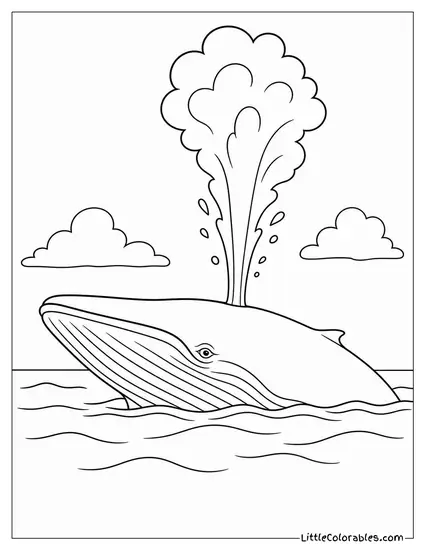

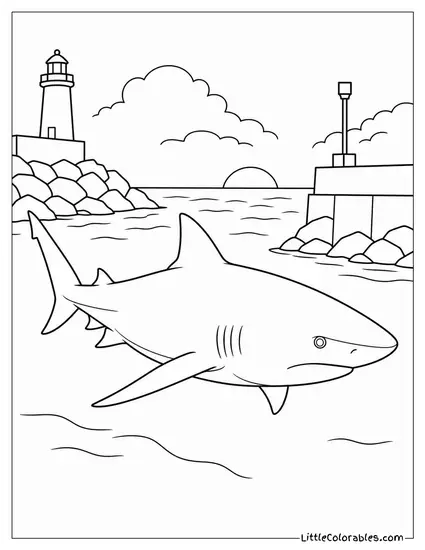


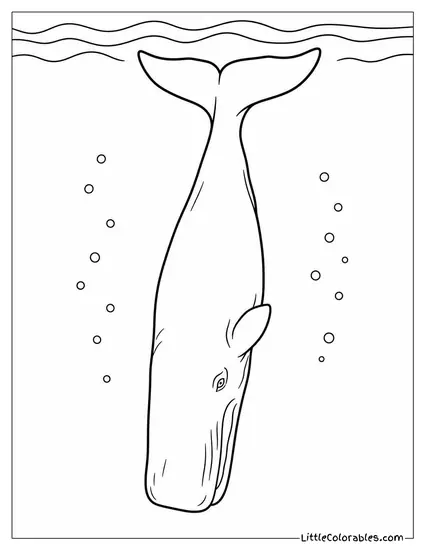


Highlighted Sea Animals Coloring Pages
Mother and Calf Dolphin
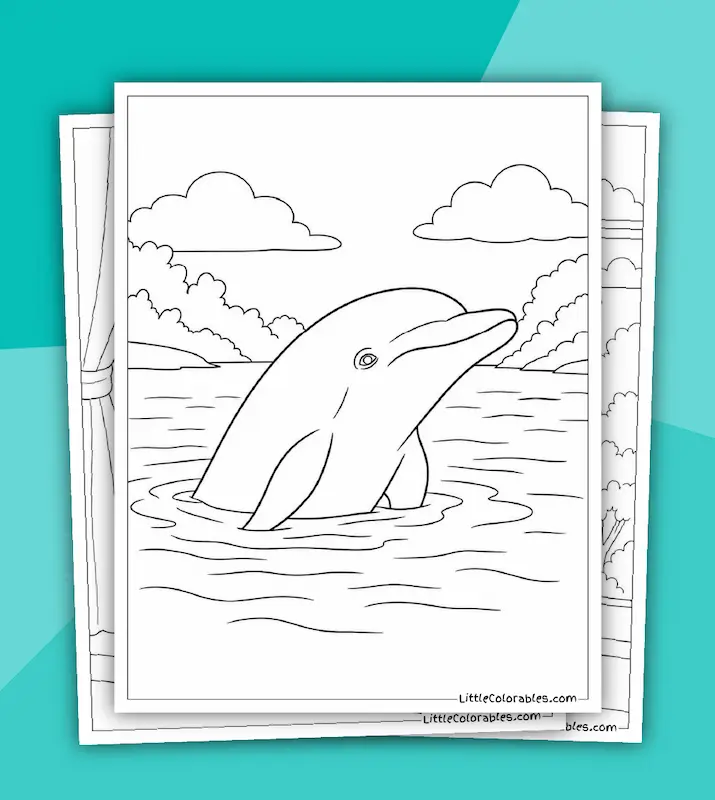
This shows a mother dolphin gently pushing her baby toward the surface. I love the simple rippling water lines at the top of the frame.
It reminds me of physically dragging my youngest out of bed on a Monday. The clean lines make this ocean animal coloring page great for younger kids who lack fine motor skills.
Giant Squid Reaching the Light
Here we have a massive giant squid swimming straight up to the sun rays breaking the surface. Look at those long tentacles trailing awkwardly behind its body.
I think older kids will really get into shading the little suckers and the light beams. It adds some real drama to the collection of printable sea animals coloring pages.
Great White at the Reef
A classic great white shark cruising right over a very detailed coral reef edge. My middle child always grabs the shark ones first without fail.
The textured coral gives them a reason to use colors other than boring gray. It is easily one of the more detailed coloring pages of sea animals we made.
Shark from Below
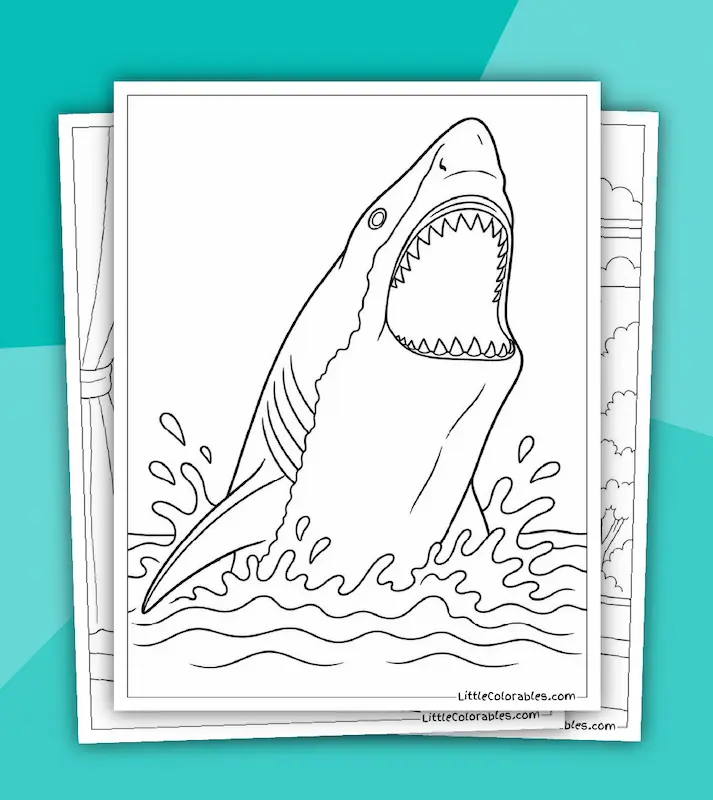
This is that scary cinematic view of a great white from underneath with the sun shining down. Just the harsh silhouette and the jagged teeth showing.
It feels very intense and heavy. Honestly it is a really cool angle for an ocean animal coloring page.
Drifting Jellyfish
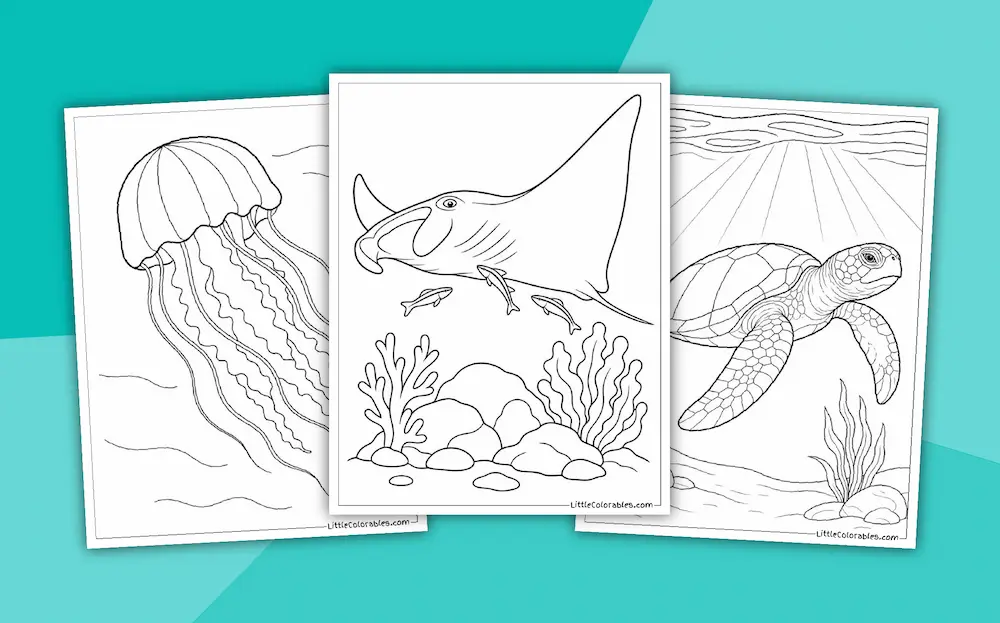
Just a large jellyfish floating along with wavy tangled tentacles. The linework here is really soothing to just sit and look at.
You can practically feel the slow physical current when you look at the page. This is a perfect printable sea animals coloring pages choice for experimenting with soft pastels.
Manta Ray at the Reef
A huge manta ray gliding over some rocks and coral with tiny fish swimming underneath its wings. It looks exactly like a natural reef cleaning station.
The stark contrast between the giant ray and the little fish is fun. Kids can burn around 43 or 44 minutes just on the rocks in these free sea animals coloring pages.
Manta Ray over a Seamount
This one features a manta ray soaring over a jagged underwater mountain peak. It has a very grand open feeling to it… almost empty.
The rocky seamount gives a nice physical grounding element to the open water above. These kinds of coloring pages of sea animals leave massive room for heavy backgrounds.
Moray Eel Snapping
An angry moray eel poking out of its dark cave to snap at a little fish. It has weird organic spots all over its long body.
Kids love the aggressive action in this one because it tells a clear story. It definitely adds some necessary excitement to the sea animal coloring pages pile.
Tips for Coloring Sea Animals
1. Layering the Blues
Water is never just one flat dead color. I used to tell my second graders to look at a physical glass of water on a desk. It changes completely with the light in the room. Start by laying down a very pale blue base everywhere.
Then you can drag in darker navy blues near the edges or right around the animals. It gives the flat paper actual tactile depth. Will they do it perfectly? No idea. But today it works.
2. Making Sand Textures
Plain yellow sand is boring. Really boring. Grab a brown or dirty orange crayon and lightly stab little dots all over the bottom of the page.
You can even use the side of a broken, stripped crayon to rub a rough texture over the paper. It makes the bottom of the ocean feel real and gritty. Kids like getting their hands dirty anyway.
3. Blending Jellyfish Colors
Jellyfish are mostly clear biological blobs anyway. So don’t press down too hard with the wax. Let the raw white of the paper show through the color.
Try using a soft pink or rather a weird pale purple on the very edges of the tentacles. It gives them that glowing alien look that deep sea creatures have. Just keep a light hand.
4. Shading Tough Sharks
Sharks shouldn’t be plain flat gray like a sidewalk. The top is usually much darker than the belly part. This is called countershading in the marine biology world.
Have your kids shade the top part with a heavy dark gray and leave the bottom completely stark white. It makes them look like actual heavy predators. It is not the worst technique to learn early.
5. Colorful Coral Reefs
Coral is where you can go absolutely crazy with the standard crayon box. There are no wrong colors on a healthy reef system. Neon pinks and toxic greens work perfectly together.
I always let my youngest just furiously scribble rainbow colors all over the coral sections. It actually ends up looking surprisingly natural when you step back. And what follows from this? The fact that all previous color theory logic goes to hell.
6. Highlighting with Erasers
If you are using colored pencils you have a literal secret weapon in your pencil case. Just lay down a thick heavy layer of blue water. Then take a hard pink eraser and aggressively rub out streaks.
Those erased lines look exactly like physical sunlight cutting through the dense water. It might cause some inconvenience with eraser shavings everywhere. But the kids think it is pure magic.
7. Using Markers for Fish
Crayons are great for big sweeping water backgrounds. But tiny reef fish need sharp fine-tip markers. The thick cheap wax just globs up on the small details and ruins the eyes.
Switch to thin washable markers for the tiny fish hiding inside the rocks. It keeps the edges crisp and saves a lot of unnecessary frustration at the kitchen table. Keep the caps tight though.
8. Don’t Forget the Bubbles
A lot of these pages have little empty circles floating around the animals. Leave them white. Or just outline them in a very light icy blue.
Sometimes kids want to aggressively color them in completely dark black or dark blue. But leaving them mostly blank makes the whole scene look wet and bubbly. All this shading advice comes down to one thing: don’t overcomplicate it.