


clearly remember trying to teach twenty energetic first graders the proper spelling of pterodactyl. That totally illogical silent ‘P’ ruins everything.
Honestly it is so much easier to just hand them a stack of free pterodactyl coloring pages and let them go wild with their crayons. Visual learning always sticks way better than boring chalkboard drills anyway.
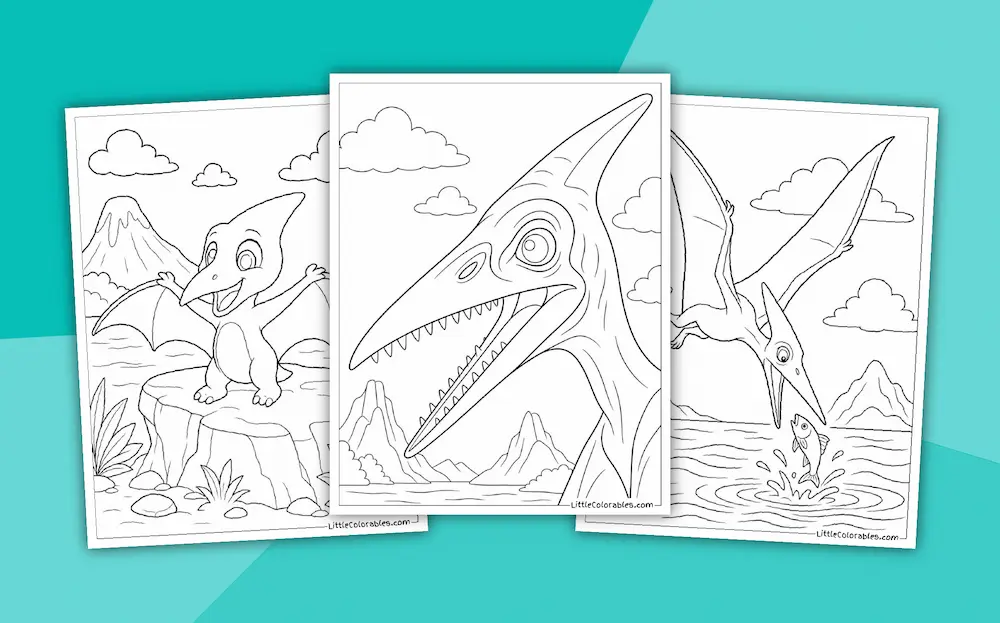
The illustrators on our team really nailed the prehistoric vibe with these new coloring sheets. We specifically wanted backgrounds that felt like a thick ancient jungle.
You definitely won’t find blank empty skies or boring flat landscapes here. Just click a thumbnail to open the PDF and start printing immediately.
Featured Pterodactyl Coloring Pages
Browse Other Dinosaurs
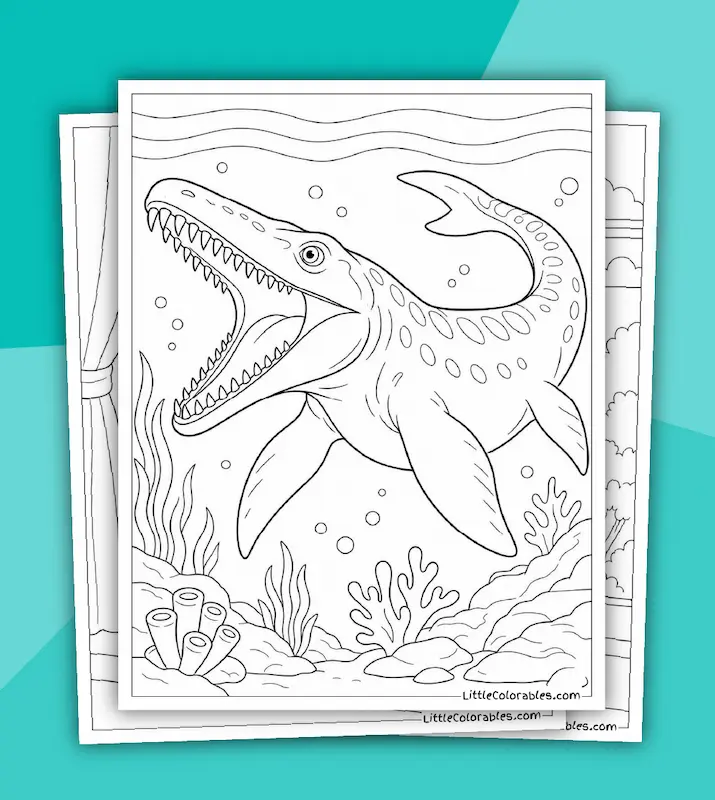
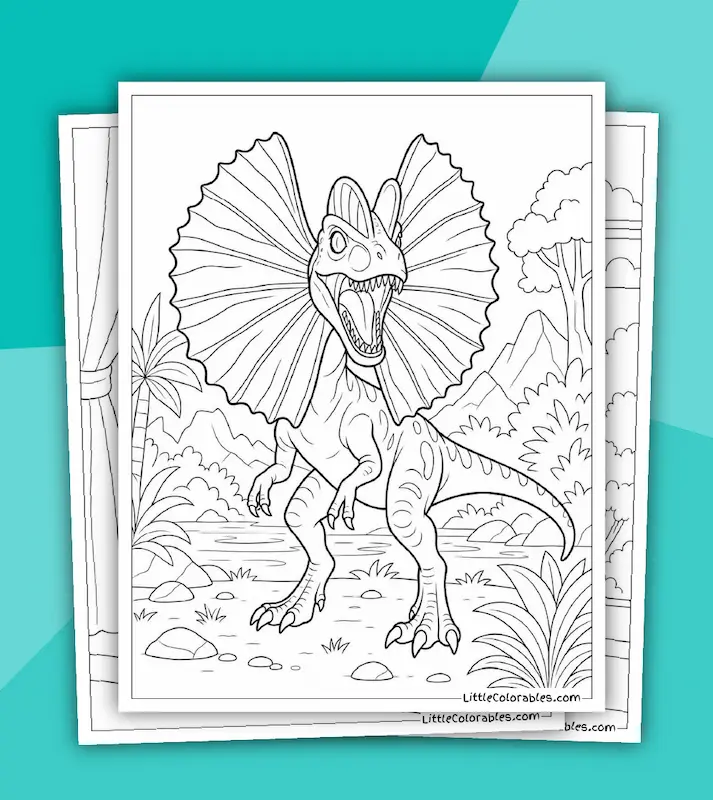
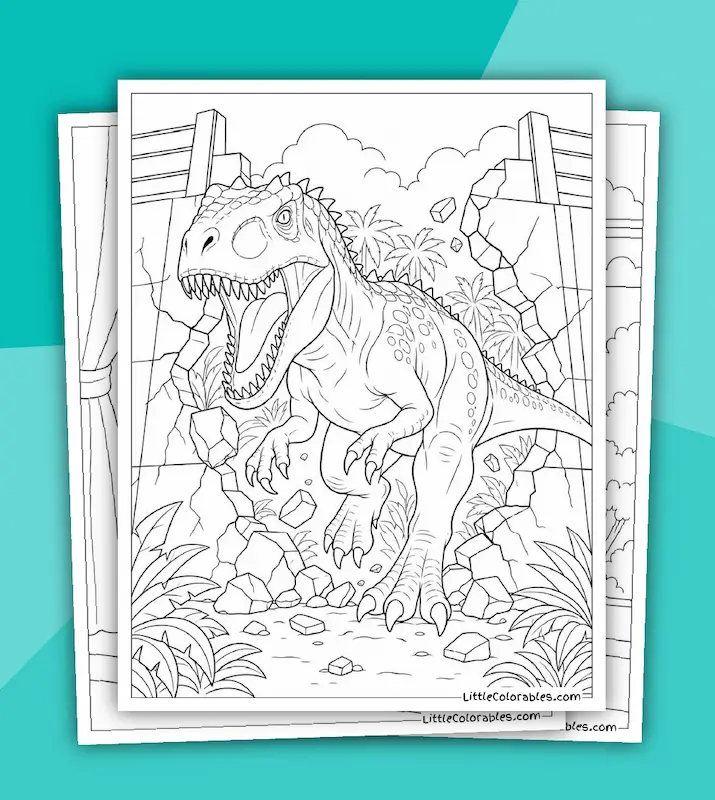
Pterodactyl Coloring Pages Highlights
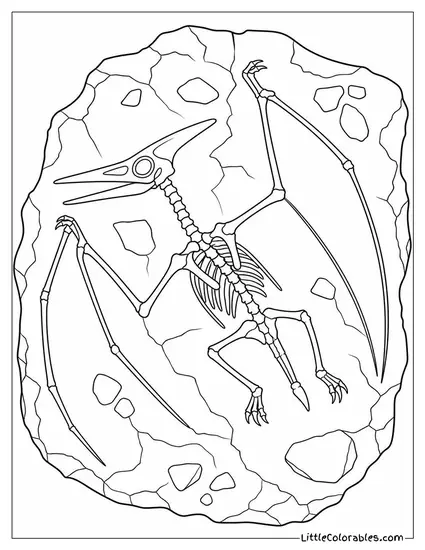
Fossil Impression in Dark Shale
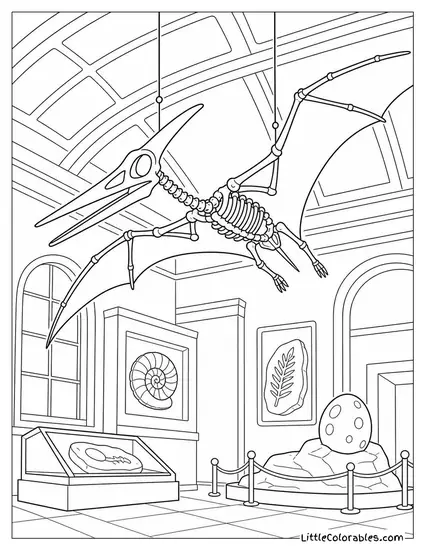
This is one of my favorite pterodactyl coloring sheets because it looks like a real museum discovery. The bones are perfectly laid out in the flat shale rock. My oldest son always colors the rock a deep charcoal gray.
It is a great opportunity to talk about paleontology with your kids. The details on the ribcage are intricate but not overly complicated. Just a solid coloring page of a pterodactyl fossil.
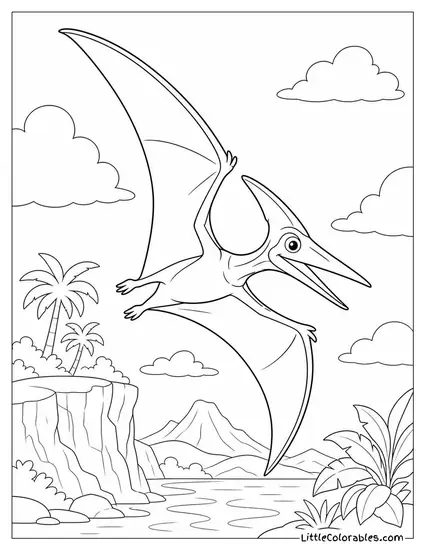
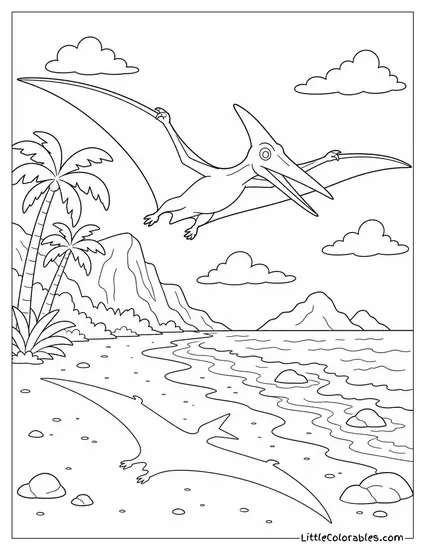
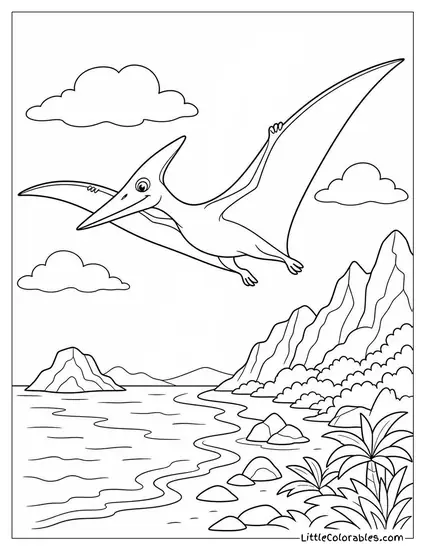
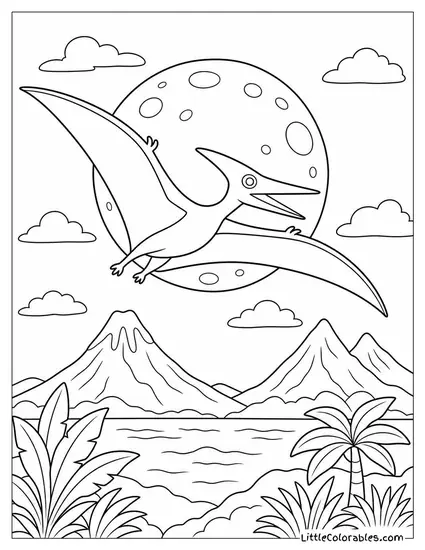
Gliding on a Thermal Above the Coastline
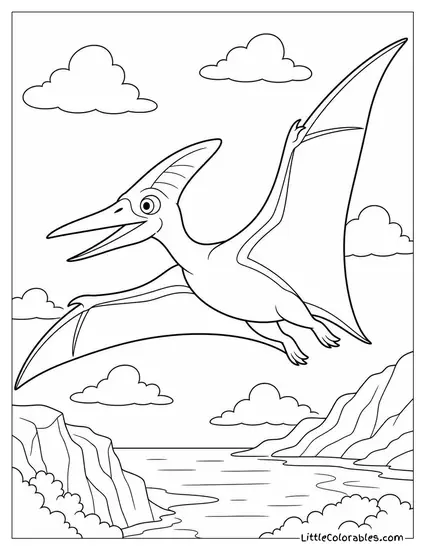
Here the pterodactyl is soaring high above a prehistoric beach. You can see the little waves crashing near some jagged coastal mountains. My team added a few fluffy clouds for extra texture in the sky.
I usually suggest using a mix of light blues and sandy yellows for this one. These printable pterodactyl coloring pages really let kids play with landscape colors.
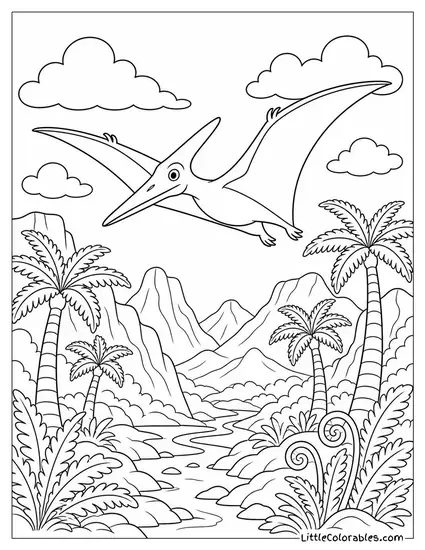
Gliding Through a Fern Tree Valley
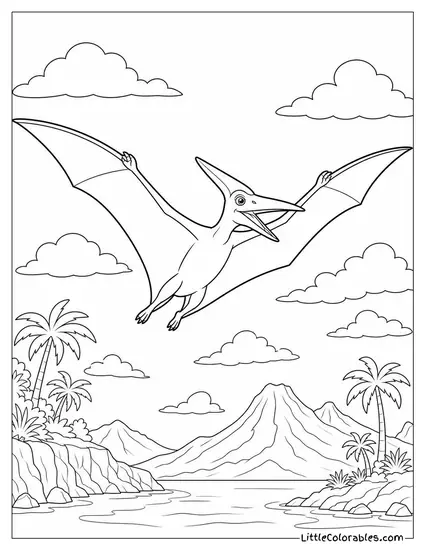
This scene is packed with dense jungle vibes and tall ancient fern trees. The pterodactyl looks so peaceful gliding right through the center of the valley.
There are plenty of leaves and palm fronds to keep busy little hands occupied. Grab every green crayon you own for this section. It is a fun challenge.
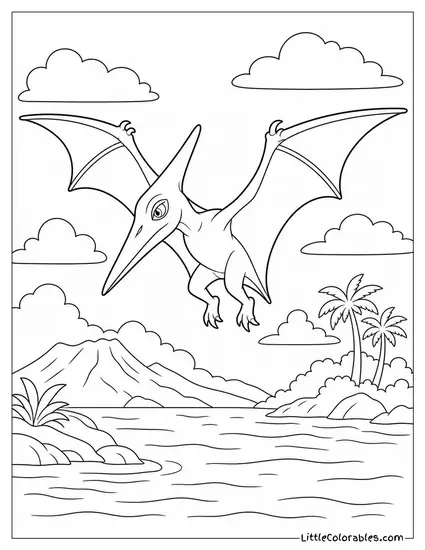
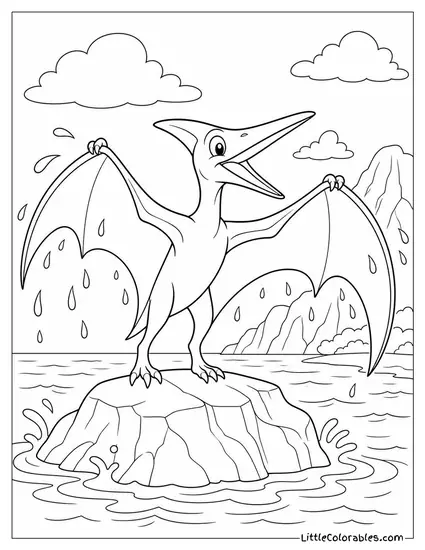
Hovering and Scanning for Prey
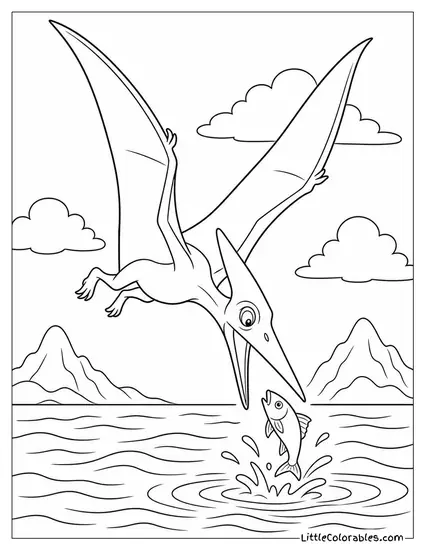
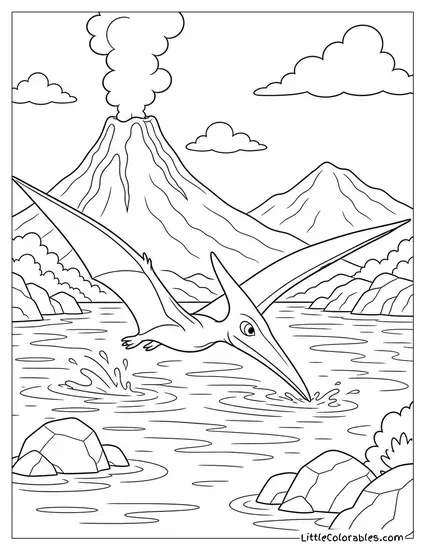
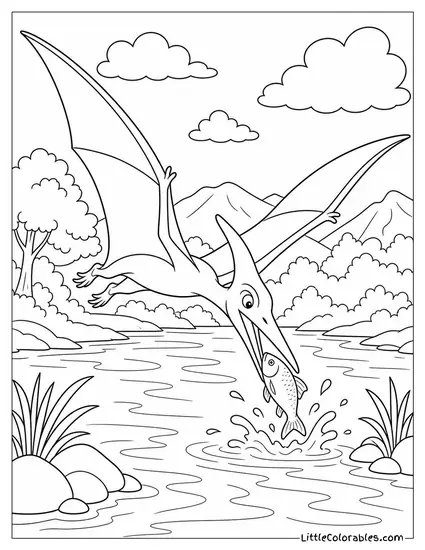
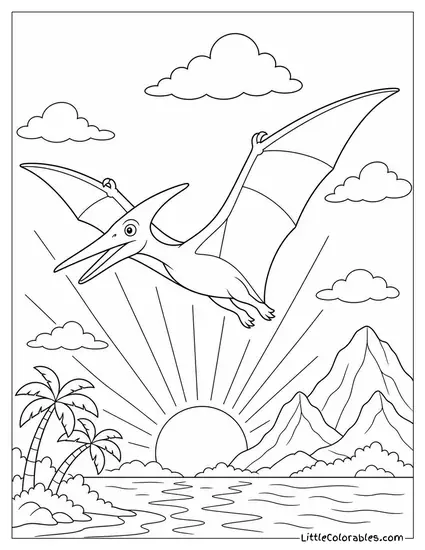
He is suspended right over the rippling water looking for a quick snack. The wings are spread wide to catch the breeze.
I love the distant mountains and the small island in the background. My middle child usually colors the water with bright turquoise. We have so many free pterodactyl coloring pages but this one stands out.
Landing on a Slow-Moving Brachiosaurus
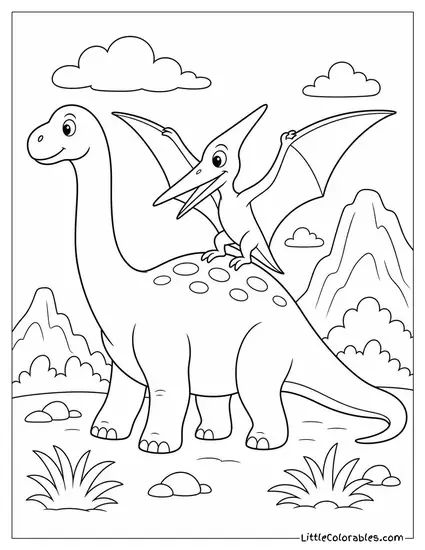
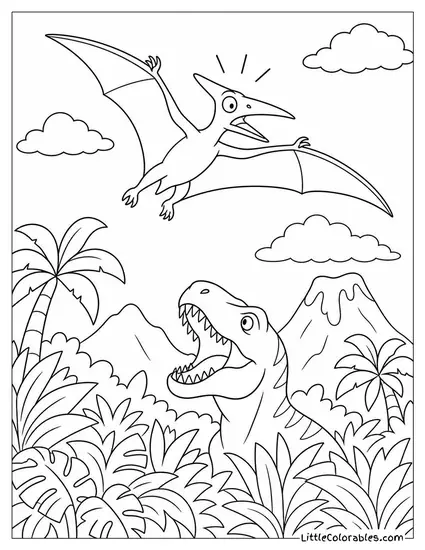
Two dinosaurs for the price of one is always a massive win in my book. The little pterodactyl is taking a rest on the back of a friendly looking brachiosaurus. They actually look like pretty good buddies.
It is a very cute scene that appeals to the younger kids. You can get really creative with the spots on the big dinosaur’s back.
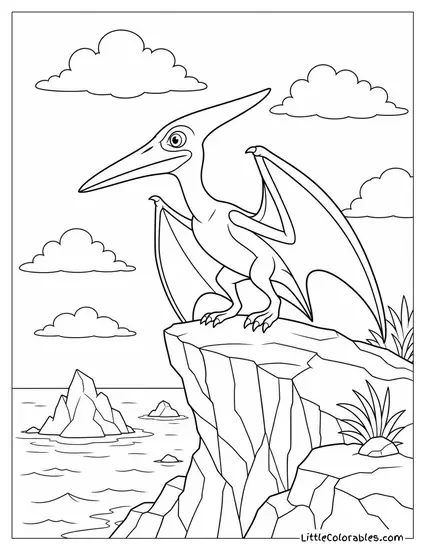
Launching Into the Open Air
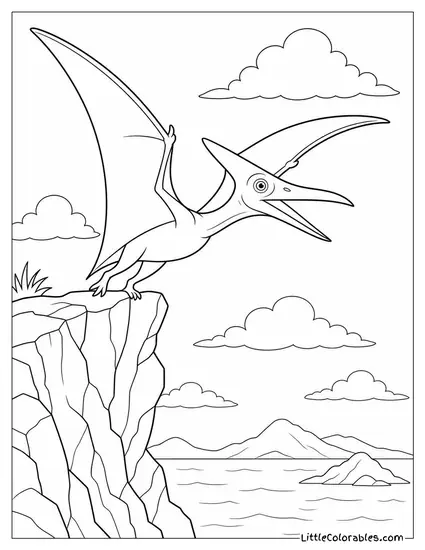
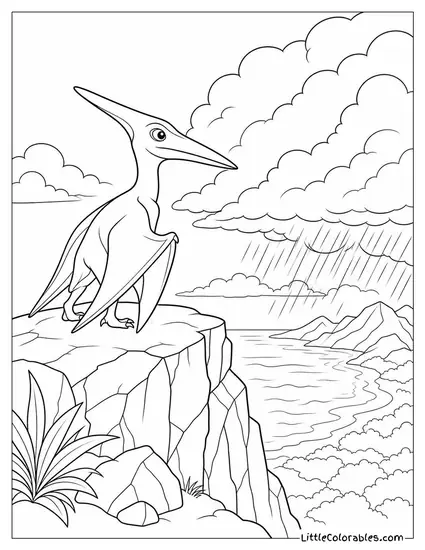
Talk about a dynamic pose. The creature is just stepping off a steep cliff side to take flight over the ocean.
The sharp rocks and the calm water below create a nice contrast. Every time we print this coloring page of a pterodactyl my kids race to finish it first. It has great energy.
Nesting With a Single Egg
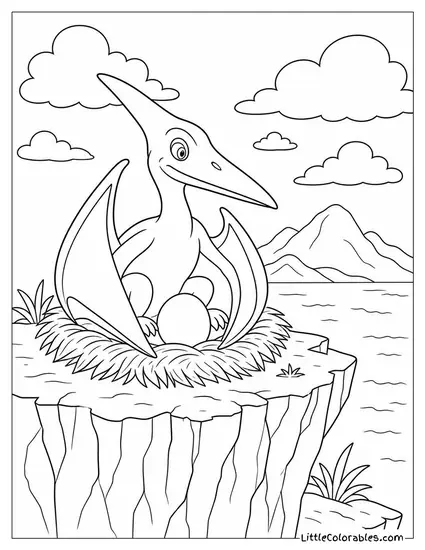
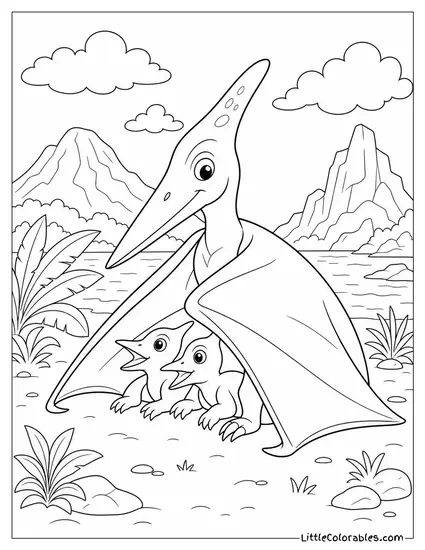
This is a much softer side of the flying reptile. It is sitting quietly in a woven nest on a high cliff edge. There is just one smooth egg resting safely at its feet.
I think this one naturally sparks conversations about how dinosaurs raised their babies. The nest gives kids a chance to use those earthy brown tones.
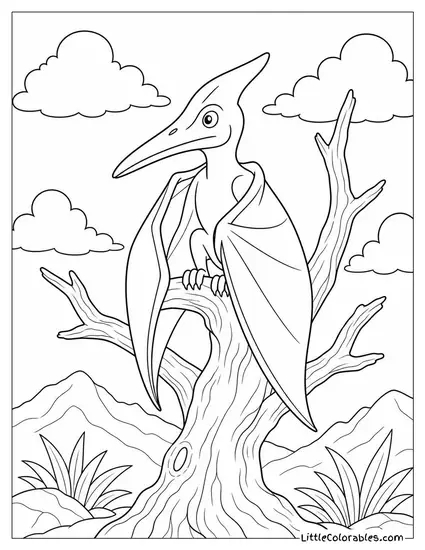
Perched With Wings Draped Like a Cape
The way the wings fold down over the dead tree branches looks exactly like a spooky cape. It gives the dinosaur a slightly mysterious vibe.
The team drew some great texture on the cracked bark of the old tree trunk. We’ve published quite a few pterodactyl coloring sheets and the intricate details here are fantastic. Try using a dark grey or purple for the cape effect.
Tips for Coloring Pterodactyls
1. The Sky Doesn’t Have to Be Blue
A lot of kids just grab the standard blue crayon for the sky and call it a day. But prehistoric skies could have been wild. I tell my kids to think about fiery sunsets.
Try blending orange and pink for a crazy evening sky. It makes the dinosaur really pop off the page. Sometimes a little purple mixed in looks amazing too.
2. Texture on the Wings
Pterodactyl wings were made of skin, not feathers. That means they probably felt leathery. You can create that rough texture by rubbing the crayon lightly over a bumpy surface.
We actually use the back of a plastic placemat for this trick. Just lay the paper down and color sideways with a brown or grey. It gives the wings a very realistic, wrinkled look.
3. Rock Faces Need Contrast
So many of these scenes feature jagged cliffs and rocks. Don’t just use one shade of grey for the whole mountain. That gets really flat.
Pick a light grey, a dark grey, and maybe even a little bit of brown. Use the darker colors in the cracks to show depth. It takes a little more time but the result is totally worth it.
4. Coloring the Fossil
The fossil page is a unique challenge because it is mostly rock and bone. I always recommend coloring the background shale first. Go with a dark, moody charcoal.
Then leave the actual bones completely white or use a very pale yellow. The contrast between the dark stone and the light bones looks incredibly striking. My kids always hang that one on the fridge.
5. Blending Ocean Water
When the dinosaur is flying over the water, the ocean shouldn’t just be a solid block of color. Water reflects light… it changes depth constantly.
I have the kids start with a light aqua near the shoreline. Then they press harder with a deep blue as the water gets further away. Adding a few white streaks for waves makes it feel alive.
6. Using Markers for the Eyes
Crayon is great for large areas but it can be clunky for tiny details. The eyes on these flying reptiles are pretty small. They can easily turn into a waxy blur if you aren’t careful.
I keep a pack of fine-tip markers handy just for the eyes and the tiny teeth. A quick dot of yellow or red marker brings the face into sharp focus. It is a simple trick I learned back in my teaching days.
7. Layering Jungle Greens
For the valley scene with all those ancient ferns, you need variety. Using the exact same green for every single leaf is a rookie mistake. Nature has endless shades.
Mix lime green for the new leaves and a dark forest green for the shadows. Sometimes we even lightly trace the edges of the fronds with a yellow colored pencil. It makes the jungle look thick and overgrown.
8. Don’t Forget the Shadows
Shadows anchor the dinosaur so it doesn’t look like it is floating weirdly on the page. Take the nesting scene for example. There should be a dark spot right under the egg.
A soft grey pencil works perfectly for this. Just lightly shade directly under the pterodactyl and the nest. It gives the whole picture a grounded, 3D effect that older kids really appreciate.